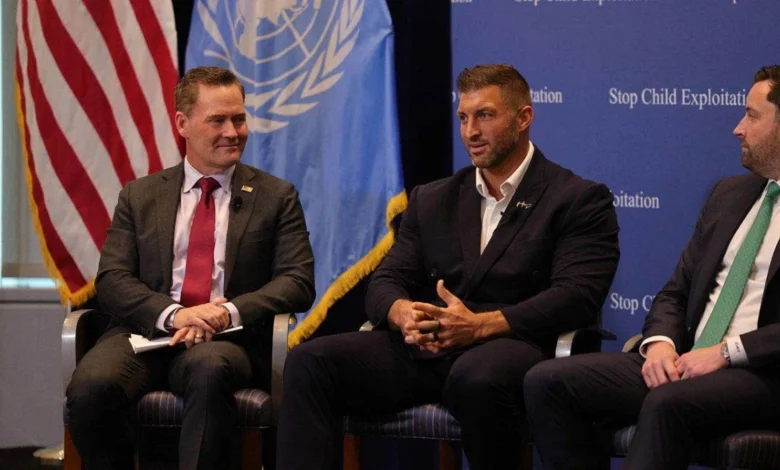
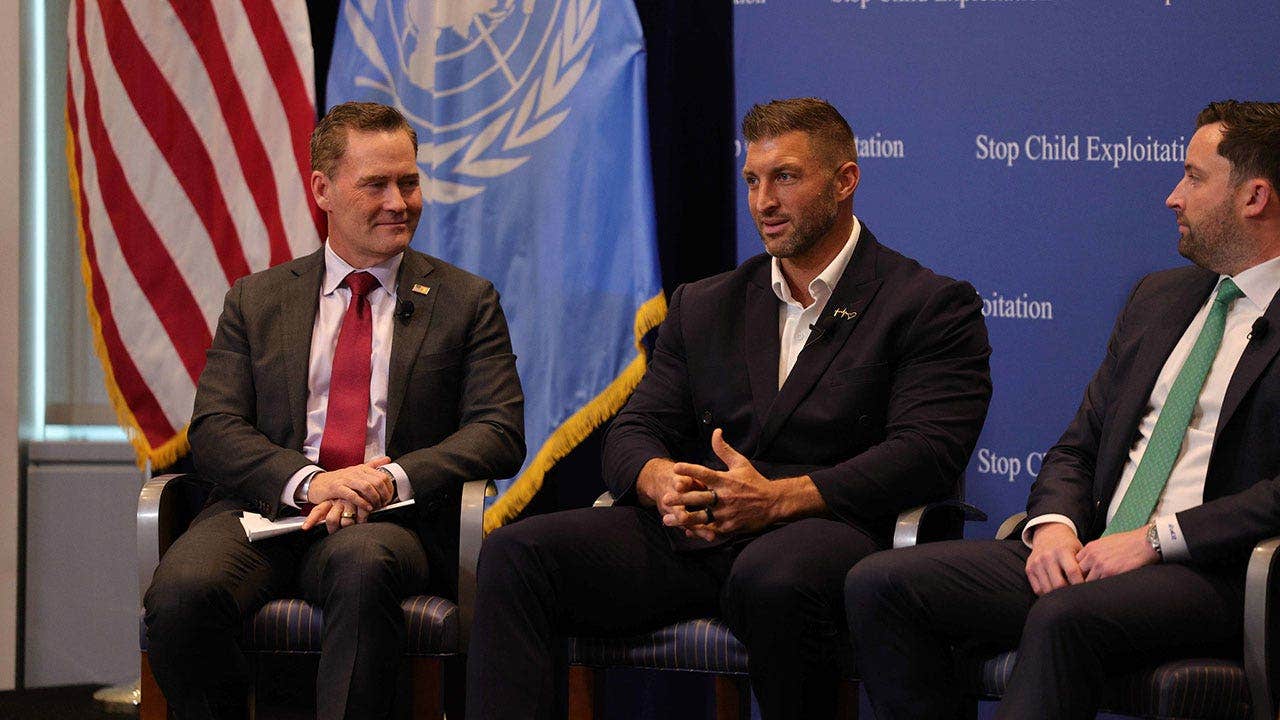
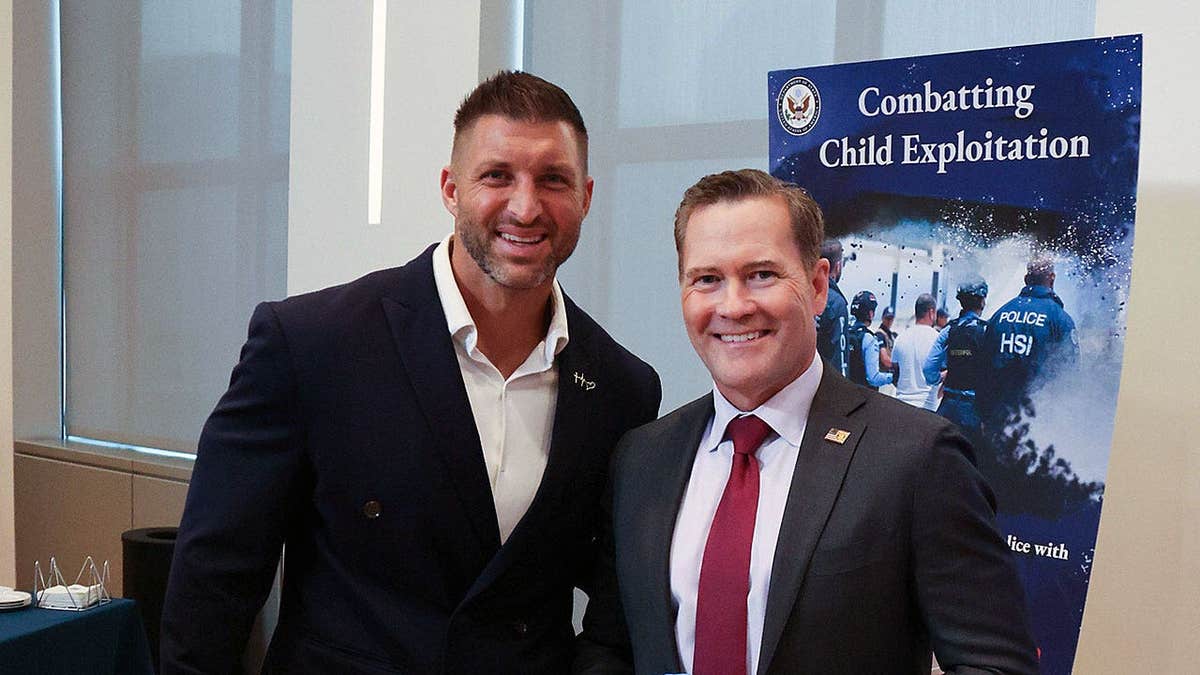
In a significant move to confront the escalating global crisis of online child exploitation, U.S. Ambassador to the United Nations, Mike Waltz, joined forces with former NFL quarterback and prominent anti-human trafficking advocate, Tim Tebow, on Thursday to inaugurate a renewed international initiative. The high-profile event, held at the U.S. Mission to the United Nations, brought together a diverse coalition of government officials, seasoned law enforcement leaders, and dedicated anti-human trafficking advocates, including representatives from Tebow’s eponymous foundation. The primary objective of this collaboration is to fortify cross-border cooperation and dismantle the intricate networks of predators who operate with impunity across international digital frontiers.
The unveiling of this concerted effort underscores a growing recognition within the international community of the pervasive and evolving nature of online child exploitation. Following the formal event, Ambassador Waltz and Tebow engaged in an exclusive discussion with Fox News Digital, where Tebow delivered a stark warning to parents. He emphasized that the threat of child exploitation is no longer confined to distant countries or the shadowy recesses of the internet, but has become a chilling reality in communities worldwide. "It’s happening in their backyard," Tebow stated emphatically, highlighting the immediate and localized danger that many American parents may underestimate. This assertion was supported by recent reports indicating a dramatic increase in online child exploitation cases domestically and globally. For instance, the National Center for Missing and Exploited Children (NCMEC) reported receiving millions of cyber-tipline reports annually, many stemming from platforms and services operating within the United States.
The Escalating Threat of Online Child Exploitation
Online child exploitation, encompassing child sexual abuse material (CSAM), grooming, and sextortion, represents one of the gravest human rights abuses of the 21st century. The proliferation of digital technologies, widespread internet access, and the anonymity offered by certain online platforms have inadvertently created fertile ground for perpetrators. These criminals exploit technological advancements to reach victims across geographical boundaries, often evading traditional law enforcement mechanisms designed for physical crimes. The digital footprint of these crimes often traverses multiple jurisdictions, complicating investigations and prosecutions.
According to data from Interpol and Europol, the volume of online child sexual abuse material has surged exponentially over the past decade. The COVID-19 pandemic, with its associated increase in screen time for children and reduced in-person oversight, further exacerbated this trend, creating new vulnerabilities. Children, particularly adolescents, spend significant portions of their lives online, engaging with social media, gaming platforms, and messaging apps, making them susceptible to the insidious tactics of online predators. These tactics often involve sophisticated psychological manipulation, known as grooming, where offenders build trust with children over time before exploiting them. The rise of "sextortion," where perpetrators coerce children into sending sexually explicit images or videos under threat of public exposure, has also become a particularly insidious form of exploitation, leaving victims with profound psychological trauma.
A United Front: The UN Initiative
The United Nations, as the preeminent global forum, serves as a crucial platform for coordinating international responses to transnational crimes. This renewed initiative leverages the UN’s convening power to galvanize member states into collective action. The event prominently highlighted the proactive stance of the United States in collaborating with nations across the globe. The strategy encompasses multiple facets:
- Victim Rescue and Support: Prioritizing the identification and rescue of exploited children.
- Network Disruption: Intensifying efforts to dismantle human trafficking networks responsible for these heinous acts.
- Perpetrator Prosecution: Strengthening legal frameworks and investigative capacities to bring child predators to justice.
Officials at the event pointed to recent successful international operations as tangible evidence of what can be achieved through enhanced cooperation. These operations, often involving intelligence sharing and coordinated raids across multiple countries, have led to the arrests of numerous perpetrators and the rescue of many victims. Furthermore, the initiative is bolstered by new funding from the U.S. Congress, indicating a strong legislative commitment to combating this issue. A U.S.-led U.N. resolution specifically targeting online sextortion also signals a focused approach to emerging threats, recognizing the unique challenges posed by this particular form of digital abuse.
Ambassador Waltz underscored the critical importance of a unified global response. "The United States is leading the charge to combat child exploitation in partnership with civil society groups like the Tim Tebow Foundation," Waltz asserted during the briefing. He continued, emphasizing the transnational nature of the crime: "Child exploitation criminals operate across borders, so a global response is critical. We need to work together to protect our children from predators." His statement highlights the understanding that no single nation can effectively combat this intricate global web of criminality in isolation.

The Role of Advocacy and Awareness: Tim Tebow’s Urgent Message
Tim Tebow, known for his distinguished NFL career and now for his profound commitment to humanitarian causes, has become a powerful voice in the fight against human trafficking and child exploitation through his foundation. His participation lends significant visibility and moral authority to the initiative. Tebow’s message to parents was unequivocal: the danger facing children online demands constant vigilance. He drew a stark analogy to underscore the gravity of the situation: "If it’s unprotected, it’s similar to dropping them off at a playground knowing that pedophiles are circling that playground," he told Fox News Digital, adding, "You would never do it." This powerful comparison aims to jolt parents into recognizing the severe risks their children face in the digital realm if adequate safeguards are not in place.
Tebow implored parents to proactively utilize available online safety tools and maintain active engagement with their children’s digital activities. He warned that predators are perpetually seeking vulnerabilities and opportunities to exploit young victims. "There are so many predators online that are looking for a vulnerability and an access to a boy or girl so that they can exploit, so that they can lure, so they can groom, so that they can sextort," Tebow explained, describing the malicious intent and sophisticated methods employed by offenders. He concluded by unequivocally stating his conviction: "I really believe it’s one of the worst evils in the world."
During the event, Tebow further stressed the indispensable nature of international cooperation. "Child exploitation requires a response as global as the threat itself," he declared, echoing Ambassador Waltz’s sentiment. His call to action was poignant and universal: "Right now, children around the world are being harmed, and we cannot look away. No child should be invisible, and no predator should be able to hide." These words encapsulate the moral imperative driving the initiative, aiming to ensure that every child, regardless of their location, is protected from digital harm.
Navigating the Complexities of International Justice
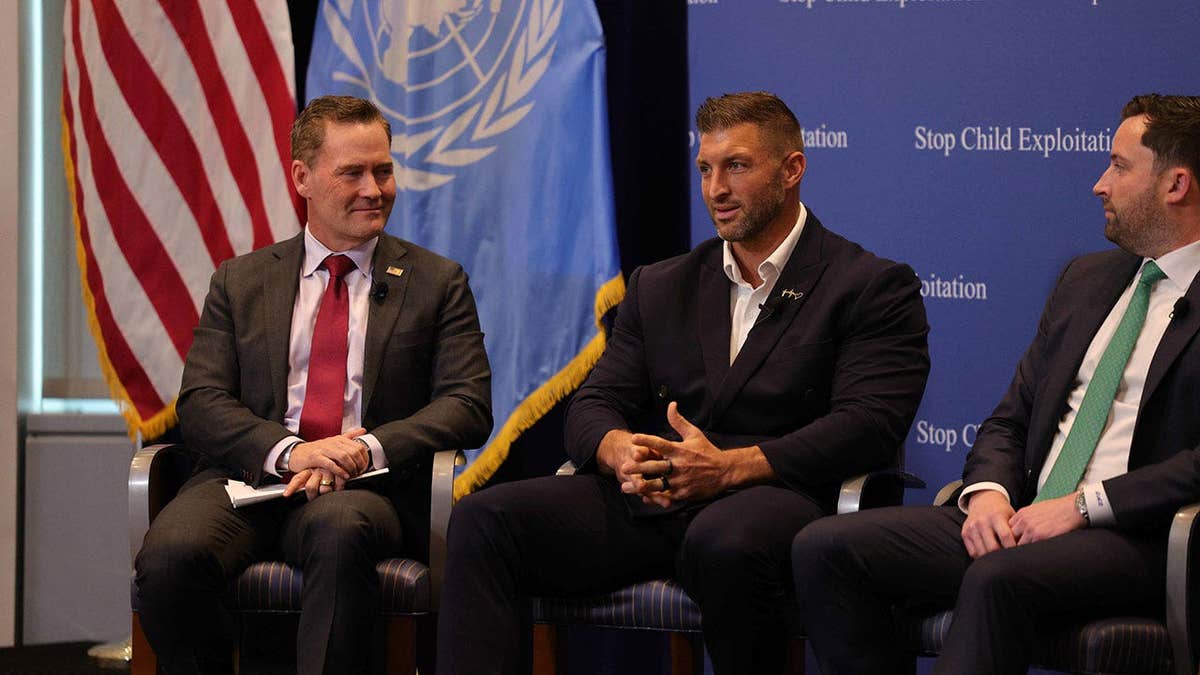
A significant challenge in combating online child exploitation is the varying legal frameworks and enforcement capabilities across different nations. When Fox News Digital inquired whether some countries were actively refusing cooperation with U.S. investigations, Ambassador Waltz offered a nuanced perspective. He clarified that the primary hurdle isn’t outright refusal, but rather a widespread lack of necessary legal instruments and investigative resources in many parts of the world.
"I don’t know that there’s countries refusing to cooperate," Waltz stated, "But what I can tell you, there’s countries all over the world [where] they don’t have the laws on the books that make these things a crime. They don’t have the extradition treaties. They don’t have the prosecutors or the investigators that know how to handle the electronic evidence in the right way." This assessment highlights a critical systemic weakness: even with the will to cooperate, many nations are simply not equipped to handle the complexities of digital forensics and cross-border cybercrime prosecution. Data localization laws, encryption challenges, and differing standards of evidence further complicate international collaboration.
To address these disparities, Waltz confirmed that various U.S. agencies and United Nations partners are actively engaged in capacity-building efforts. This includes providing training to foreign law enforcement personnel, assisting in the development of robust national legislation, and facilitating the establishment of extradition treaties. Such efforts are crucial for creating a more uniform and effective global response to online child exploitation.
Waltz also drew a crucial connection between migration and human trafficking, asserting that these two phenomena remain closely linked. He noted that vulnerable girls, in particular, are often exploited by ruthless criminal organizations during perilous migration routes. The instability and desperation inherent in irregular migration make individuals, especially unaccompanied minors or those separated from their families, prime targets for traffickers and exploiters. This connection underscores the need for comprehensive approaches that address the root causes of vulnerability, including poverty, conflict, and lack of opportunity, alongside direct law enforcement interventions.
Tebow further elaborated on the immense challenges faced by investigators globally in identifying victims. He explained that offenders are highly sophisticated in their efforts to avoid detection, making the task of identification extraordinarily difficult. "When we also talk about this, there are so many places that are underfunded, under-equipped, and it does take some training and understanding of what is happening online so we can best use victim identification," Tebow said. He lauded the specialized skills of victim identification specialists, acknowledging their crucial role: "Those victim identification specialists really are specialists. They’re incredible at what they’re doing because those that are performing this evil, they’re not trying to get caught." This recognition highlights the need for continuous investment in specialized training, forensic tools, and psychological support for these frontline responders. "So it takes really special people to be able to understand, to find them and then bring them to justice. More importantly, bring that kid into freedom," Tebow concluded, emphasizing the ultimate goal of liberation and healing for the victims.
The Critical Role of Parents and Communities
Beyond international efforts and law enforcement, the initiative implicitly emphasizes the indispensable role of parents, educators, and local communities. Empowering parents with knowledge and tools for online safety is a cornerstone of prevention. This includes understanding privacy settings on social media, using parental control software, educating children about online risks, fostering open communication, and recognizing warning signs of grooming or exploitation. Schools and community organizations also play a vital part in providing digital literacy education and creating safe spaces for children to report abuse.
Looking Ahead: Challenges and the Path Forward
The collaboration between the U.S. Mission to the United Nations, the Tim Tebow Foundation, and international law enforcement partners marks a significant step towards strengthening cross-border efforts. However, the path ahead is fraught with challenges. The rapid evolution of technology means that predators are constantly adapting their methods, requiring continuous innovation in detection and prevention. The sheer scale of the internet and the encrypted nature of many communications channels present formidable obstacles. Furthermore, securing sustained political will and financial resources from all member states will be crucial for the long-term success of such initiatives.
This renewed global effort is intended to combat child exploitation through expanded cooperation, leveraging cutting-edge technology, and coordinating intricate international investigations. Its success will be measured not only by the number of arrests and convictions but, more importantly, by the number of children rescued, the support provided to survivors, and the creation of a safer digital environment for future generations. The collective commitment demonstrated by Ambassador Waltz, Tim Tebow, and their international partners offers a beacon of hope in a fight against what many consider one of the darkest evils of our time. It is a stark reminder that while the internet connects the world, it also brings a shared responsibility to protect its most vulnerable members.
Related posts: