Two Decades on the Lam: Fugitive Richard Graydon’s Elaborate Biotech Executive Persona Unravels in Dramatic Arrest

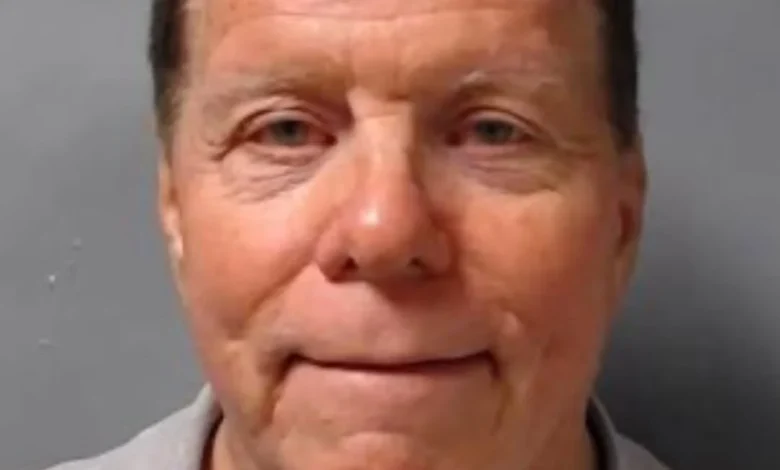
The remarkable two-decade odyssey of Richard Graydon, a man who meticulously crafted a sophisticated persona as a leading biotech executive while simultaneously evading federal authorities for twenty years, concluded dramatically on July 16 with his arrest aboard a 56-foot sailing vessel in New York’s East River. Known to law enforcement as Arthur William Fischer, the fugitive had cultivated an image as a highly credentialed oncologist and chief medical officer, successfully infiltrating the upper echelons of the competitive pharmaceutical and biotechnology industries. His capture by U.S. Marshals and the U.S. Coast Guard brings to an end one of the longest-running manhunts in Rhode Island’s history, exposing a life built on an elaborate web of aliases and fabricated achievements.
A Fugitive’s Masterful Deception
For twenty years, the true nature of Arthur William Fischer remained shrouded in mystery, even as he moved through the world as Richard Graydon, among more than a dozen other identities identified by police. Law enforcement sources, including his profile on the long-running television program America’s Most Wanted, painted a picture of an individual uniquely equipped for life on the run: a "master yachtsman, a world traveler, and internationally connected." These attributes, meticulously documented by investigators, likely served as crucial assets in his prolonged evasion, enabling him to navigate complex global networks and maintain a low profile while still engaging in activities that demanded a high degree of organizational and interpersonal skill. The U.S. Marshals Service, the primary federal agency tasked with tracking and apprehending fugitives, had tirelessly pursued Fischer, recognizing the immense challenge posed by a subject with such a diverse skillset and a proven ability to disappear and re-emerge under new guises. The description of him as a master yachtsman, for instance, perfectly aligns with his ultimate capture on a sailboat, suggesting that maritime life may have been a consistent element of his clandestine existence.
America’s Most Wanted, a program renowned for its role in bringing fugitives to justice by leveraging public tips, would have broadcast Fischer’s image and details to millions, underscoring the severity of the charges he faced and the urgency of his capture. Being featured on such a high-profile show typically signifies a particularly elusive or dangerous individual, further highlighting the extraordinary length and complexity of the manhunt that spanned across two decades and countless jurisdictions. Despite the constant threat of recognition, Graydon not only avoided capture but managed to establish himself in a highly specialized and scrutinized professional field.
The Biotech Persona: A Fabricated Ascent
The audacious nature of Graydon’s deception became strikingly clear through his carefully constructed career in the biotechnology sector. His public debut in this fabricated persona appears to have solidified in 2017 with the self-publication of a book titled The Genetic Risks of Cancer: The Effects of DNA, Genomics and Inheritance on Aging and Survival. This publication, available on platforms like Amazon, served as a tangible credential, presenting Graydon as an accomplished oncologist who had held significant leadership roles, including Chief Medical Officer, within the biotech and drug development industries. The book’s subject matter—cancer genomics and its impact on health—was strategically chosen, aligning with a cutting-edge and highly respected area of medical science, thereby lending an air of intellectual authority to his manufactured identity. While the book reportedly garnered no reviews on Amazon, its very existence provided a foundational element for his professional narrative.
This literary endeavor laid the groundwork for his subsequent entry into legitimate biotech firms. In October 2022, Atossa Therapeutics, a Seattle-based clinical-stage biopharmaceutical company focused on developing novel therapeutics for oncology and infectious diseases, announced the appointment of Richard Graydon as its interim Chief Medical Officer. The company’s CEO, Steven Quay, lauded Graydon’s purported expertise in a public statement, saying, "We are privileged to welcome Richard to Atossa, where his deep experience in CAR-T cell therapy fits well with our current strategic direction as we explore our opportunities in cell therapy." CAR-T cell therapy is a highly advanced and rapidly evolving form of immunotherapy that uses a patient’s own modified immune cells to fight cancer, requiring profound scientific and clinical understanding. Quay’s statement underscored the trust placed in Graydon’s claimed credentials and the perceived value of his expertise to the company’s strategic objectives.
The pinnacle of Graydon’s fabricated career came in March of the current year, when Immix BioPharma, a biopharmaceutical company focused on developing novel therapies for cancer and other life-threatening diseases, announced his hiring. Immix presented Graydon as a "board-certified hematologist-oncologist with over 20 years of experience in clinical development." The press release went further, attributing to him a prestigious background, including recent tenures at pharmaceutical giants Merck & Co. and Johnson & Johnson. Crucially, Immix claimed Graydon had "led new and supplemental new drug applications and biologics license applications for 7 approved drugs including Darzalex, Carvykti, Keytruda, and Imbruvica." These drugs are not merely any pharmaceuticals; they represent some of the most successful and impactful cancer treatments globally. Keytruda (pembrolizumab), for instance, is a blockbuster immunotherapy developed by Merck, approved for various cancers, and a cornerstone of modern oncology. Darzalex (daratumumab) is a major therapy for multiple myeloma, while Carvykti (ciltacabtagene autoleucel) is a cutting-edge CAR-T cell therapy, and Imbruvica (ibrutinib) is a significant treatment for blood cancers. Attributing leadership roles in the development and approval of such critical medications would instantly elevate Graydon to an elite status within the pharmaceutical industry, implying an unparalleled level of experience and influence.
Adding to the impressive, yet ultimately fictitious, resume, Immix’s announcement also detailed Graydon’s academic pedigree: "Dr. Graydon received his MD and PhD from Stanford University and trained at Harvard’s Massachusetts General Hospital." Stanford University and Harvard Medical School, along with Massachusetts General Hospital, are globally recognized as institutions of immense prestige in medical education and research. Earning an MD and PhD from Stanford, followed by training at MGH, would signify an exceptional intellect and dedication, a pathway reserved for the brightest minds in medicine. The ability to convincingly assert such a background, even briefly, highlights the sophistication of Graydon’s deception and raises serious questions about the depth of the due diligence conducted by these biotech firms. Investigative journalists at Stat, a leading health and medicine news publication, attempted to verify these claims but found no corroborating evidence, and Immix BioPharma notably did not respond to requests for comment regarding the discrepancies.
The Dramatic Capture on the East River
The elaborate charade came crashing down on July 16. Arthur William Fischer, alias Richard Graydon, was apprehended by U.S. Marshals and the U.S. Coast Guard aboard his 56-foot sailing vessel, The Silver Lining, while navigating the East River in New York City. The calm precision of the arrest, which authorities confirmed occurred "without incident," belies the two decades of relentless pursuit that preceded it. The involvement of the U.S. Coast Guard underscores the maritime context of the capture, leveraging their expertise in waterway interdiction to corner a fugitive who had seemingly mastered the art of nautical evasion. For the U.S. Marshals Service, the capture marked a significant triumph, closing a long and challenging chapter in their ongoing mission to track down and arrest federal fugitives. The East River, a bustling waterway in one of the world’s most populous cities, provided an unexpected stage for the culmination of a manhunt that likely spanned continents and required intricate intelligence gathering. The name of his vessel, The Silver Lining, now stands as an ironic testament to the fleeting optimism of a man living a double life.
Corporate Fallout and Broader Implications
The immediate aftermath of Graydon’s arrest reverberated through the biotech companies he had briefly served. Immix BioPharma acted swiftly, confirming Graydon’s termination in a Monday SEC filing. In an attempt to mitigate potential investor concerns and reputational damage, the company stated, "Given his short tenure, management believes there is no material effect on the business." While Immix’s leadership may assert that the brief employment of a highly placed, yet fraudulent, executive will have no lasting impact on its operations or financial standing, the implications for the company and the broader industry are undeniable.
The incident raises critical questions about corporate governance, due diligence, and the vulnerabilities inherent in the high-stakes world of biotech executive hiring. For companies like Immix and Atossa, the revelation of employing a long-term fugitive under false pretenses can lead to:
- Reputational Damage: Even with claims of "no material effect," the public perception of the companies’ vetting processes and internal controls can be significantly tarnished. This can affect investor confidence, partnerships, and talent acquisition.
- Regulatory Scrutiny: The U.S. Securities and Exchange Commission (SEC) may examine the circumstances of Graydon’s hiring and the companies’ disclosures. Misrepresentations in executive profiles, especially for a Chief Medical Officer role that inherently deals with sensitive scientific and regulatory matters, could lead to investigations into the accuracy of public statements and filings.
- Investor Confidence: Shareholders and potential investors rely heavily on the integrity and expertise of a company’s leadership team. Discovering that a key executive was a fraud could erode trust, potentially impacting stock performance and fundraising efforts.
- Enhanced Due Diligence: The incident will likely prompt a re-evaluation and strengthening of background check protocols across the biotech and pharmaceutical sectors, particularly for C-suite positions. Verifying academic credentials, employment history, and professional certifications, especially for individuals claiming extensive international experience or decades-old achievements, will become even more stringent. This may involve employing advanced investigative services that go beyond standard checks.
- Impact on Internal Projects: While Immix stated "no material effect," the very presence of an individual lacking genuine qualifications in a critical role, even for a short period, could have subtle impacts on strategic discussions, project evaluations, or scientific direction, particularly in fields as specialized as CAR-T cell therapy and oncology drug development.
The case of Richard Graydon, or Arthur William Fischer, serves as a stark reminder of the sophisticated nature of modern deception and the persistent challenges faced by both law enforcement and corporate entities in verifying identities and credentials. The ability of an individual to maintain a high-level professional facade for years while simultaneously evading capture for federal offenses highlights not only his remarkable cunning but also potential systemic weaknesses in background verification processes, particularly when dealing with candidates who present seemingly impeccable yet ultimately fabricated histories. As the legal proceedings against Fischer unfold, the biotech industry will undoubtedly be left to grapple with the lessons learned from this extraordinary tale of a fugitive who sailed into the heart of cutting-edge medicine under a stolen identity.