The Power of Indigenous Governance: Why Local Self-Determination is the World’s Best Climate Defense



From the high-altitude peaks of the Himalayas in Nepal to the dense, rain-drenched forests of the Ecuadorian Amazon and the sprawling grasslands of Canada, Indigenous communities are finding themselves on the front lines of an accelerating climate emergency. These regions are no longer facing isolated, seasonal weather events; instead, they are increasingly grappling with "compounding crises"—a phenomenon where consecutive floods, wildfires, and droughts strike in rapid, overlapping succession, leaving little room for recovery or institutional rebuilding. A landmark report published by the global nonprofit Land Is Life posits that while the scientific community has begun to acknowledge the value of Indigenous ecological knowledge, there remains a critical, systemic failure to respect the Indigenous governance structures that facilitate and protect that knowledge.
The Convergence of Crisis and Knowledge
The report, released during New York Climate Week, synthesizes data from 46 countries and over 200 distinct case studies, encompassing diverse ecosystems ranging from arid drylands to coastal zones. The findings are sobering: more than 80 percent of respondents reported that they are now managing two or more climate disasters simultaneously, while 90 percent indicated that the frequency of these catastrophic events has risen significantly over the past decade.
This shift from singular climate shocks to perpetual crisis states requires a fundamental change in how the international community approaches adaptation. For decades, Western-led climate initiatives have often treated Indigenous lands as "laboratories" for biodiversity or carbon sequestration, frequently bypassing the very people who have managed these landscapes for millennia. Luisa Castañeda Quintana, executive director of Land Is Life, argues that the global community is missing the point by focusing on the creation of new, complex technological structures. "We show that it’s not that they are only the most impacted, but they are already implementing effective solutions," she states. "When it comes to adaptation, we don’t really need to create new structures or systems. We just need to see what is working."
A Chronology of Resilience: Case Studies in Action
To understand the efficacy of Indigenous governance, one must look at how these systems function under pressure. A historical review of community responses reveals a pattern of proactive, rather than reactive, management.
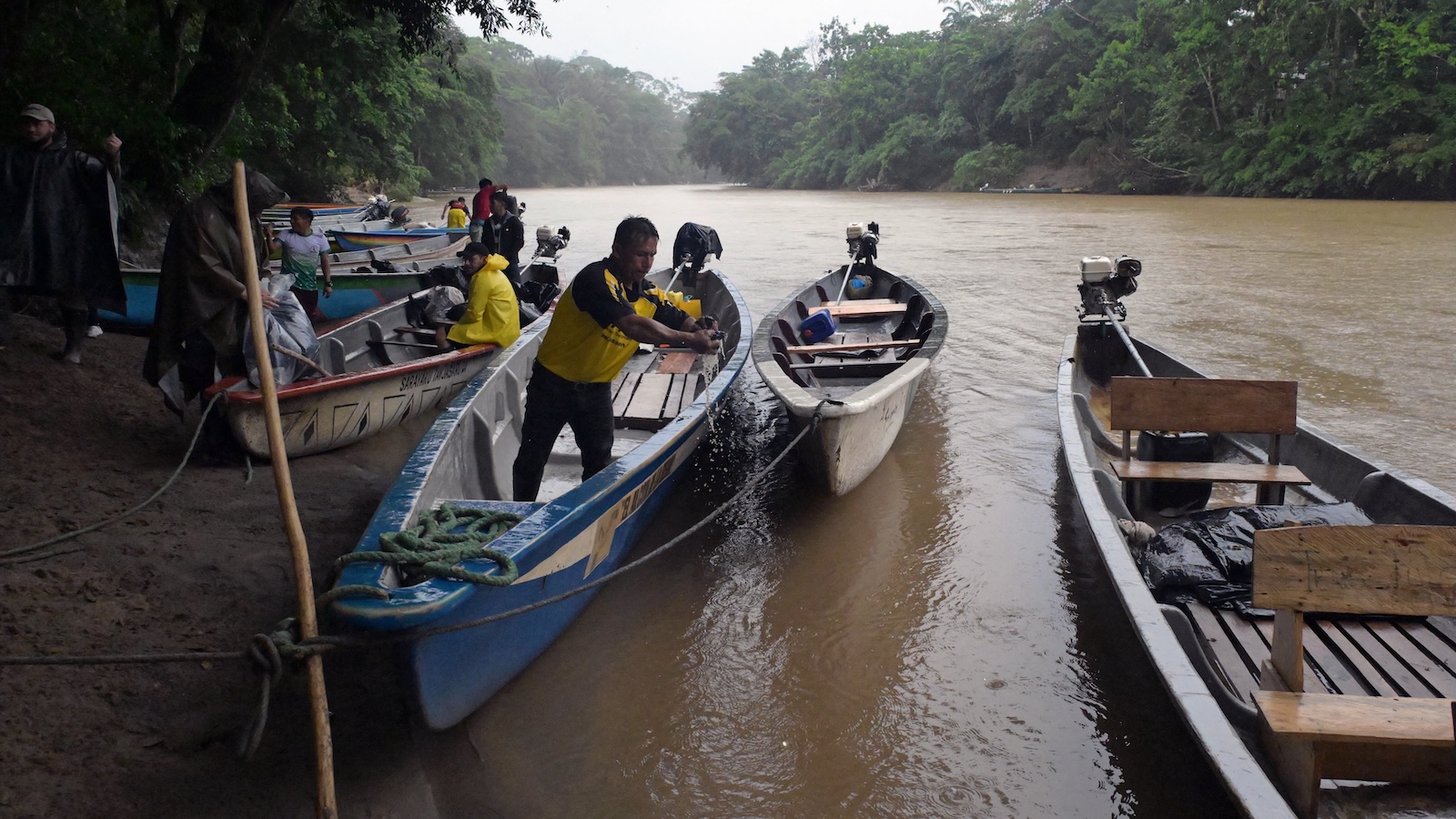
In 2019, the Kichwa People of Sarayaku in the Ecuadorian Amazon faced a catastrophic flood of the Bobonaza River. The disaster threatened the livelihoods of roughly 1,600 people living across 500 square miles. However, the community did not collapse. Because the Sarayaku maintained established governance structures, they were able to initiate an immediate, coordinated response. Elders had observed specific, anomalous patterns in lightning and rainfall at the river’s headwaters—traditional ecological indicators that preceded the flooding.
By leveraging the minga—a Kichwa principle of collective responsibility and solidarity—the community moved beyond mere survival. They activated pre-existing decision-making protocols to manage emergency housing, resource distribution, and external communication with government authorities. This incident serves as a model for how decentralized, locally governed systems can outperform centralized disaster response mechanisms that are often hampered by bureaucracy and a lack of local context.
Similar models are evident globally. In Kenya, Endorois and Tugen women have pioneered the cultivation of climate-resilient sorghum and millet varieties. These crops have proved to be the only viable food source during years of extreme drought, effectively preventing localized famine where conventional agriculture failed. In Brazil, the Coordination of Indigenous Organizations of the Brazilian Amazon (COIAB) has institutionalized fire management and response teams, providing a frontline defense against the deforestation-linked wildfires that plague the region.
The Financial and Legal Gap
Despite the documented success of these localized strategies, a massive gap exists between rhetoric and reality. The global climate finance architecture remains largely inaccessible to the people who are most effectively using it. Data from the Indigenous Peoples Rights International (IPRI) and other human rights organizations suggests that despite billions of dollars being pledged by G20 nations and international financial institutions for climate adaptation, only a negligible fraction reaches Indigenous communities directly.
Anisha Buda, a program officer at the National Indigenous Women Forum in Nepal, notes that the problem is twofold: a lack of direct funding and a tendency for non-Indigenous organizations to act as intermediaries. "There are so many projects that are supposed to be for Indigenous peoples, but they are implemented by non-Indigenous organizations and non-Indigenous peoples," Buda says. This "middleman" approach often results in projects that fail to account for local linguistic or cultural needs, or worse, ignore the very governance structures that ensure long-term sustainability.
Furthermore, many nations continue to criminalize Indigenous land rights or refuse to provide legal recognition for ancestral territories. Without legal title to their land, Indigenous communities struggle to access credit, defend their borders against extractive industries, and participate as equals in international climate negotiations.
The Role of Partnerships and Co-Management
The Land Is Life report highlights that while self-determination is the goal, strategic, respectful partnerships can act as force multipliers. In Peru, for example, the Quechua communities within the Ausangate Regional Conservation Area have successfully integrated their traditional ecological knowledge with Western scientific research. By collaborating with conservation groups to document environmental indicators, they have improved their ability to predict and monitor ecological changes, creating a hybrid model of resilience that satisfies both local needs and international scientific standards.
However, the report warns that many "partnerships" remain superficial. Climate initiatives that focus exclusively on short-term carbon credits, or those that impose external authority, often undermine the social cohesion necessary for long-term adaptation. The most successful initiatives are those that treat Indigenous governance as an equal partner, not as a consultant or a beneficiary.
Implications for Global Climate Strategy
As the United States, European nations, and other global powers re-evaluate their climate commitments amid shifting geopolitical priorities—such as conflicts in Ukraine and the Middle East—the resources earmarked for global climate adaptation are becoming increasingly scarce. This creates a dangerous paradox: just as the climate crisis demands more investment, the available funding is shrinking.
The analytical consensus presented in the report is clear: in an era of limited resources, funding must be diverted toward systems that are already producing measurable results. Investing in Indigenous governance is not an act of charity; it is a high-yield, low-risk strategy for global climate stability. By providing direct, flexible funding to Indigenous-led organizations, governments can leverage centuries of environmental expertise that no amount of imported technology can replicate.
Gisela Hurtado, the author of the report, emphasizes that the world must stop viewing Indigenous communities solely as victims of climate change. Instead, they must be viewed as the stewards of the future. "What they are seeing in the territories, we’re going to see it also in the future," Hurtado says. "They are the ones that are much more connected with the Earth to know what is going to happen in the future."
Conclusion: A Shift in Governance
The path forward requires a paradigm shift. International climate policy must move away from top-down mandates toward a framework that recognizes Indigenous legal rights, supports decentralized governance, and facilitates direct, non-extractive financial support. The evidence provided by the Land Is Life report confirms that the most effective climate solution is not a new invention—it is the empowerment of the people who have been, and continue to be, the most effective guardians of the planet’s ecosystems. Until policymakers bridge the gap between acknowledging the value of Indigenous wisdom and actually resourcing the structures that house it, the world remains in a precarious position, ignoring its most effective tools for survival in an increasingly volatile climate.
Related posts: