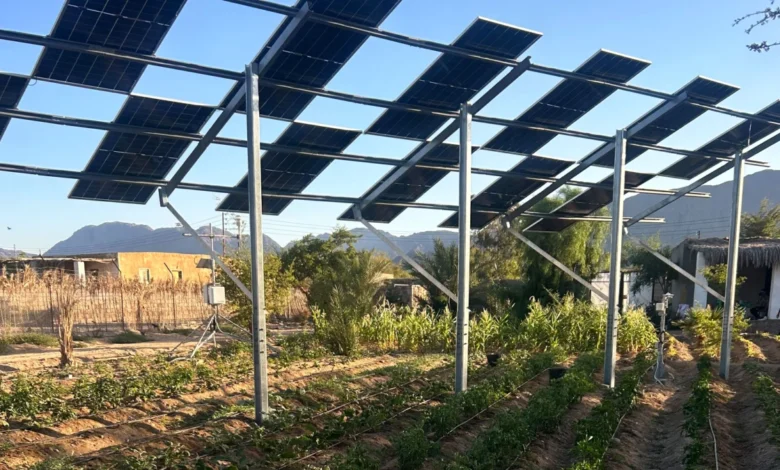
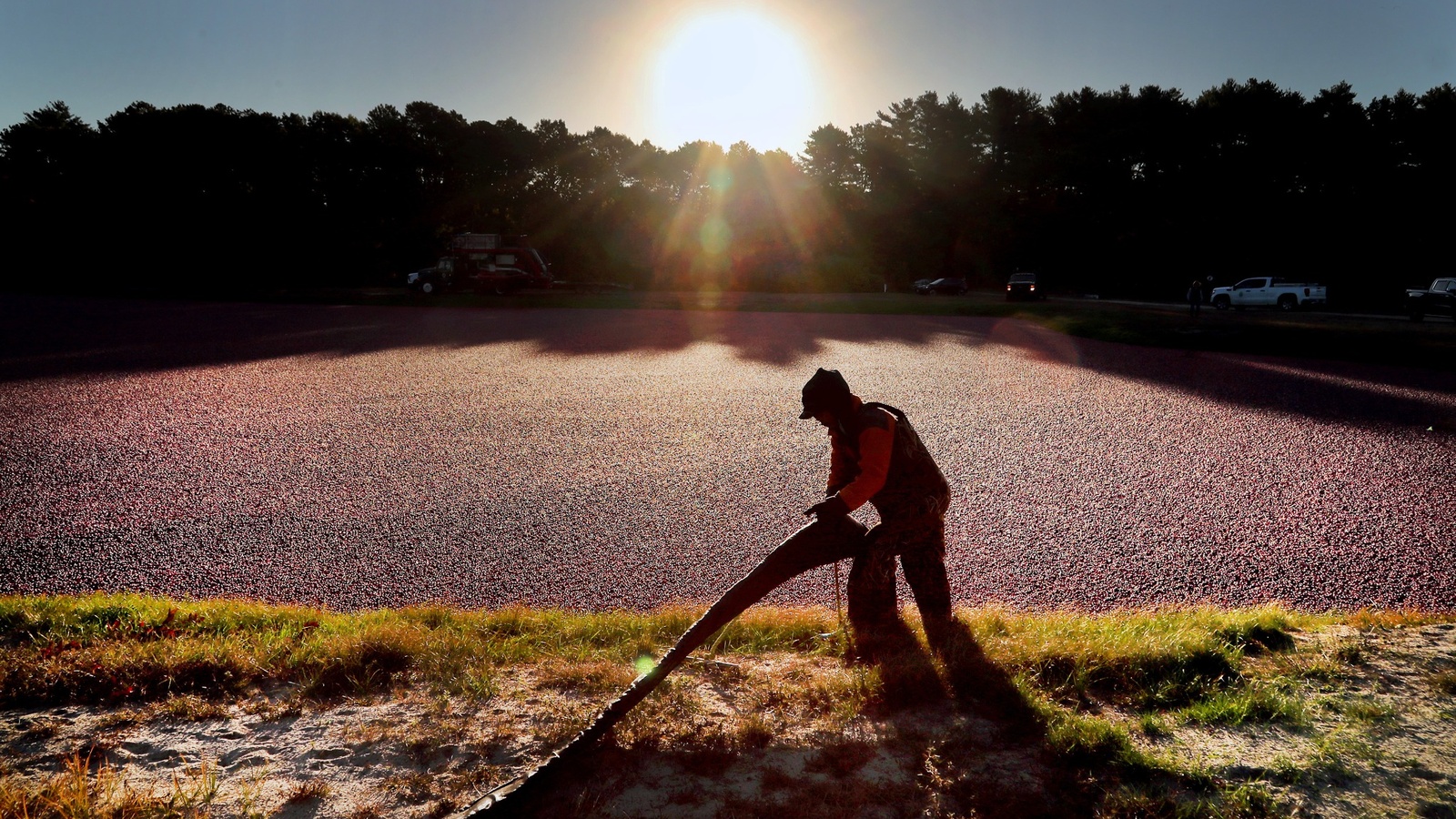
It is currently peak cranberry season in southeastern Massachusetts, a period defined by the rhythmic harvesting of ruby-red berries that will soon populate holiday tables across the nation. Yet, at two distinct sites in Kingston and Plymouth, the traditional image of a cranberry bog has undergone a radical transformation. Amidst the flooded basins and specialized harvesting equipment, towering metal pilings rise above the vines, supporting an intricate grid of photovoltaic panels. These two sites represent a pioneering intersection of agriculture and renewable energy, marking the first successful, fully operational instances in the United States—and potentially the world—of cranberry cultivation beneath a solar array.
This unconventional marriage of sectors is not merely an aesthetic curiosity; it is a calculated response to the urgent, often conflicting demands of the clean energy transition and land conservation. As Massachusetts accelerates its commitment to achieving net-zero carbon emissions by 2050, the state is under immense pressure to identify suitable sites for massive solar installations. However, the geographic constraints of the Bay State—characterized by high population density, expansive protected woodlands, and a premium on existing farmland—have turned site selection into a contentious public policy issue.
The Regulatory and Financial Landscape
The adoption of agrivoltaics, or "dual-use" solar, has been heavily incentivized by the Commonwealth of Massachusetts. Since the early 2000s, the state has refined its solar incentive framework to favor projects that provide secondary benefits to the land. In 2018, the state broke new ground by introducing a specific financial premium for dual-use projects. Under the current incentive structure, while a standard 1-MW to 5-MW solar array might command a base rate of approximately 23.17 cents per kilowatt-hour, agrivoltaic projects receive an additional 9-cent-per-kilowatt-hour kicker.
This financial delta is significant. It serves as an economic stabilizer for agricultural producers who might otherwise struggle with the rising costs of land taxes, equipment maintenance, and fluctuating commodity prices. For many farmers, the lease payments from a solar developer provide a guaranteed, long-term revenue stream, often referred to as "harvesting the sun," which protects the farm’s viability without necessitating the permanent retirement of the acreage from agricultural production.
Engineering the Bog: A Unique Technical Challenge
Integrating heavy-duty solar infrastructure into a landscape defined by water and wetlands presented significant engineering hurdles. Traditional solar installations rely on foundations driven roughly 8 to 10 feet into stable soil. In the soft, saturated substrate of a cranberry bog, such standards were insufficient. Prateek Tare, co-founder and executive vice president of Distributed Energy Infrastructure (DEI), noted that the project required extensive iteration to identify the correct machinery and piling depths necessary to ensure structural integrity in a bog environment.
Furthermore, the electrical distribution systems—usually buried in trenches—required a complete redesign. Because the soil in a bog is periodically flooded to facilitate harvesting and frost protection, the cabling had to be routed through an overhead system, avoiding the risks of water damage and ground-level interference. To accommodate the specific needs of the cranberry vines, the panels were elevated 10 feet above the ground, mounted on single-axis trackers that follow the sun’s trajectory. This elevation and the wider-than-average spacing between pilings allow for the operation of mechanical harvesting equipment, ensuring that the solar array does not act as an impediment to the farm’s primary productivity.
A Historical Context of the Initiative
The current success in Kingston and Plymouth was preceded by a more turbulent chapter in the town of Carver. Approximately five years ago, two bog sites in Carver were identified as the intended debut for cranberry-solar integration. The physical infrastructure was successfully erected, and the crops were cultivated underneath. However, the venture stalled when the parent company faced bankruptcy, leaving the projects in a state of suspended animation.
Industry experts and stakeholders, including consultant and veteran cranberry farmer Iain Ward, emphasize that these early setbacks should not be viewed as systemic failures of the agrivoltaic model, but rather as lessons in project management and financial solvency. Today, new ownership has taken control of the Carver sites, and there is a stated intention to complete the infrastructure and bring the arrays to full commercial operation. This transition reflects a maturing industry, one that is shifting from experimental proofs-of-concept to more standardized, scalable operational procedures.
Broader Implications for Agriculture and Renewables
The significance of these projects extends beyond the cranberry industry. Massachusetts leads the nation in cranberry production behind only Wisconsin, making the state a critical testing ground for these technologies. Cranberry bogs are often protected wetlands, which renders them immune to traditional real estate development such as luxury housing or commercial centers. This inherent protection, however, creates a unique scenario: when a farmer decides to retire, the land is often left in a state of limbo.
By integrating solar, these farms can transition from failing enterprises to resilient clean energy hubs. The model has gained sufficient traction that DEI is now diversifying its application, applying similar dual-use principles to apple orchards, cattle pastures, and Christmas tree farms.
From an environmental perspective, the dual-use model addresses the "land use" critique often leveled against large-scale solar. Critics of utility-scale solar argue that clearing forests for panels leads to habitat loss and carbon sequestration disruption. Agrivoltaics circumvents this by utilizing land that is already "disturbed" or already dedicated to industrial-scale agricultural production. By keeping the land in agricultural use, the ecological footprint of the solar project is minimized.
Economic Analysis and Future Outlook
The economic viability of these projects is supported by the community solar model. In this arrangement, the electricity generated by the bog arrays is sold to local subscribers, who benefit from lower utility rates and the ability to source their energy from renewable, locally generated power. This fosters a localized energy economy that directly connects the consumer to the farmer’s land.
However, the path forward is not without challenges. The upfront capital expenditure (CAPEX) for agrivoltaics is inherently higher than traditional solar due to the specialized mounting systems, civil engineering requirements for wet soil, and the potential need for customized agricultural equipment. According to industry analysts, the success of these projects depends heavily on the continued availability of state-level performance incentives. If state policies were to shift, the economic feasibility of building solar in such demanding environments could be re-evaluated.
Despite these complexities, the outlook remains optimistic. As of late 2024, the "proof of concept" phase is effectively over. The data collected from the Kingston and Plymouth harvests provide empirical evidence that yields are not significantly compromised by the presence of the panels. In some instances, the shade provided by the panels may even offer a degree of protection against heat stress during particularly intense summer months, a phenomenon being studied by agronomists in other crop sectors.
Conclusion
The transformation of Massachusetts cranberry bogs into dual-use energy sites is a quintessential example of modern environmental engineering. It reconciles the need for aggressive decarbonization with the necessity of preserving agricultural heritage. As stakeholders continue to refine the technology, from the depth of the pilings to the tilt of the panels, the model is expected to become more efficient and cost-effective.
Iain Ward, in reflecting on the progress, remarked that changing a paradigm is a slow, iterative process. "It is picking up steam," he noted, emphasizing that the lessons learned from the initial projects in Kingston and Plymouth are now being codified into best practices. For the cranberry industry—an iconic component of the Massachusetts economy—this shift offers a lifeline. By diversifying their output to include both agricultural produce and emission-free electricity, these farmers are ensuring their land remains a productive, vital asset for the next century, proving that the sun can indeed sustain both the harvest and the grid.
Related posts: