Laura Gallacher speaks on Russell Brand’s ten-year prison sentence following rape and sexual assault conviction

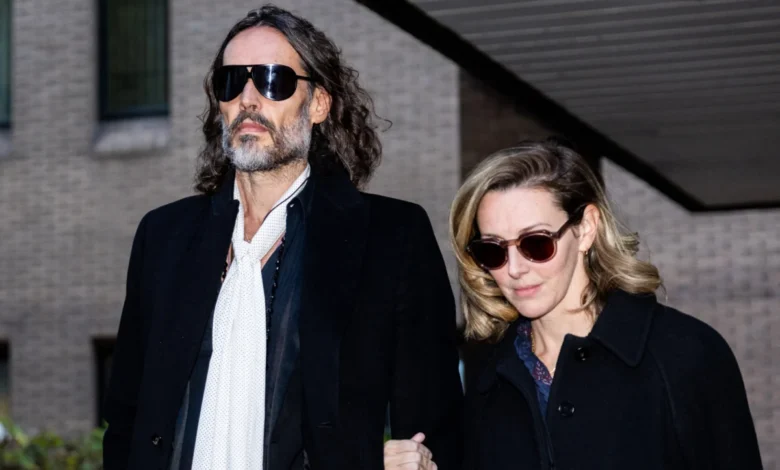
In the wake of a landmark legal conclusion in London, Laura Gallacher, wife of actor and media personality Russell Brand, has publicly addressed the sentencing of her husband to ten years and six months in prison. The sentence follows a high-profile criminal trial that resulted in a guilty verdict for rape and sexual assault, marking a definitive end to a judicial process that has captivated international media and sparked intense debate regarding accountability, celebrity, and the judicial system.
The remarks were shared via a YouTube video posted this past Sunday, which served as a platform for both Gallacher and Brand to address their followers. The broadcast included a pre-recorded segment featuring Brand, filmed during the active phases of the trial, juxtaposed with contemporary commentary from Gallacher. The couple, who have been married since 2017 and share three children, have maintained a consistent defense of Brand’s character throughout the legal proceedings, despite the severity of the charges and the eventual conviction.
A Chronology of the Legal Proceedings
The conviction concludes a lengthy investigative and legal timeline that began following public allegations against the former comedian. The case, which centered on incidents involving accusations of non-consensual sexual activity, moved through the British judicial system with significant public scrutiny.
The trial itself was characterized by rigorous testimony from both the prosecution and the defense. During the proceedings, Gallacher took the witness stand to provide character testimony, portraying her husband as a “caring and kind” individual. She emphasized the nature of their marriage, describing it as built on radical honesty and mutual support. "I feel very seen by him," Gallacher stated during her testimony. "We have a very honest, frank and clear relationship and marriage."
Following the conclusion of the trial earlier this month, the court delivered a guilty verdict, leading to the imposition of the ten-year and six-month sentence. This outcome represents a significant shift in Brand’s professional and personal trajectory, moving from a prominent media figure and social commentator to an incarcerated individual.
The Stance of the Defense and Public Commentary
In the video released on Sunday, Gallacher addressed the emotional weight of the sentencing. "We trust God, and we trust His plan, and we trust everything He’s doing right now," she remarked. Acknowledging the difficulty of the transition, she noted, "Even though it’s painful, and obviously, will take some getting used to for me to even sit here and not have my companion and my person with me. I’m speaking to Russell. He’s okay, and he’s praying, unsurprisingly."
Brand’s own contributions to the video, recorded while the trial was ongoing, reflected a deep cynicism regarding the media’s handling of the case. He likened the journalistic coverage to a "football match," suggesting that the mainstream media was more concerned with the spectacle of his downfall than with the legal realities of the case.
"We don’t really look at coverage," Brand said during the recording. "But someone showed me some of the coverage the other day from people that were actually broadly supportive. But I know that’s not generally how it’s being covered in the mainstream media, and you can draw your own conclusions from that. Although what we’ll say is, it’s amazing to watch other people’s coverage of it because they just talk about it like it’s a football match."
Broader Context and Societal Implications
The conviction of a figure as prominent as Russell Brand carries significant implications for the entertainment industry and the broader #MeToo-era landscape in the United Kingdom. Brand, who rose to fame as a stand-up comedian and MTV presenter before pivoting toward YouTube-based political and spiritual commentary, commanded a massive digital audience. His transition from mainstream television to a specialized, often anti-establishment online platform provided him with a direct line to millions of followers, many of whom have expressed unwavering support throughout the trial.
From a legal standpoint, the case serves as a benchmark for how courts manage allegations involving high-profile defendants in the digital age. The intensity of the public interest necessitated strict judicial management to ensure a fair trial, a challenge compounded by the proliferation of social media commentary that often operates outside the traditional rules of evidence and reporting.
Analysis of the Verdict
The sentence of ten years and six months is reflective of the gravity with which the court viewed the charges of rape and sexual assault. Under current sentencing guidelines in England and Wales, such a sentence suggests that the court found multiple aggravating factors or that the totality of the offending warranted a significant custodial term to satisfy the requirements of public protection and retribution.
The divide between Brand’s supporters and the mainstream legal and media establishment has become increasingly polarized. Supporters often frame the conviction as a targeted effort to silence a prominent critic of institutional power, while critics of the defense argue that the evidence presented in court was sufficient to overcome any narrative of bias. The insistence by Gallacher and others in the "Sunday Service" community that Brand is a victim of a larger, potentially spiritual or institutional, injustice underscores a persistent disconnect between the court’s findings and the perceptions held by his dedicated online base.
The Role of Character Testimony in High-Profile Cases
Gallacher’s testimony, which sought to humanize the defendant, highlights a common strategy in criminal defense: providing the jury with a lens through which to view the defendant as an individual beyond the charges. However, the legal system ultimately prioritizes the specific evidence of the alleged offenses over the general character of the accused. The jury’s decision to convict indicates that the prosecution successfully met the burden of proof, regardless of the domestic stability portrayed by the defense.
As Brand begins his sentence, the question remains how his legacy will be interpreted in the long term. For many, this conviction represents the final word in a career defined by volatility and controversy. For his inner circle and his remaining followers, the focus remains on the spiritual and personal survival of the man they continue to defend.
Moving Forward
The aftermath of the trial will likely involve appeals, a standard procedural step in cases of this magnitude. However, the immediate reality is that Brand remains in the custody of the British prison system. For Gallacher and their three children, the challenge of navigating life in the public eye while dealing with the long-term absence of a spouse and father will undoubtedly remain a significant focus of their personal lives.
The case also serves as a reminder of the volatility of celebrity. The rapid shift from public acclaim to legal condemnation is a phenomenon that has affected numerous figures in recent years, but the specific dynamics of Brand’s case—his unique platform, his controversial commentary, and his dedicated, insulated digital community—make it a singular study in the intersection of law, media, and public belief.
The judicial system has issued its verdict, and the legislative process has mandated a significant period of incarceration. As the news cycle eventually turns, the case of Russell Brand will likely be cited as a seminal moment in the contemporary cultural landscape, reflecting both the power of the courts to hold individuals accountable and the enduring power of digital narratives to shape public perception in the face of legal finality.
The impact of this conviction will ripple through the platforms where Brand once broadcasted, as they grapple with the content he created and the community he fostered. Whether this marks the end of the "Brand phenomenon" or the beginning of a different, more isolated phase of his influence remains to be seen. For now, the legal proceedings have concluded, leaving a family, a media landscape, and a public to process the consequences of a decade-long sentence for one of Britain’s most recognized faces.
Related posts: