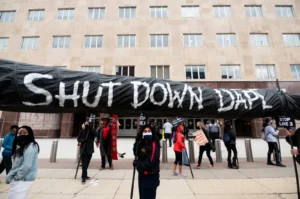
The Corporate Capture of American Higher Education and the Erosion of Institutional Autonomy

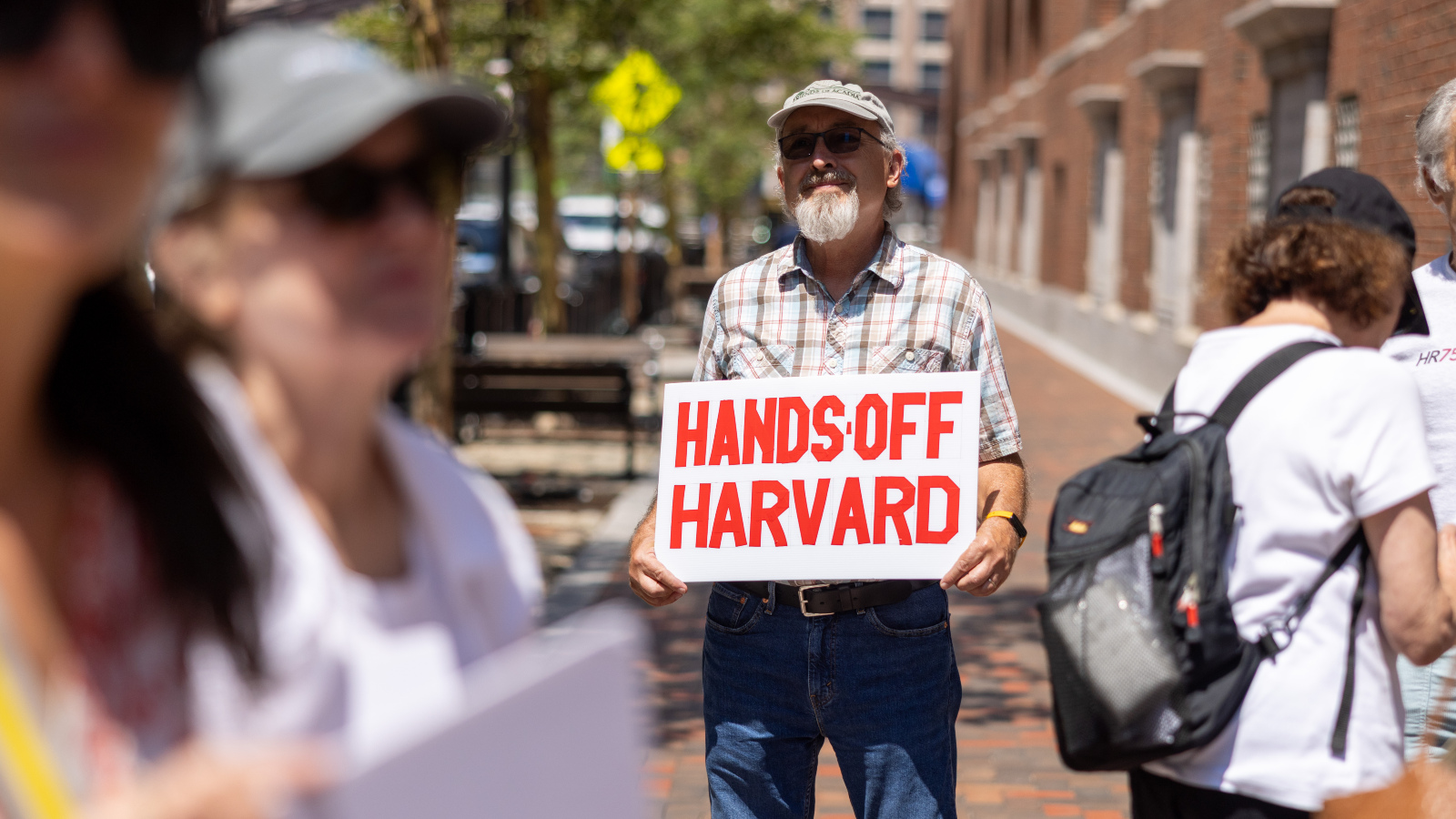
The landscape of American higher education is undergoing a seismic shift as federal financial pressure, combined with decades of deep-rooted private influence, converges to reshape the nation’s research and academic priorities. Since returning to the White House in January, the Trump administration has aggressively utilized the power of the purse to mandate ideological alignment at elite universities. By freezing or withdrawing billions in federal grants and initiating sweeping investigations into institutional policies, the administration has successfully exerted leverage over admissions, hiring practices, and diversity, equity, and inclusion (DEI) mandates. This interventionist approach has led to a precipitous decline in institutional autonomy, with the United States now trailing nations like Hungary and Turkey in global indices measuring academic freedom.
However, a landmark study recently published in the journal Energy Research & Social Science suggests that this current administrative pressure is not a novel development but rather the culmination of a fifty-year strategy of corporate encroachment. Researchers argue that American universities have long been susceptible to this form of "corporate capture," where private donors—particularly those from the fossil fuel sector—have systematically shaped research agendas, curricula, and faculty appointments to align with their commercial interests. This long-term erosion of academic independence has, according to the study’s authors, left institutions structurally vulnerable to the current political climate.
A Historical Trajectory of Influence
The roots of this phenomenon can be traced back to the early 1970s, specifically to the 1971 memorandum written by Lewis F. Powell Jr., shortly before his appointment to the U.S. Supreme Court. In his advisory to the U.S. Chamber of Commerce, Powell articulated a blueprint for the business community to reclaim intellectual influence from what he perceived as a dangerously liberal academic establishment. He advocated for a sustained, well-funded effort to place sympathetic scholars in key departments, evaluate and reform textbooks, and lobby university boards of trustees to correct what he termed an "ideological imbalance."
This strategy was subsequently operationalized by a network of powerful conservative foundations, including the Olin, Scaife, Koch, and Bradley foundations. Over the past four decades, these organizations have funneled hundreds of millions of dollars into academia and policy think tanks, most notably The Heritage Foundation. The alignment between these historical efforts and the modern-day "Project 2025"—a comprehensive policy roadmap for the Trump administration—is stark. Observers like Robert Brulle, an environmental sociologist at Brown University, argue that the current executive agenda is essentially the execution of the long-term vision outlined in the Powell memo.
The Financial Mechanics of Corporate Capture
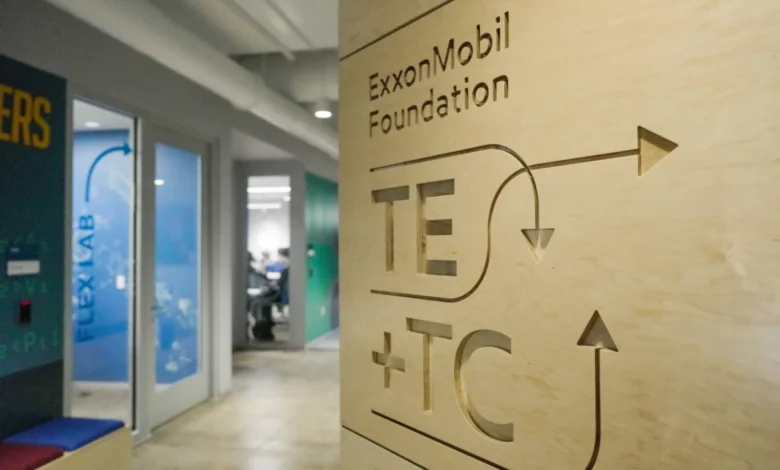
The financial dependence of universities on private industry has become a significant focal point for investigators. Data analysis reveals that between 2010 and 2020, major fossil fuel entities—including ExxonMobil, BP, Chevron, Shell, and Koch Industries—contributed at least $700 million to 27 prominent U.S. universities. These donations, while often framed as philanthropic support for research, have frequently come with expectations that align with the donors’ strategic objectives.
The case of Princeton University’s Carbon Mitigation Initiative provides a salient example of this dynamic. For 25 years, BP funded this initiative, a partnership that ended in 2025 following public and congressional scrutiny. Internal documents uncovered during a recent congressional investigation revealed a level of coordination that concerned ethics watchdogs. In 2020, a BP executive described the relationship with the university as "increasingly synergistic," noting that the alignment of interests had been a deliberate, planned outcome.
This synergy has had measurable impacts on global policy. A 2022 study published in Nature examined reports from MIT, Harvard, and Stanford, finding that research produced by these institutions during periods of fossil fuel funding consistently displayed a bias in favor of natural gas. This includes the widespread adoption of the "bridge fuel" narrative, which was solidified by a 2011 MIT report funded by industry interests. Similarly, a 2004 Princeton paper on climate stabilization wedges, which was heavily influenced by BP input, helped center carbon capture and storage technologies in international climate agreements—a policy path that remains technically unproven at scale despite two decades of academic and political promotion.
The Cascade Effect: From Research to K-12
The influence of corporate actors extends far beyond the ivy-covered walls of elite research institutions. K-12 education, particularly in states with high concentrations of energy production, has been a long-term target for industry messaging. In states like Louisiana and Oklahoma, industry-sponsored materials are often integrated into public school curricula. By framing fossil fuels as the "backbone of modern life"—highlighting the petroleum derivatives used in common school supplies like crayons and glue—industry groups have successfully normalized their presence in the classroom, insulating their business models from critical scrutiny by the next generation of voters.
This broader strategy creates a "slow drift" toward market-friendly solutions, according to Noel Healy, lead author of the recent study and a professor at Salem State University. The capture is rarely a case of overt propaganda, but rather a subtle steering of resources away from research topics that might threaten industry profitability and toward those that support status-quo energy models.
Implications of Federal Retrenchment
The current administration’s decision to withhold federal funding has exacerbated the financial desperation of universities, creating a feedback loop of dependence. As state funding for higher education has stagnated or declined over the last decade, universities have increasingly turned to private donors to fill the void. This reliance has made institutional leaders more willing to accept "strings-attached" funding that bypasses traditional academic peer-review processes.
The consequences are already manifesting in the behavior of institutional leadership. Schools such as Columbia, Brown, and Northwestern have faced direct pressure to alter their research trajectories, particularly regarding climate initiatives. The $4 million grant revocation at Princeton, justified by the administration on the grounds that the research contributed to "climate anxiety," serves as a warning to other institutions.
"University leaders need to stop engaging in anticipatory obedience and self-censorship," says Ryan Wishart, a sociology professor at Creighton University and co-author of the study. Wishart argues that by preemptively suppressing research or distancing themselves from controversial topics to avoid losing federal funds, universities are effectively doing the administration’s work for them.
The Path Forward: Transparency and Oversight
As the debate over academic freedom intensifies, calls for reform are growing. Academics and policy experts are advocating for:
- Congressional Oversight: A formal, bipartisan investigation into the extent of corporate influence in university research and administrative governance.
- Financial Transparency: Mandated disclosure of all private donor contracts, particularly those involving energy, pharmaceutical, and agricultural corporations, to ensure public accountability.
- Institutional Independence: A renewed commitment by boards of trustees to protect faculty from political interference and the influence of private donors, even under the threat of funding cuts.
However, the path to reform is fraught with difficulty. As Robert Brulle notes, the structure of many public universities—where boards of trustees are often politically appointed—renders them susceptible to the agendas of state legislatures with deep ties to the industries they are supposed to be regulating.
The decline in American academic freedom is not merely a political dispute over curricula; it is a structural crisis. As universities are forced to choose between financial survival and the integrity of their research, the very nature of the American intellectual tradition is at stake. Whether these institutions can reclaim their role as independent arbiters of truth or will continue to function as extensions of corporate and political power remains the defining question of this academic era. The "synergy" between donors and universities, once heralded as a model of public-private cooperation, is now increasingly viewed as the primary mechanism through which the independence of the American academy has been effectively compromised.