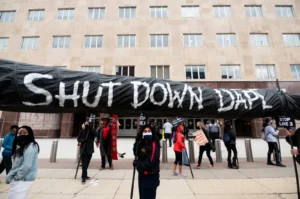
A Rare Moment of Multilateral Consensus: UN Nations Secure Landmark Declaration on Statehood Amid Rising Sea Levels

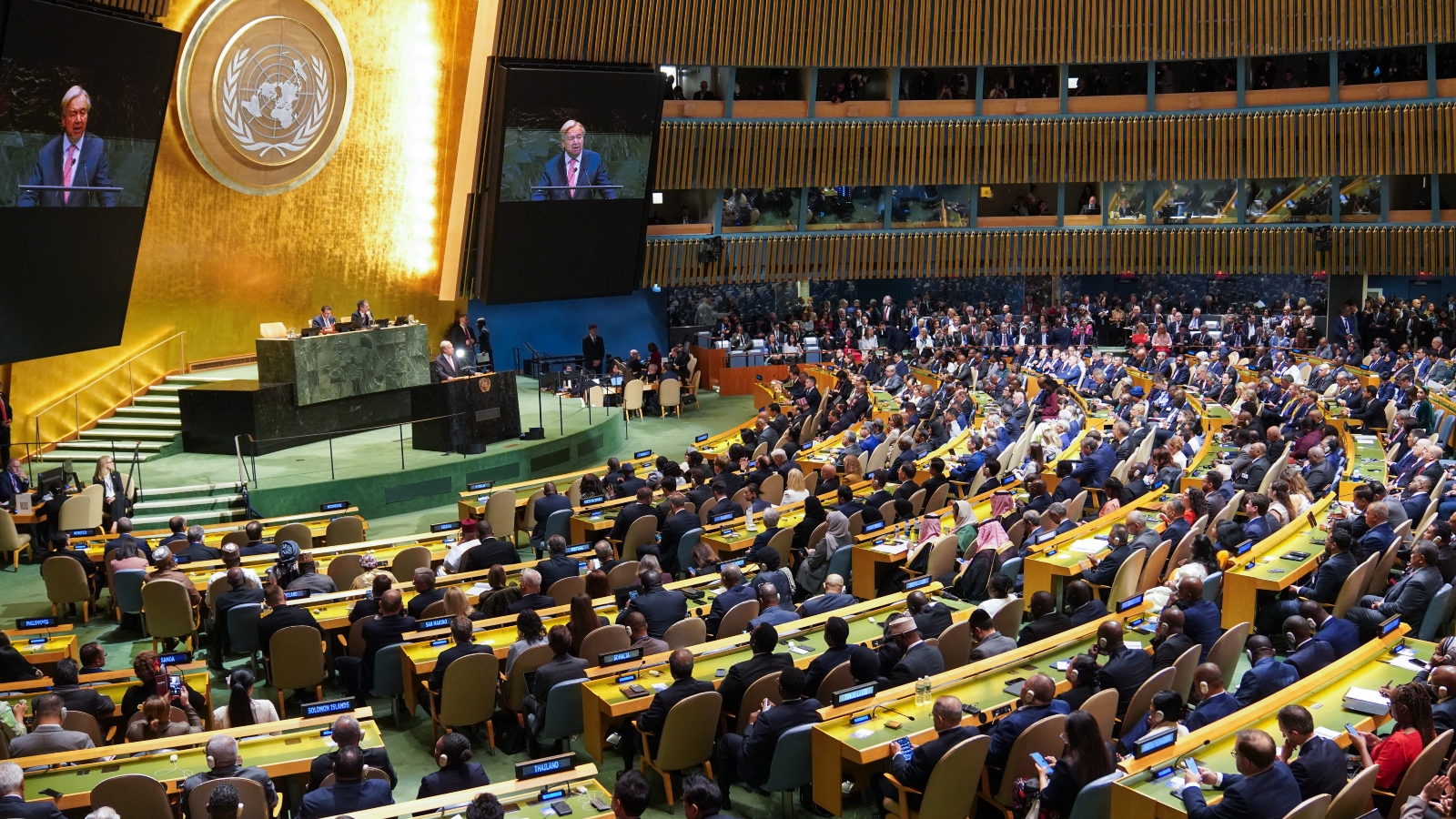
The United Nations General Assembly reached a rare and historic consensus this week, adopting a unanimous resolution that addresses the existential threat of sea-level rise while providing a legal lifeline to the world’s most vulnerable island nations. In a climate of intensifying geopolitical friction and a general retreat from international environmental commitments, the declaration serves as a significant, albeit narrow, victory for global cooperation. Remarkably, the United States—under an administration that has recently withdrawn from the Paris Agreement and actively campaigned against international climate-related financial obligations—opted not to obstruct the resolution.
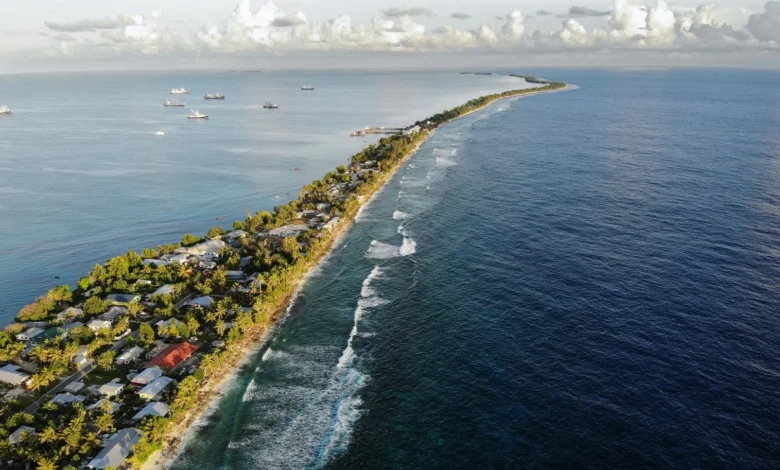
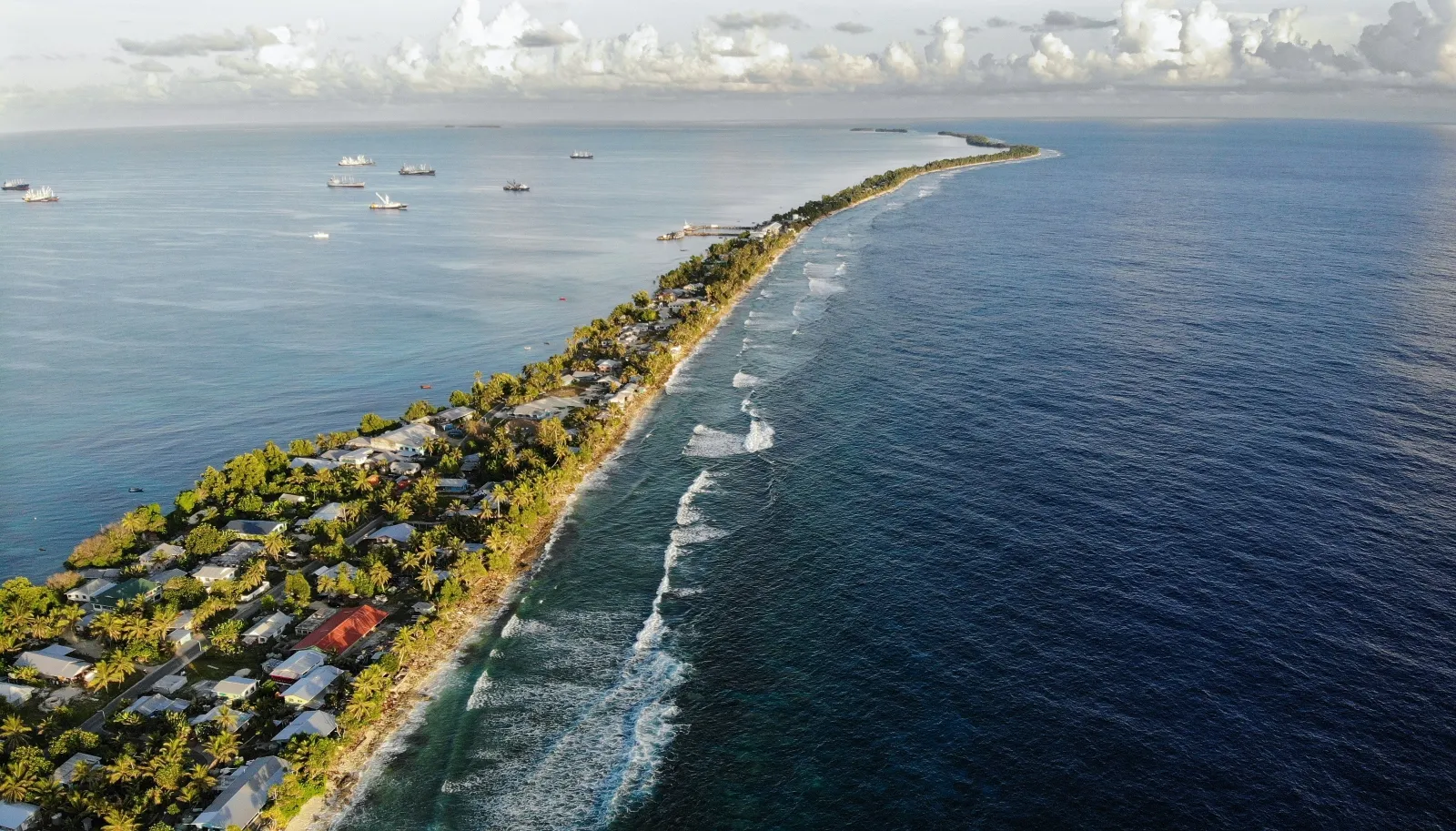
For nations such as Tuvalu, the Marshall Islands, and the Bahamas, the declaration is more than a diplomatic gesture; it is a foundational legal shield. By affirming that sovereign states will retain their legal standing and maritime boundaries even if their physical landmass is entirely submerged by rising oceans, the resolution addresses a terrifying ambiguity in international law. For decades, legal scholars have debated whether a country without territory can continue to exist as a sovereign entity. This week’s declaration effectively settles that question in favor of the island states, ensuring that their exclusive economic zones—vital for fishing, energy development, and security—remain under their control in perpetuity.
A Chronology of Climate Diplomacy and Friction
The path to this week’s resolution was neither straightforward nor inevitable. The past two years have seen a marked decline in climate-focused multilateralism, particularly as the second term of the Trump administration prioritized "America First" policies that often clashed with the global climate agenda.
In early 2025, the U.S. administration signaled its intent to aggressively pivot away from international climate frameworks. This was followed by a series of high-profile departures and challenges:
- January 2025: The United States formally withdraws from the Paris Agreement, citing concerns over economic sovereignty and the burden of international emissions targets.
- April 2025: The U.S. government launches a public campaign against proposed carbon taxation frameworks for international shipping, arguing that such levies would disproportionately impact American supply chains.
- August 2025: Following reports of the U.S. threatening trade tariffs against nations that prioritize climate-centric rhetoric in trade discussions, global diplomatic relations reached a cooling point.
- September 2025: Prime Minister Philip Davis of the Bahamas addresses the UN General Assembly, emphasizing that his nation’s struggle against rising tides is not merely an environmental issue but a battle for the fundamental survival of his people.
- September 2026: The UN General Assembly achieves the unanimous adoption of the declaration on sea-level rise, marking the first major climate-related consensus involving the U.S. in nearly two years.
The Legal Framework of Survival
The core of the declaration rests on the principle of "presumption in favor of continued statehood." This language directly mirrors findings from the International Court of Justice (ICJ), which ruled last year that the disappearance of a state’s physical territory does not automatically negate its existence as a legal person under international law.
This legal clarification is critical for the Alliance of Small Island States (AOSIS), a coalition of 39 low-lying coastal and island nations. Without this affirmation, these nations feared that as their land became uninhabitable, their sovereign rights to the surrounding waters—which hold immense economic value—would be open to exploitation by larger powers. As the world turns its attention toward deep-sea mining and offshore energy, the preservation of these maritime zones acts as a buffer against what Prime Minister Davis describes as a potential "free-for-all" for natural resources.
Kamal Amakrane, the managing director of the Global Center for Climate Mobility and climate envoy for Trinidad and Tobago, characterized the declaration as a shift from legal presumption to international affirmation. "The world has agreed to preserve the integrity of these nations by consensus," Amakrane noted, "which is particularly meaningful in a year when such consensus has been so elusive."
Economic Realities and the Funding Gap
While the declaration provides a critical legal framework, it does not solve the immediate financial crisis facing developing nations. Current climate finance flows, which rely heavily on grants and low-interest loans from wealthy nations, remain drastically insufficient.
According to recent data from the OECD, developed nations provided approximately $130 billion in climate finance in 2024. While this figure is significant, it falls far short of the trillions required for comprehensive adaptation projects, such as the construction of seawalls, the restoration of mangrove ecosystems, and the relocation of entire populations.
The 2024 climate summit in Baku established a goal of $300 billion annually by 2035, yet the mechanisms for achieving this remain ill-defined. Furthermore, the reliance on loans rather than grants has exacerbated the debt crises in nations already struggling to recover from catastrophic weather events. For instance, the Bahamas continues to service substantial debt incurred during the reconstruction efforts following Hurricane Dorian in 2019, highlighting the disparity between the cost of climate adaptation and the availability of non-extractive capital.
Why the U.S. Stayed its Hand
The absence of U.S. opposition to this resolution has prompted significant analysis among international relations experts. While the current administration has been hostile toward climate aid and international treaties, the issue of maritime boundaries presents a unique intersection of national interest and survival.
Bryce Rudyk, a legal advisor to AOSIS and a professor at New York University, suggests that the U.S. and other wealthy, industrialized nations recognize that the legal uncertainty of sea-level rise is a double-edged sword. "Everyone will lose land to some degree, and no one wants to lose their ocean territory," Rudyk explains. "It is in every country’s interest to ensure that maritime borders are protected by international law, even if those nations are not currently facing the same immediate existential threats as island states."
By supporting the declaration, the U.S. avoids a scenario where the collapse of small island nations sets a destabilizing precedent for international law. If the world were to adopt a standard where lost land equals lost sovereignty, it could eventually undermine the claims of any nation with a coastline, including the United States itself.
Broader Implications for Global Stability
The passage of this declaration suggests that even in a highly polarized geopolitical landscape, there remains a baseline of "enlightened self-interest" that can drive global policy. The document serves as a template for future negotiations, proving that consensus is possible when the underlying issue is framed as a matter of universal legal and territorial security.
However, the effectiveness of the resolution will ultimately be tested by the willingness of wealthier nations to back the declaration with tangible financial support. While the resolution includes strong language regarding the "urgent obligation" of historical emitters to provide adaptation funding, such rhetoric is non-binding.
For the people of the Marshall Islands, Tuvalu, and other sinking nations, the resolution provides a vital layer of dignity and legal protection. It ensures that even if their physical borders are redrawn by the rising Pacific, their political identity remains fixed in the international order. As the international community moves forward, the success of this declaration will likely depend on whether the global powers view it as a final compromise or a starting point for more substantive climate action.
The coming years will be decisive. With sea levels projected to continue rising throughout the century, the international legal system will be under constant pressure to interpret and apply these new standards. For now, the United Nations has managed to prevent a legal vacuum, providing a small but necessary victory for the rule of law in an age of climate uncertainty. The challenge remains: to ensure that while the physical maps of the world may change, the protections afforded to those on the front lines of climate change do not erode alongside their coastlines.