Super Typhoon Sinlaku Leaves a Trail of Devastation Across Micronesia as Climate Crisis Intensifies Pacific Storms

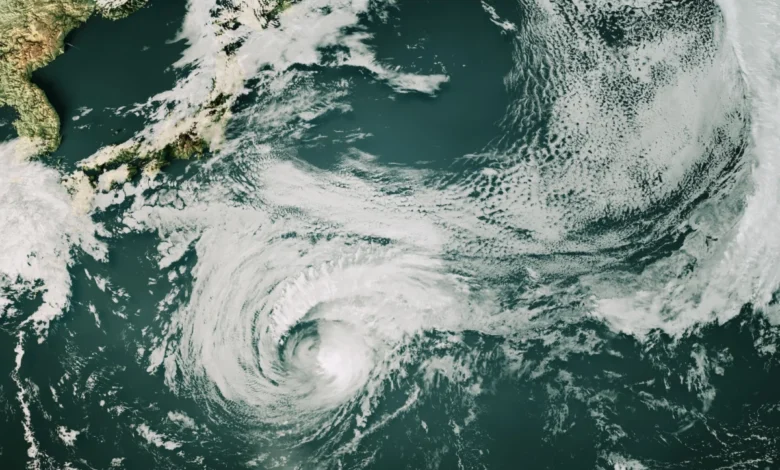
The Western Pacific is currently grappling with the catastrophic aftermath of Super Typhoon Sinlaku, a storm that has redefined the parameters of seasonal volatility in the Micronesian region. For lifelong residents of Saipan, such as Katelynn Delos Reyes, the arrival of a typhoon is a familiar, if dreaded, rite of passage. Having survived the 170-mph onslaught of Supertyphoon Yutu in 2018—the second-strongest storm in United States history—and Typhoon Soudelor in 2015, Delos Reyes believed her family was prepared for the April 14 landfall. However, Sinlaku proved to be an anomaly, both in its behavior and its sheer destructive power, signaling a new era of "rapid intensification" events that are increasingly linked to rising global temperatures.
The Anatomy of an Unprecedented Storm
What began as a manageable weather system quickly transformed into a record-breaking disaster. Just days before striking the Commonwealth of the Northern Mariana Islands (CNMI), Sinlaku was classified as a "banana typhoon"—a colloquial term used by residents of the Mariana Islands to describe storms with tropical-storm-force winds strong enough to level banana trees but weak enough to leave sturdier vegetation and infrastructure intact. This perception of manageable risk shifted abruptly over the weekend of April 12.
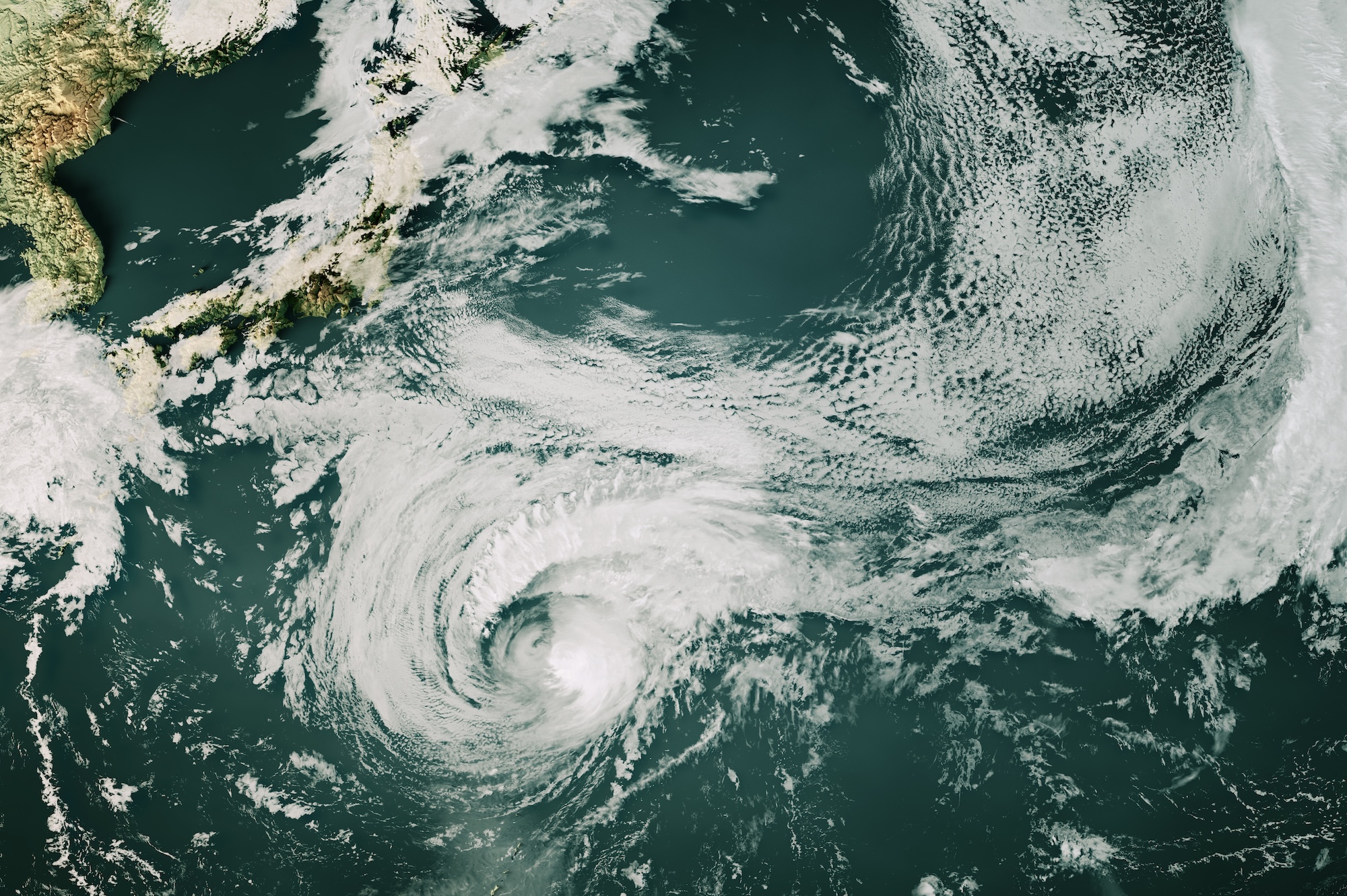
In a span of just 24 hours, Sinlaku underwent a process of rapid intensification, its sustained winds jumping by 75 mph. By the time it reached peak intensity, it had become a 185-mph monstrosity, earning the title of the strongest storm recorded on Earth so far this year. Although winds had technically "weakened" to 150 mph by the time the eye wall reached inhabited areas of Saipan, the storm’s slow forward motion meant that communities were subjected to punishing conditions for an extended duration.
Meteorologists noted that Sinlaku’s behavior was facilitated by exceptionally warm ocean temperatures. Shel Winkley, a meteorologist with Climate Central, pointed out that the storm tracked over waters that were 0.6 degrees Celsius warmer than the historical average. According to climate modeling, such elevated temperatures are 70 to 100 times more likely in the current era of fossil-fuel-driven climate change. These warmer waters act as high-octane fuel for tropical cyclones, allowing them to gain strength at rates that often outpace emergency warning systems.
A Chronology of Destruction Across the Pacific
The timeline of Sinlaku’s passage through the Micronesian region reveals a path of destruction that spanned thousands of miles of open ocean and dozens of island communities.
April 10–12: The Warning Phase
Initial reports from the National Weather Service in Guam indicated a developing tropical depression. Residents in the Federated States of Micronesia (FSM) and the CNMI began standard preparations, including boarding windows and stockpiling water.
April 13: Rapid Intensification
The storm defied early forecasts, exploding from a Category 1-equivalent storm to a Category 5 Super Typhoon. This sudden escalation left many residents with little time to seek sturdier shelter if their primary residences were not concrete-reinforced.
April 14–15: Landfall and Stagnation
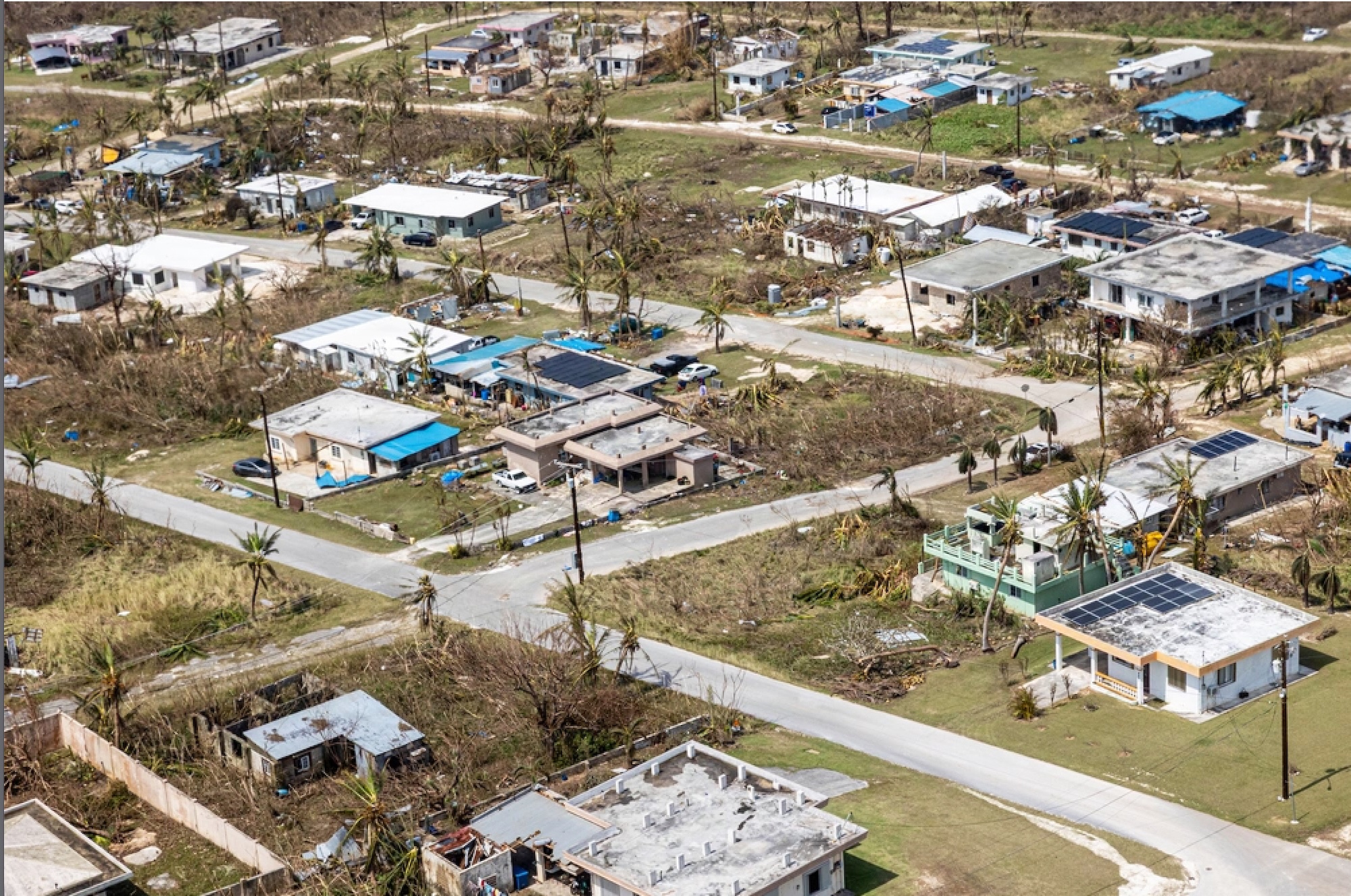
Sinlaku tore through the CNMI and Guam. Unlike previous storms that moved quickly across the islands, Sinlaku slowed to a crawl. In Saipan, residents reported the storm "sitting" on top of them for more than 24 hours. The prolonged exposure to 150-mph winds and torrential rain caused structural fatigue in buildings that had survived previous disasters.
Late April – May: The Recovery Crisis
More than a month after the initial impact, the region remains in a state of emergency. While the winds have long since dissipated, the humanitarian crisis has only deepened as supply chains struggle to reach isolated outer islands and power grids remain offline.
The Human Toll and Regional Fatality Reports
The death toll associated with Sinlaku has risen to 17 across the region, making it the deadliest weather event in Micronesia since 2002. The fatalities highlight the diverse ways in which typhoons claim lives beyond the immediate physical impact of wind and rain.
In Guam, a couple died from carbon monoxide poisoning, a tragic consequence of running a portable generator in an enclosed space during the prolonged power outage following the storm. At sea, the cargo ship Mariana suffered an engine failure at the height of the storm; six crew members are confirmed dead after the vessel was overwhelmed by massive swells.
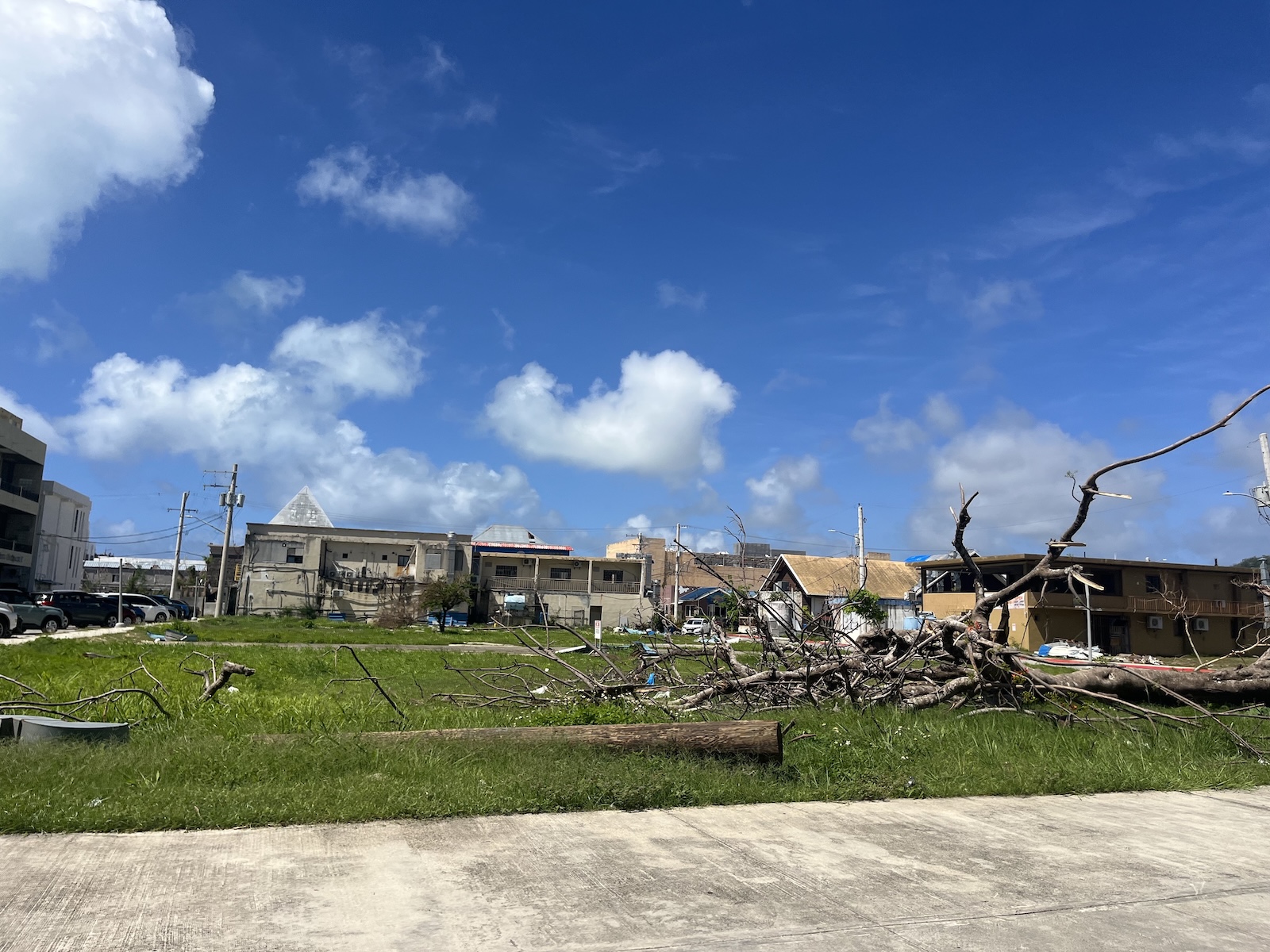
The Federated States of Micronesia, specifically Chuuk State, bore the brunt of the human loss. Nine deaths were reported there, including a newborn baby. In a heartbreaking account, officials noted that the infant’s pregnant mother was unable to reach a medical facility because fallen trees and debris had completely blocked the only access roads. Other deaths in Chuuk were attributed to capsized small boats and falling timber.
Infrastructure Collapse and the Long Road to Recovery
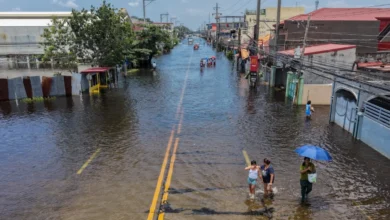
The scale of property damage is staggering. In Chuuk and Yap states alone, emergency officials estimate that more than 7,000 homes were either destroyed or severely damaged, resulting in the displacement of over 13,000 people. A situation report from the Chuuk Disaster Emergency Operations Center warned that access to potable water is "critically compromised" and food reserves are "depleting rapidly."
In the CNMI, the recovery is equally fraught. While Saipan’s tourism district of Garapan remains littered with debris, the island of Tinian has faced an even harsher reality, remaining entirely without electricity for over a month. Indigenous fishermen have turned to traditional methods, catching ti’ao (goatfish) to provide fresh protein for their families in the absence of working refrigeration.
The educational impact is also profound. Dozens of schoolhouses were leveled or sustained roof failures, leaving thousands of children without a place to learn. Officials in both the CNMI and Chuuk suggest that many students may not return to a traditional classroom for several months, further disrupting a region still recovering from the educational setbacks of the COVID-19 pandemic.
The Political Dimension: Climate Reparations and Global Responsibility
Super Typhoon Sinlaku has reignited a fierce international debate regarding "loss and damage"—the concept that wealthy, high-emitting nations should compensate smaller, developing nations for the climate-driven disasters they endure.
The Federated States of Micronesia was among 140 nations that recently voted in favor of a landmark United Nations resolution. This resolution affirms that state governments have a legal obligation to protect the environment from greenhouse gas emissions and suggests that nations failing to do so should be held liable for climate reparations.
The United States, which maintains sovereignty over Guam and the CNMI and holds a Compact of Free Association with the FSM, was one of only eight nations to vote against the resolution. This creates a complex geopolitical tension: while the U.S. provides millions in aid through FEMA and USAID, it simultaneously resists legal frameworks that would mandate long-term financial accountability for the carbon emissions that scientists say are making these storms more lethal.
Humanitarian Efforts and Diaspora Mobilization
In the absence of a comprehensive global climate fund, the burden of recovery has fallen on a mix of federal aid, international NGOs, and the Micronesian diaspora. The International Organization for Migration (IOM) and UN agencies have begun staging relief supplies, while the U.S. and China have both pledged emergency disaster assistance to Chuuk.
In the United States, the Micronesian diaspora has mobilized with remarkable speed. Organizations like the Honolulu-based "We Are Oceania" have been fundraising to send essential tools—such as chainsaws for clearing debris and solar-powered lanterns—to affected villages. In Guam, the demand for battery-powered fans and portable power stations became so high that major retailers like Home Depot reported total stock depletion as residents bought supplies to ship to family members in the harder-hit northern islands.
Analysis of Implications for the Pacific
The saga of Sinlaku serves as a grim case study for the future of Pacific island habitability. As storms become more intense and "banana typhoons" become a thing of the past, the cost of living on these islands is rising exponentially. The need for concrete-reinforced housing, underground power lines, and resilient water systems is no longer a luxury but a requirement for survival.
For residents like Katelynn Delos Reyes, the trauma of the storm is balanced by a deep-seated cultural tie to the land. Despite the missing roof on her home and the struggle of caring for her 94-year-old bedridden mother in a humid, post-storm environment, she remains resolute. The story of Sinlaku is not just one of meteorological data and political resolutions; it is a story of Indigenous resilience in the face of a changing planet. As the June 22 deadline for FEMA assistance approaches, thousands of families in the Western Pacific are left to wonder not if the next super typhoon will come, but whether they will have finished rebuilding from Sinlaku before it arrives.