The Evolution of the Electric Grid How Massachusetts Is Turning Electric Vehicles into Mobile Power Plants through Bidirectional Charging

The traditional relationship between a utility provider and its customers has long been a one-way street: the utility generates power, and the consumer pays to use it. However, a groundbreaking initiative in Massachusetts is poised to flip this script. A high-profile coalition of energy and technology companies, including Eversource, National Grid, EnergyHub, Sunrun, and The Mobility House, has officially launched a pilot program to test vehicle-to-grid (V2G) technology. This initiative seeks to transform electric vehicles (EVs) from simple transportation assets into sophisticated components of the state’s power infrastructure, allowing them to discharge energy back into the grid during times of peak demand.
As the United States grapples with an aging electrical infrastructure and the dual pressures of decarbonization and rising energy consumption, V2G technology offers a promising solution. By utilizing the massive, collective storage capacity of EV batteries, utilities can stabilize the grid, reduce the need for expensive new power plants, and provide a new revenue stream for vehicle owners.
The Mechanics of Vehicle-to-Grid Technology
To the casual observer, an electric vehicle is simply a car that replaces a gasoline tank with a battery. However, in the eyes of a grid operator, an EV is a high-capacity mobile energy storage unit. Most modern EVs carry batteries with capacities ranging from 60 to 100 kilowatt-hours (kWh). To put this in perspective, a typical residential backup battery, such as a Tesla Powerwall, holds approximately 13.5 kWh. A single EV, therefore, possesses enough energy to power an average American home for several days.
V2G technology allows for bidirectional energy flow. While standard EV charging is "one-way" (grid to vehicle), V2G requires specialized hardware—a bidirectional charger—and software that allows the utility to communicate with the vehicle. When the grid is under stress, such as during a summer heatwave when air conditioning use spikes, the utility can "call" for energy. The vehicle then discharges a portion of its stored power back into the lines, helping to meet the surge in demand without the utility having to fire up "peaker" plants, which are often the most expensive and polluting sources of electricity.
The Massachusetts Pilot: A Coalition of Industry Leaders
The new program in Massachusetts integrates V2G capabilities into the existing ConnectedSolutions framework. ConnectedSolutions is an established demand-response program used by National Grid and Eversource that incentivizes customers to reduce their electricity use or discharge energy from home batteries during peak periods. By adding EVs to this ecosystem, the program significantly expands the available "virtual power plant" (VPP) resource.
The partnership involves several key players, each bringing a specific expertise to the table:
- National Grid and Eversource: The primary utilities providing the infrastructure and the customer base.
- Sunrun: A leader in residential solar and battery storage, Sunrun provides the consumer-facing integration and hardware expertise.
- EnergyHub: This company provides the distributed energy resource management system (DERMS), the software "brain" that coordinates thousands of different devices to act as a single power plant.
- The Mobility House: An international provider of charging and energy management solutions, focusing on the technical requirements of vehicle-to-grid integration.
According to Chip Silverman, director of grid services at Sunrun, the lessons learned from this pilot will be instrumental in scaling the technology nationwide. "It’s great to have Massachusetts stepping into the lead here," Silverman noted, emphasizing that these early tests are essential for understanding how to manage the "magic" of aggregated resources.
Economic Incentives for EV Owners
One of the primary drivers for consumer adoption of V2G is the potential for financial compensation. Participants in the Massachusetts program are paid for the energy they provide to the grid. This creates a "revenue stream" for drivers, effectively lowering the total cost of EV ownership.
Russell Vare, vice president of vehicle-grid integration at The Mobility House North America, clarified that the grid does not require a daily discharge from every car. Instead, the utility calls for energy during a limited number of hours per year—typically during the hottest afternoons or coldest mornings. Because the frequency of these "events" is low, the impact on the long-term health and degradation of the EV battery is minimal, while the financial reward for the owner remains significant.
For the utility, the economic case is even stronger. Building a new natural gas peaker plant or installing massive stationary battery arrays costs billions of dollars. By "renting" the capacity of batteries that consumers have already purchased for transportation, utilities can avoid massive capital expenditures. These savings can, in theory, be passed on to all ratepayers, even those who do not own an electric vehicle.
Addressing the Growing Strains on the US Power Grid
The launch of this pilot comes at a critical juncture for the American energy landscape. The U.S. grid is currently facing a "perfect storm" of challenges:
- Electrification of Everything: As consumers switch from gas furnaces to electric heat pumps and from internal combustion engines to EVs, the total demand for electricity is projected to skyrocket.
- The Data Center Boom: The rapid expansion of artificial intelligence and cloud computing has led to the construction of massive data centers that require enormous, constant amounts of power.
- Renewable Intermittency: As states move away from coal and gas toward wind and solar, the grid must manage the "intermittency" problem—the sun doesn’t always shine, and the wind doesn’t always blow. V2G provides the flexible storage needed to "bank" renewable energy when it is abundant and release it when it is not.
- Climate Change: Rising global temperatures are increasing the frequency and intensity of heatwaves, which in turn drives up the demand for air conditioning, creating dangerous peaks that can lead to blackouts.
By turning millions of EVs into a distributed storage network, V2G acts as a buffer against these pressures. It allows the grid to become more "elastic," absorbing excess energy and releasing it exactly when and where it is needed most.
Technical Barriers and the Path to Mainstream Adoption
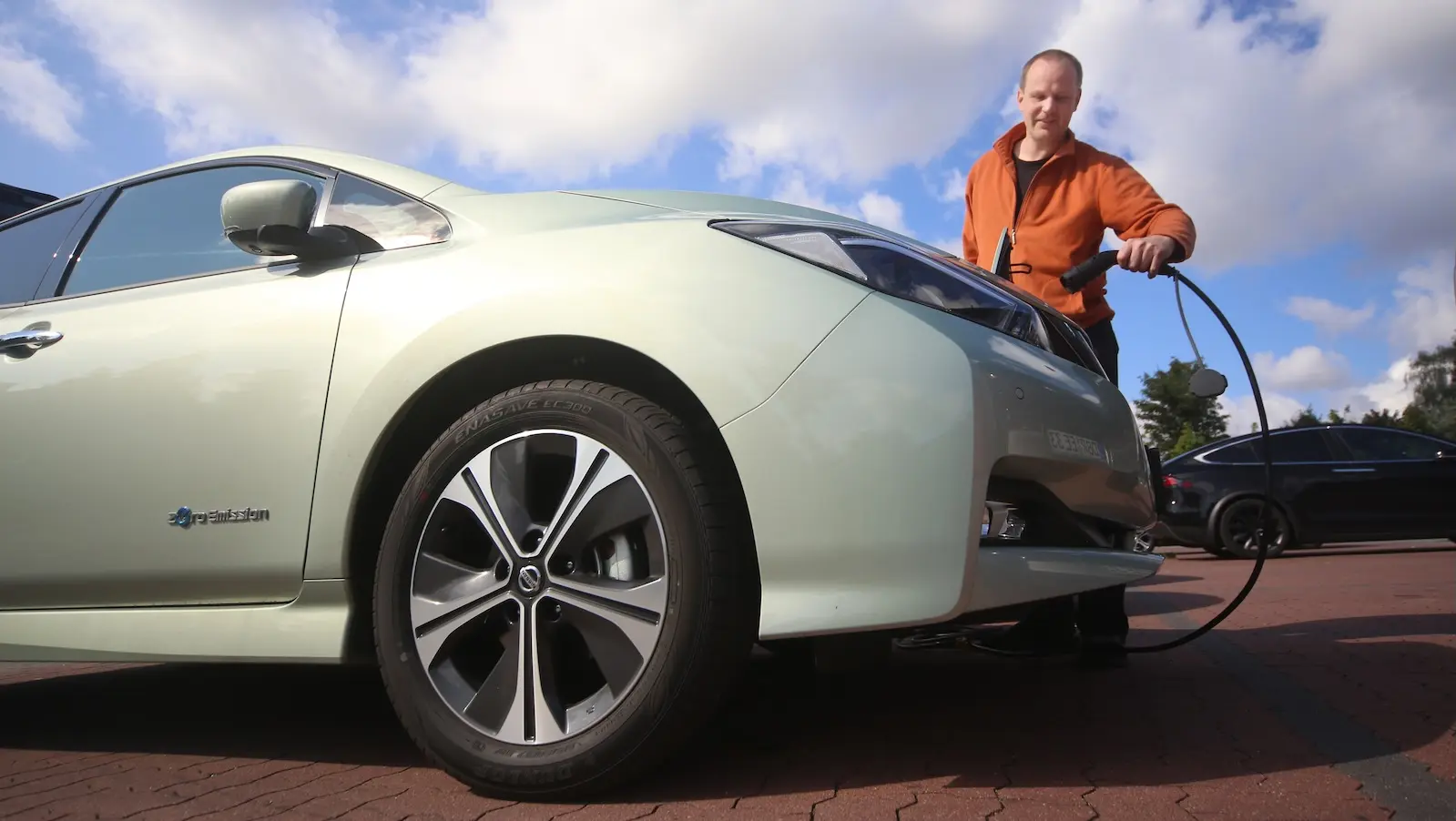
Despite the promise of V2G, several hurdles remain before the technology becomes a standard feature of American life. The most significant is the requirement for bidirectional hardware. Currently, most EVs and home chargers are only capable of one-way flow. While models like the Nissan Leaf have supported bidirectional charging for years, other major manufacturers are only now beginning to integrate the necessary hardware into new models.
Furthermore, the cost of bidirectional chargers is currently higher than standard Level 2 chargers. However, industry experts expect these costs to plummet as production scales. Seth Frader-Thompson, president of EnergyHub, stated that as standards continue to mature and installation becomes simpler, V2G will become "dramatically more accessible" over the next several years.
Standardization is another critical factor. The industry is currently moving toward universal protocols, such as ISO 15118-20, which ensure that different vehicle makes can communicate seamlessly with different charging stations and utility software.
The Role of Fleets and School Buses
While individual passenger cars are a vital part of the V2G equation, municipal and commercial fleets offer even greater potential. School buses, in particular, are considered the "low-hanging fruit" for V2G technology. They have enormous batteries, they follow highly predictable schedules, and they are typically idle during the mid-afternoon hours when the grid experiences its highest summer peaks.
A single electric school bus can hold enough energy to power dozens of homes. By coordinating entire fleets of buses or delivery vans, cities can create massive virtual power plants that provide a level of grid stability previously only possible with large-scale industrial infrastructure.
Analysis of Implications: A Paradigm Shift in Energy
The Massachusetts V2G pilot represents more than just a technical trial; it is a preview of a fundamental shift in how society interacts with energy. We are moving toward a "prosumer" model, where individuals are both consumers and producers of electricity.
This decentralization of power has profound implications for grid reliability. In a traditional centralized system, the failure of a single large power plant or a major transmission line can cause a widespread blackout. In a decentralized V2G-enabled system, the "power plant" is distributed across thousands of driveways and parking lots. This makes the grid inherently more resilient to physical attacks, natural disasters, and technical failures.
Moreover, the environmental benefits are substantial. By reducing the reliance on fossil-fuel-powered peaker plants, V2G helps lower the overall carbon footprint of the electrical grid. It also maximizes the utility of renewable energy, ensuring that "green" electrons generated at noon are not wasted but are instead stored in car batteries for use at 7:00 PM.
Conclusion: The Road Ahead
As the Massachusetts pilot project moves forward, the data collected will provide a blueprint for utilities across North America. The success of the program will depend on its ability to balance the needs of the grid with the convenience of the driver. Innovative software solutions, such as apps that allow users to set a "minimum charge" level to ensure they always have enough range for their commute, will be key to gaining public trust.
The ultimate promise of V2G is a more efficient, more affordable, and more reliable energy system. Far from being a burden on the grid, the millions of electric vehicles expected to hit the roads in the coming decade may well be the very thing that saves it. By integrating transportation and energy sectors, Massachusetts is taking a significant step toward a sustainable future where every parked car is a silent contributor to the stability of the modern world.