Kevin Pietersen embraces role as specialist mentor to challenge England white-ball setup under Brendon McCullum

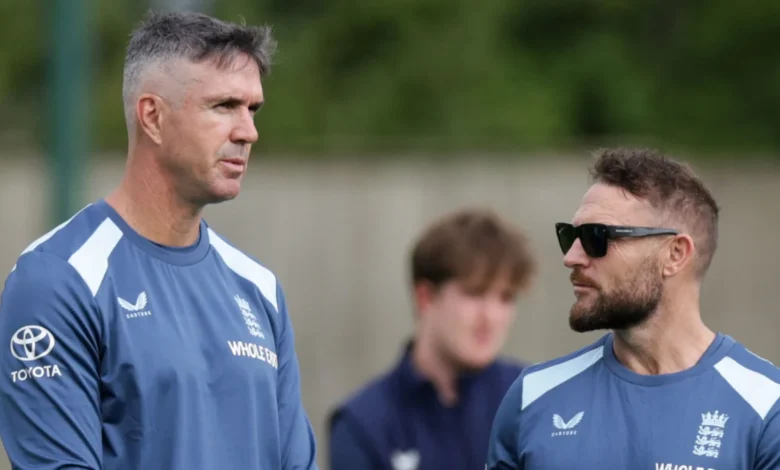
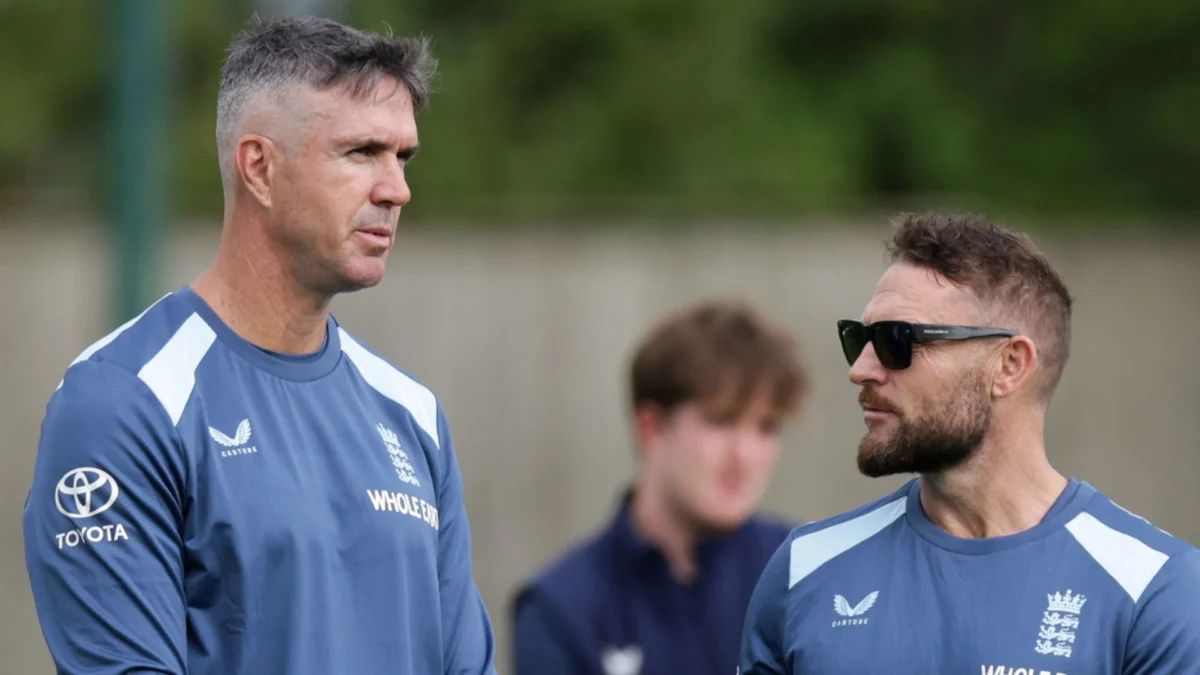
The appointment of Kevin Pietersen as a specialist mentor to the England white-ball cricket team represents a significant shift in the internal dynamics of the national setup. Known throughout his career and subsequent punditry for a combative and uncompromising approach to the game, Pietersen’s integration into the backroom staff is not intended to be a passive advisory role. Instead, both he and England white-ball head coach Brendon McCullum have framed the partnership as a deliberate exercise in constructive friction, designed to push the squad toward the 2027 50-over World Cup with a refined, high-octane tactical identity.
This transition marks a notable evolution for both men. Pietersen, who retired from international cricket in 2014 and professional play in 2018, has spent the last several years as a vocal critic of the England and Wales Cricket Board (ECB) and the team’s strategic direction. His arrival into the dressing room follows a period of transition for England’s limited-overs cricket, which has sought to regain its global dominance after a challenging cycle in major ICC tournaments.
A Mandate for Constructive Dissent
The genesis of this collaboration was an unexpected telephone call from McCullum. Pietersen admitted that his initial reaction to the approach was one of apprehension, fearing that his history of public criticism might have finally crossed a line. However, the nature of the conversation quickly shifted when McCullum made his expectations clear: he wanted a voice within the camp that would challenge his own decision-making and push the players beyond their current comfort zones.
"Brendon, when he first called me, I thought I was in trouble because I’d said something," Pietersen recounted during the recent series against Sri Lanka. "But he said this exact point: ‘I’d like you to come in and challenge me.’ He’s since said to me that he absolutely loves the fact that I am inside the rooms and picking on things that can make the players better. If we can’t do that as a coach—try and challenge players to be the best versions of themselves—then we are letting them down."
This philosophy aligns with the aggressive, "Bazball" ethos that McCullum brought to the Test team. By bringing in an external voice with a reputation for intense, individualistic excellence, McCullum is attempting to foster a culture of accountability where players are forced to justify their tactical choices, ensuring that the "high-octane" style of play is executed with precision rather than just reckless intent.
Chronology of the Recent White-Ball Transformation
The impact of this new coaching alignment was immediately visible in the recent series against Sri Lanka. England delivered a dominant performance, securing a 3-0 whitewash in the T20 International series before clinching the ODI series 2-1 with a resounding 223-run victory at The Oval.
The current trajectory of the England white-ball side is as follows:
- Early 2024: Following a disappointing run in major tournaments, the ECB begins a strategic review of white-ball cricket, eventually leading to a clearer demarcation between the Test and limited-overs coaching roles.
- Mid-2024: Brendon McCullum is confirmed as the white-ball head coach, moving away from his dual-format responsibility.
- August 2024: Kevin Pietersen is announced as a specialist mentor, with a brief extending through to the 2027 50-over World Cup in South Africa, Zimbabwe, and Namibia.
- September 2024: The England team completes a 3-0 T20I sweep of Sri Lanka, signaling a successful start to the new leadership era.
- September 22, 2024: England defeats Sri Lanka by 223 runs at The Oval to seal the ODI series, showcasing the implementation of the new tactical framework.
Strategic Objectives and Statistical Context
McCullum’s vision for the team is underpinned by data and a desire for consistency that has occasionally eluded the side. While the T20 team has been formidable—winning 22 of their last 25 completed matches and ascending to the top of the world rankings—the ODI team remains in a rebuilding phase, currently sitting sixth in the ICC rankings.
"I’ve been able to drill down on some aspects of where you want to take this team and how you want to shape it," McCullum noted. "I want us to become the strongest, fastest, and most robust cricket team in the world. The performance we saw against Sri Lanka was brilliant, but you have to do it time and time again over a long period. That is the hurdle we must clear to be successful at the next World Cup."
The focus is not merely on power-hitting, which has long been an England hallmark, but on "game intelligence." This is where Pietersen’s input is specifically targeted. During the Sri Lanka series, he emphasized the importance of "rotation of strike," a subtle but critical component of building large totals in ODI cricket that prevents the middle-order from becoming stagnated against spin bowling.
The Case of Harry Brook: Talent Meets Maturity
Central to the success of this new era is Harry Brook, the vice-captain who has quickly become the focal point of England’s batting lineup. Both McCullum and Pietersen hold the young Yorkshireman in high regard, though they are tasked with tempering his natural aggression with the situational awareness required of a future leader.
Brook’s recent form has been superlative. In the opening T20I against Sri Lanka, he scored a 42-ball century—the joint-second-fastest in England’s history—leading Ben Stokes to describe him as an "absolute freak."
However, Pietersen, who was also known for his occasional lapses in concentration, is working with Brook to bridge the gap between pure talent and tactical maturity. "Looking back at my career, the brain-fade moments happen because you see the game differently," Pietersen explained. "Harry Brook is a player that sees the game differently. There are times when he stands at the wicket and thinks, ‘This is too easy.’ The one thing I’m working really hard on with him is being better at assessing game situations. I will never try and take the flair and that genius out of him, but he needs to understand the context of every ball."
McCullum concurs, noting that Brook’s influence extends beyond his batting. "Tactically, he’s outstanding. He’s growing as a leader and maturing as a person at a rapid speed. The boys respect him immensely, not just for his cricket brain but for the way he creates the right environment."
Broader Implications for the England Setup
The implications of this coaching structure are profound. By appointing a former player who has operated as an independent media voice, the ECB is essentially opening the team to the kind of scrutiny that usually exists only in the public sphere. If the team performs well, the move will be lauded as a masterstroke of transparency and high-performance management. If the team falters, the internal tension between a coach like McCullum and a mentor like Pietersen could become a focal point of media speculation.
Furthermore, this development signals an end to the "insider-only" culture that has often characterized national sports boards. By inviting someone to "challenge" the status quo, the team is signaling that it prioritizes objective improvement over the comfort of the existing hierarchy.
As the countdown to the 2027 World Cup begins, the integration of Pietersen serves as a litmus test for the team’s maturity. The goal is to create a squad that is not only physically dominant but mentally flexible—capable of adapting to the shifting landscapes of international venues and match conditions. Whether this unconventional mentorship leads to a second 50-over trophy remains to be seen, but the intent is clear: England is no longer content to rely on the status quo. Through rigorous challenge, constant assessment, and a willingness to embrace the volatility of elite talent like Harry Brook, the side is looking to redefine its identity on the world stage.
With the next year serving as a vital preparation phase, the synergy between McCullum’s calm, tactical authority and Pietersen’s restless desire for excellence will be the defining narrative of England’s white-ball cricket. The success of the team will ultimately depend on whether they can harness these diverse perspectives into a singular, cohesive, and championship-winning machine.