Following the dramatic conclusion of its nine-episode debut run, Ryan Murphy’s television adaptation of Bret Easton Ellis’s acclaimed 2020 novel The Shards has ignited widespread speculation across internet fan forums, literary circles, and television review sites. The finale, titled "Stairway to Heaven," left audiences suspended on a sharp narrative cliffhanger while simultaneously positioning several core characters directly in the crosshairs of both a brutal serial killer narrative and an escalating domestic mystery. At the center of this cultural conversation is breakout actor Homer Gere, who portrays the enigmatic and polarizing character Robert Mallory. In a comprehensive discussion regarding the series’ labyrinthine plotting, Gere opened up about his unconventional approach to the role, his transition into professional acting, and the complex mechanics of adapting an unreliable narrator for the screen.
The Anatomy of an Elusive Character: Unpacking Robert Mallory
From his very first appearance in the series, Robert Mallory presents an intellectual and emotional puzzle to both his peers within the narrative and the audience at home. For Gere, the key to unlocking this complexity lay in an unconventional interpretation of identity and reality within the fictionalized 1981 Los Angeles setting.
"You can’t understand him because, in my opinion, he’s not real," Gere explains. Rather than playing a traditional antagonist or standard teen drama archetype, Gere approached Robert as a psychological mirror. According to the actor, Robert functions as a reflection of whatever person he happens to be addressing at any given moment. This deliberate stylistic choice results in a fragmented, incomplete portrayal of a human being, mirroring the characteristics often attributed to a sociopath or psychopath who shapes-hifts to blend into their environment.
This theory takes on profound weight when examining the relationship between Robert and the story’s protagonist, Bret, played by Igby Rigney. In episode eight, a pivotal and intimate encounter between the two characters catalyzed a major shift in fan perception. While initial viewer consensus strongly aligned with Bret’s increasingly paranoid perspective—casting Robert as a sinister, predatory force—the narrative turn invited audiences to reevaluate the absolute truth of Bret’s recollections. Gere firmly champions "Team Robert," arguing that viewers have been far too quick to grant uncritical trust to Bret as a narrator. Because the entire television narrative frames events through the retrospective lens of an aging author recounting his youth four decades later, Gere insists that the story must be approached with profound skepticism.
Background and Literary Origins of The Shards
The television adaptation of The Shards represents a significant creative expansion from Bret Easton Ellis’s original source material. Published in 2020, the semi-autobiographical novel takes place in 1981 Los Angeles, capturing a decadent yet deeply ominous private school milieu overshadowed by the looming specter of a serial killer known as "The Trawler," alongside the nascent, terrifying prelude of the emerging HIV/AIDS epidemic.

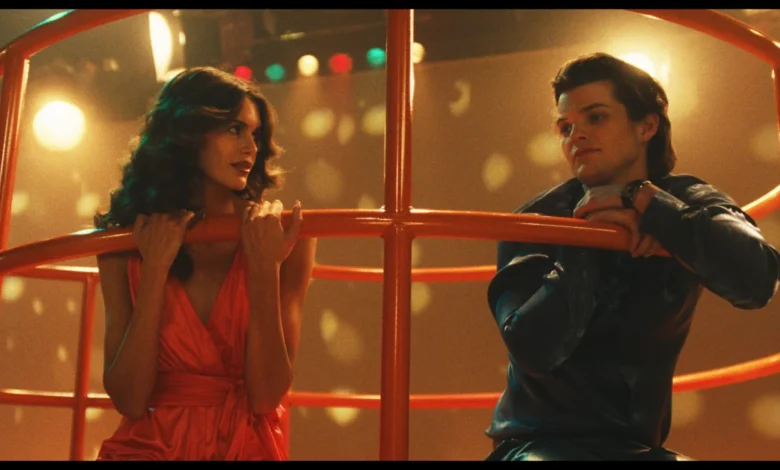
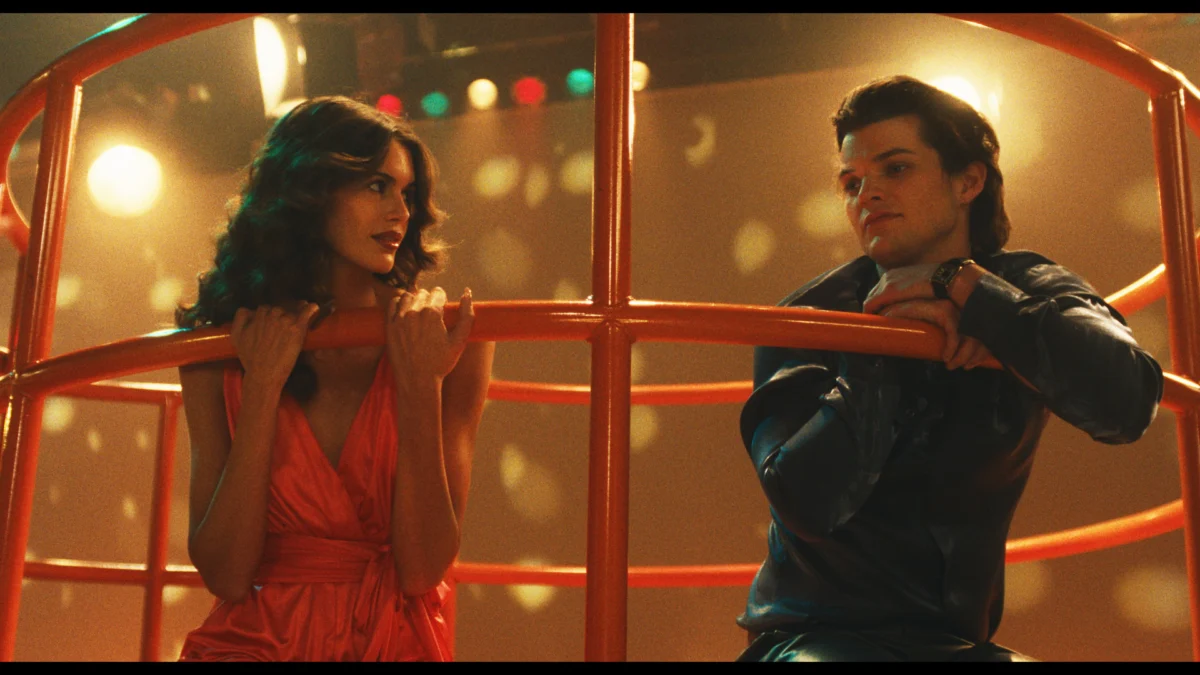
While the novel offers a dense, introspective dive into adolescent alienation, luxury, and paranoia, showrunner Ryan Murphy and Ellis have charted a distinct path for television. By diverging from the text to introduce sequences like the viral "Dance Off!" episode in season one—a grueling production feat that required Gere and co-star Kaia Gerber to execute extensive, multi-night dance choreography—the creative team has broadened the scope of the universe. Murphy and Ellis have publicly outlined ambitious plans to extend the television adaptation across three or four distinct seasons, signaling that the current first-season finale has only mapped out approximately the first third of the source novel’s total narrative arc.
The Casting Pipeline and The Transition to Professional Acting
Homer Gere’s journey to leading the cast of a major prestige television series is as unconventional as his character study. Despite growing up with a famous pedigree—as the son of Hollywood icon Richard Gere—the younger Gere did not participate in high school drama programs or pursue traditional conservatory training. Instead, acting entered his life organically during his undergraduate studies at Brown University.
In college, Gere became involved with a student-run organization called Brown Motion Pictures, which secures university funding to produce independent short films. After a friend recommended him for a role in a student thesis film, Gere experienced a grueling, six-day shoot featuring twelve-hour working blocks. Rather than feeling exhausted by the physical and mental demands, Gere discovered a sustained passion for the filmmaking process, prompting him to pivot away from his initial career trajectory.
The transition from student films to major studio television occurred at a breakneck pace. Gere successfully secured roles in both the final season of HBO’s Euphoria and Ryan Murphy’s The Shards back-to-back, enjoying a mere two-day break between the two massive productions. His audition process for The Shards itself involved a shifting carousel of characters; initially auditioning for the role of Thom (ultimately played by Graham Campbell), Gere was subsequently redirected by casting directors to read for Robert Mallory, cementing a career-defining match. Interestingly, Gere accomplished this without having read Ellis’s novel prior to his initial audition, though he quickly rectified this by consuming the audiobook narrated by Ellis himself during the weeks leading up to his callback.
Untangling the Mystery of The Trawler and Season One Suspects
As the season one finale places every major character firmly on the board as a suspect—not only in connection to the ongoing murders attributed to The Trawler, but also regarding the harrowing attempted murder of Terry (portrayed by Wes Bentley)—the identity of the killer remains a central obsession for the fanbase.
Gere is unequivocal when assessing whether Robert Mallory could actually be the infamous Trawler. From a dramatic standpoint, Gere dismisses the idea as "too on the nose," noting that an outcome where the outwardly suspicious newcomer is simply unmasked as the literal serial killer would defy narrative sophistication. Furthermore, Gere points to deeper structural clues embedded within the broader literary mythos, though he notes the television series has yet to reach those narrative milestones.

Instead, the character of The Trawler functions effectively on both a literal mystery level and a symbolic one. Showrunner Ryan Murphy has repeatedly noted that the relentless, creeping dread of The Trawler serves as a deliberate metaphor for the terrifying, misunderstood arrival of the AIDS epidemic in the early 1980s—a historical reality that decimated a generation and cast a long, melancholic shadow over the youth culture of coastal California.
Professional Reception and Future Implications
The critical and commercial response to The Shards has cemented its status as a major television event, shifting the young cast members into the upper echelon of rising industry talent. For Gere, the validation of seeing the audience split into distinct factions—such as the emergence of a genuine "Team Robert" following the narrative shifts of the later episodes—signals that his complex character work successfully landed with viewers.
Furthermore, Gere’s off-screen dynamic with co-star Kaia Gerber drew significant media attention, particularly following joint profiles in publications like Vogue. Navigating early career anxieties alongside a fellow actor who shares unique historical ties to classic Hollywood synergy—noting that Richard Gere and Cindy Crawford were married in the 1990s—allowed the two leads to quickly establish a comfortable rapport before diving into emotionally intense and physically demanding scenes.
Looking ahead toward a potential season two renewal, Gere has expressed intense enthusiasm to explore further material from Ellis’s novel, particularly tense apartment sequences involving knives and the continued evolution of Robert’s stylistic presentation, down to his constantly shifting hair and wardrobe. As the industry watches closely to see how Ryan Murphy will expand the remaining two-thirds of the literary source material, Homer Gere’s sudden ascent positions him as one of the most compelling breakout performers of the current television landscape, opening doors to future collaborations with auteur filmmakers who champion complex, intellectual storytelling.