Anne Hathaway secures another box office victory as Verity claims the top spot while Digger falters


Anne Hathaway has cemented her status as the definitive box office force of 2026, with the weekend debut of the psychological thriller Verity marking her third No. 1 opening of the calendar year. The film, an adaptation of the ubiquitous Colleen Hoover bestseller, is tracking for a domestic opening between $30 million and $35 million across 3,510 North American locations. This achievement follows a high-profile run that saw Hathaway anchor both the summer blockbuster The Devil Wears Prada 2 and the sweeping epic The Odyssey, effectively establishing a rare consistency in an increasingly volatile theatrical market.
The success of Verity stands in stark contrast to the performance of Warner Bros.’ high-stakes environmental satire Digger. Starring Tom Cruise, the project is currently trending toward a significant financial disappointment, with projections placing its opening weekend gross between $12 million and $15 million. The gulf between these two releases highlights a shifting paradigm in audience preference, where mid-budget literary adaptations are increasingly outperforming bloated, big-budget genre experiments.
The Colleen Hoover Phenomenon
The theatrical adaptation of Verity represents the latest milestone in a lucrative partnership between Hollywood and the literary works of Colleen Hoover. Since the 2024 breakout success of Sony’s It Ends With Us, which grossed an impressive $350 million globally, studios have aggressively pursued the author’s back catalog.
The chronology of Hoover’s film adaptations illustrates a consistent, if varied, commercial trajectory:
- 2024: It Ends With Us – Sony’s flagship adaptation set the high-water mark with a $50 million opening weekend and a long-tail theatrical run.
- 2025: Regretting You – Paramount’s drama served as a mid-tier performer, securing a $13.6 million debut.
- 2026: Reminders of Him – Universal’s foray into the author’s romance library opened to $17 million.
By keeping production budgets modest, these films offer studios a low-risk, high-reward model. Verity, produced for $40 million, is positioned as a strategic win for Amazon MGM. The studio, still recovering from the financial misfire of this summer’s Masters of the Universe—which yielded only $113 million against a $200 million price tag—urgently requires the steady returns that the Hoover brand historically provides.
Amazon MGM’s Strategic Pivot
Amazon MGM has been navigating a complex transition as it expands its footprint in the theatrical distribution space. The studio’s recent history is defined by a series of dramatic fluctuations. The spring of 2026 provided a massive windfall with the release of Project Hail Mary, the Ryan Gosling-led astronaut drama that earned $684 million globally, establishing the studio as a legitimate competitor to legacy majors.
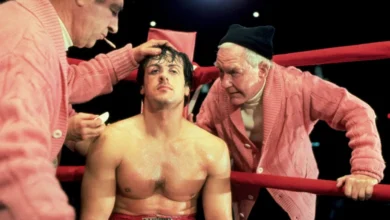
Looking toward the remainder of the year, Amazon MGM is banking on a diverse slate to sustain this momentum. This includes I Play Rocky, a narrative look at the production of the 1976 Sylvester Stallone classic, and the heist thriller How to Rob a Bank, featuring a marquee cast including Nicholas Hoult and Pete Davidson. By balancing historical dramas with contemporary thrillers, the studio is attempting to solidify a reliable release cadence that avoids the pitfalls of over-leveraged tentpole films.
The Critical and Commercial Divide in Verity
Despite the projected financial success of Verity, the film has faced a polarized reception from critics. Directed by Michael Showalter, known for his work on The Big Sick, the film adapts the story of a struggling writer hired to complete the series of an incapacitated, legendary author, Verity Crawford.
The casting—featuring Anne Hathaway, Dakota Johnson, and Josh Hartnett—was intended to bolster the film’s prestige, but early reviews have signaled a disconnect between the film’s tone and its execution. Variety’s Guy Lodge characterized the feature as a "listless" and "unintentionally funny tale," suggesting that while the source material is potent, the transition to screen has not been without friction. Hathaway’s involvement, however, remains a central pillar of the film’s marketing, further bolstered by her appearances in the psychodrama Mother Mary and the sci-fi thriller The End of Oak Street earlier this year.
Digger and the Crisis at Warner Bros.
The performance of Digger serves as a case study in the perils of ballooning production costs and poor reception. As Warner Bros. prepares for its transition under new ownership—with the acquisition by Paramount set to be finalized next week—the failure of this film compounds a difficult year for the studio.
The production of Digger has been plagued by logistical challenges. While initially greenlit with a budget of $125 million, four industry sources have indicated that the final cost climbed to between $160 million and $180 million due to significant delays. A Warner Bros. spokesperson has officially disputed these figures, though box office analysts maintain that for a film of this scope to reach profitability, it would have required a domestic debut in the $40 million range.
The irony of the current situation is profound. In 2025, Warner Bros. enjoyed a historic run of commercial hits, including Sinners, A Minecraft Movie, and Weapons. The sudden reversal in 2026, highlighted by misfires such as The Bride! and Supergirl, underscores the fragility of studio slates.
A New Marketing Strategy for Flops
In an unusual move, Warner Bros. has pivoted its marketing strategy for Digger to lean directly into the negative critical reception. Rather than attempting to hide poor reviews, the studio’s latest promotional materials feature the tagline "decide for yourself," an attempt to frame the film’s "baffling" and "unpleasant" descriptions as points of curiosity for audiences.
This defensive marketing posture is a growing trend among studios facing significant critical backlash for high-budget projects. By acknowledging the negative discourse, the studio aims to frame the film as a polarizing "event" that requires personal verification, though industry experts remain skeptical of this approach’s efficacy in preventing a financial loss.
Broader Market Implications
The weekend’s box office performance offers a clear look at the current state of the film industry. The success of Verity suggests that audience demand for mid-budget, character-driven narratives remains robust, provided the IP is recognizable and the marketing is targeted. Conversely, the struggle of Digger highlights that even with high-profile stars like Tom Cruise, the "prestige blockbuster" model is facing diminishing returns.
As the industry moves toward the close of the 2026 fiscal year, the divergence in these two films will likely influence studio greenlight processes for the coming years. Studios are increasingly expected to scrutinize budgets for non-franchise properties, favoring the "low-risk" profile of literary adaptations over the high-stakes, high-budget spectacles that have historically dominated the box office but have recently struggled to capture the public imagination.
The impending merger between Paramount and Warner Bros. adds an additional layer of complexity to these results. The incoming leadership will likely conduct a top-to-bottom audit of current production pipelines, meaning that the failures of 2026 may serve as the catalyst for a significant shift in corporate strategy, potentially marking the end of the era of uncontrolled budget expansion in favor of a more disciplined, fiscally conservative approach to filmmaking.