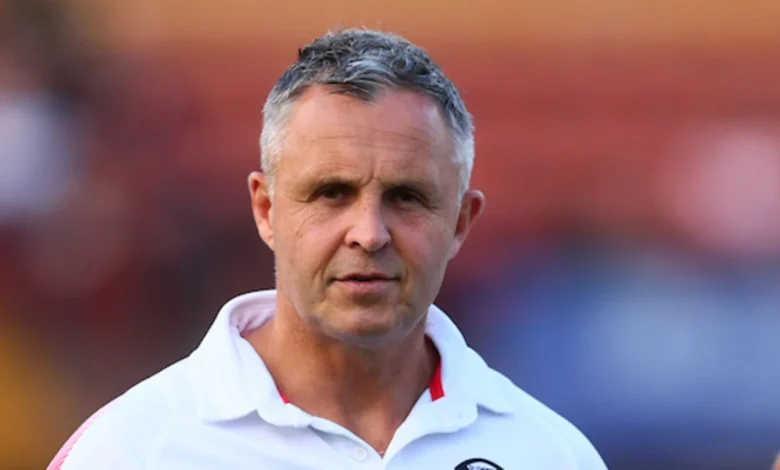
In a seismic shift that has sent ripples through the Super League, Paul Rowley has stepped down as head coach of St Helens with immediate effect. The announcement, made late on Tuesday evening, marks the end of a tenure that, while marked by significant challenges this season, sought to build upon the club’s unparalleled legacy of success. Rowley’s departure comes at a critical juncture for the perennial powerhouses, who currently occupy the final playoff spot in sixth place, a precarious position by their own extraordinarily high standards.
The Saints, a club synonymous with Super League dominance, find themselves in an unfamiliar territory of vulnerability. Their current standing, just two points ahead of Hull KR who possess a game in hand, highlights the intensity of the competition for playoff berths. This season has been a stark departure from the norm for a club that has never missed the Super League playoffs since the competition’s inception, a testament to their consistent excellence over two decades. The decision to part ways with Rowley, though described as difficult by the club’s hierarchy, signals a decisive move to reorient the team as they navigate the remaining weeks of the regular season.
A Difficult Season Culminates in Coaching Change
The 2024 Super League season has presented St Helens with a unique set of hurdles. Injuries to key personnel, a demanding fixture list, and the inherent pressure of maintaining their status as a top-tier club have all contributed to a campaign that has fallen short of the championship aspirations that define the club. While Rowley inherited a squad that had achieved unprecedented success under his predecessor, Kristian Woolf, the transition and the subsequent challenges have evidently taken their toll. The club’s chairman, Eamonn McManus, acknowledged these difficulties in his statement, underscoring the complex nature of the decision.
"I would like to thank Paul for his commitment and extreme hard work as our head coach," McManus stated. "He will always be warmly welcomed at the club." This sentiment, while appreciative, also subtly acknowledges the circumstances that led to the parting of ways. McManus continued, "The decision was an extremely difficult one for all concerned, and we fully recognise the extra challenges that Paul faced with us this particular season." This recognition of external pressures, coupled with the club’s forward-looking mandate, paints a picture of a club prioritizing its long-term vision.
Interim Leadership and Immediate Focus
Stepping into the breach is assistant coach Eamon O’Carroll, who will assume interim leadership of the team. O’Carroll, a respected figure within the club’s coaching structure, faces an immediate baptism of fire. His first major challenge will be overseeing the team’s performance in their highly anticipated Rivals Round match against fierce adversaries Wigan Warriors on Friday evening. The fixture, a cornerstone of the Super League calendar, is live on Sky Sports at 8pm, and will undoubtedly serve as a significant test of the team’s resilience and O’Carroll’s ability to galvanize the squad.
The appointment of an interim coach is a standard procedure in such situations, allowing the club breathing room to conduct a thorough search for a permanent successor while maintaining operational continuity. O’Carroll’s intimate knowledge of the playing group and the club’s established playing philosophy will be invaluable in this transitional period. His task will be to steady the ship, extract the best from the existing squad, and navigate the club through the remainder of the season with the primary objective of securing a playoff spot and, if possible, mounting a challenge for silverware.
Historical Context: The Unprecedented St Helens Dynasty
To fully appreciate the significance of this coaching change, one must consider the extraordinary dynasty St Helens has cultivated. The club has achieved an unparalleled level of sustained success in the Super League era, including a historic run of four consecutive Grand Final victories from 2019 to 2022. This period of dominance, under the astute leadership of Kristian Woolf, established a benchmark for excellence in the sport. Rowley’s appointment in November 2022 was seen as a strategic move to build upon this foundation and maintain the club’s winning culture.
Woolf’s departure after the 2022 season created a void that was difficult to fill. Rowley, who had previously served as an assistant coach at the club, was tasked with the immense responsibility of succeeding a coach who had achieved so much. His tenure, though brief, has been characterized by a relentless pursuit of improvement and a dedication to the club’s ethos. However, the Super League is a fiercely competitive environment, and the margins for error are minuscule. The demanding nature of the competition, coupled with the weight of expectation at a club like St Helens, presents a formidable challenge for any coach.
Analyzing the Implications: Playoff Hopes and Future Direction
The immediate implication of Rowley’s departure is the pressure it places on St Helens to secure their playoff position. With only a handful of regular-season games remaining, every match becomes crucial. The upcoming fixture against Wigan, a team currently vying for a top-two finish, is not just a derby; it is a critical litmus test for the Saints’ playoff aspirations. A strong performance, regardless of the result, could provide much-needed momentum under O’Carroll’s interim charge. Conversely, a poor showing could amplify existing concerns and create further instability.
Beyond the immediate playoff race, the club must now embark on a strategic search for its next permanent head coach. This decision will be pivotal in shaping the club’s future direction. Will they opt for an established Super League figure with a proven track record? Or will they look for an up-and-coming coach with fresh ideas? The club’s chairman, Eamonn McManus, articulated this ambition clearly: "We as a club must now look forward and do all within our powers to preserve our position as the most successful club in the history of Super League and to restore our position as a silverware contender going forward." This statement underscores the club’s unwavering commitment to remaining at the pinnacle of the sport.
The financial implications of a coaching change can also be a consideration, though in the context of a club like St Helens, established as a commercial powerhouse within rugby league, the immediate financial impact is likely to be secondary to the sporting imperative. The focus will be on finding a coach who can reignite the team’s performance and ensure their continued competitiveness.
Broader Impact on Super League
The departure of a head coach from a club of St Helens’ stature inevitably creates a ripple effect throughout the Super League. It highlights the inherent volatility of professional sport and the intense scrutiny faced by coaches. It also serves as a reminder that even the most successful clubs are not immune to challenges and the need for adaptation. The narrative surrounding St Helens will undoubtedly dominate headlines in the coming weeks, drawing attention to their struggles and the subsequent leadership change.
Furthermore, the decision may also influence player recruitment and retention strategies in the future. Prospective signings will be keen to understand the club’s long-term vision and coaching philosophy. The stability and direction offered by the incoming head coach will be a significant factor in attracting and keeping top talent.
Looking Ahead: The Road to Recovery
As the dust settles on this significant announcement, the focus for St Helens shifts resolutely to the future. The club has a proud history of overcoming adversity and demonstrating remarkable resilience. The interim leadership of Eamon O’Carroll will be tasked with navigating these turbulent waters, with the immediate objective of solidifying their playoff position. The subsequent appointment of a permanent head coach will be a defining moment, signaling the club’s ambition and strategic direction for years to come.
The Super League is a relentless competition, and St Helens, despite their recent challenges, remain a formidable force. The coming weeks will be crucial in determining their playoff fate and setting the stage for their resurgence. The club’s commitment to maintaining its status as the most successful in Super League history remains unwavering, and this coaching change, while disruptive, is ultimately aimed at reinforcing that enduring ambition. The "more to follow" tagline in the initial announcement hints at further developments as the club navigates this critical period of transition. The eyes of the rugby league world will be on St Helens as they strive to restore their championship pedigree.
Related posts: