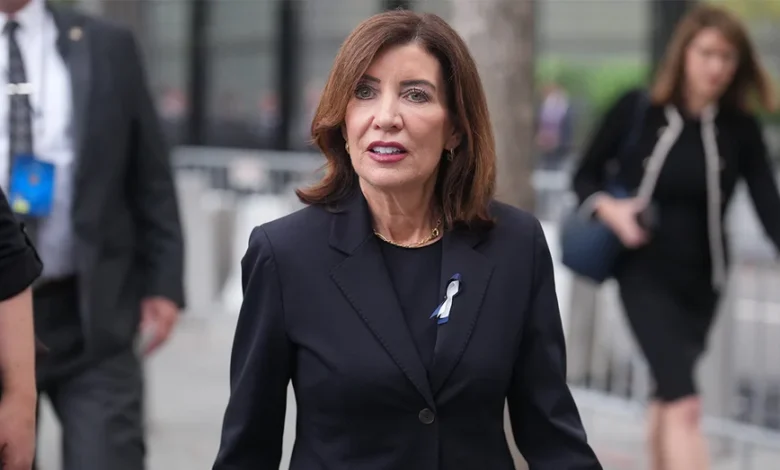
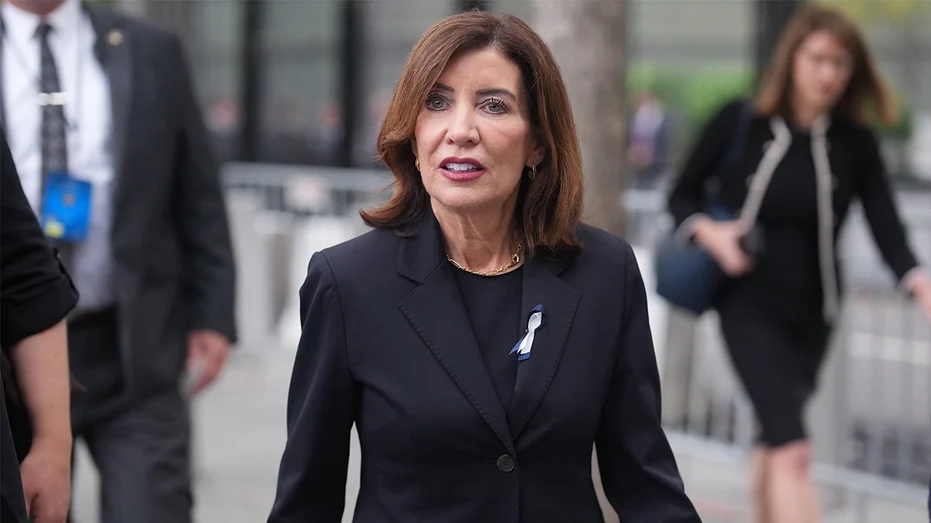
New York Governor Kathy Hochul signed a controversial piece of legislation that grants the state attorney general sweeping authority to investigate, penalize, and seek injunctions against organizations accused of circulating deceptive communications designed to mimic labor unions. While supporters of the measure argue that the law provides vital protections for workers against fraudulent solicitation, critics and free-speech advocates have condemned the legislation as an unconstitutional assault on political expression. The statute specifically targets communications that falsely appear to be authorized by a union or its representatives, empowering Democratic Attorney General Letitia James to levy civil penalties of up to $1,000 per violation.
The enactment of this legislation has ignited a fierce national debate over the intersection of labor advocacy, government regulation, and First Amendment rights. Conservative nonprofit organizations, most notably the Freedom Foundation, assert that the law is a targeted instrument crafted to shield public-sector unions from competitive outreach. By raising the specter of state-level investigations and financial penalties, critics argue that the legislation creates a chilling effect on groups attempting to inform public employees of their legal rights under federal precedent. As legal challenges loom, the controversy underscores deep-seated partisan divisions over the political influence of labor organizations and the mechanisms used to regulate public employment sectors across the United States.
Background Context and Legislative Origins
The legislative push in New York arrives amid a shifting legal and political landscape concerning public-sector labor unions. For decades, mandatory union membership and automatic dues deductions were standard conditions of employment for many government workers, including public school teachers, transit workers, and civil servants across numerous states. However, the legal foundation for these mandatory structures was fundamentally altered in June 2018 when the United States Supreme Court issued its landmark ruling in Janus v. American Federation of State, County, and Municipal Employees (AFSCME).
In a 5-4 decision, the high court held that requiring public employees to financially support a union as a condition of employment violates the First Amendment. The majority reasoned that public-sector collective bargaining inherently involves matters of substantial public concern—such as municipal budgets, taxation, and educational policy—making forced financial subsidization an unconstitutional compelled speech requirement.
Following the Janus decision, several conservative and libertarian advocacy groups launched proactive campaigns to educate public employees about their newfound right to resign from union membership and cease paying dues. Among these organizations, the Freedom Foundation emerged as a prominent actor, deploying direct mail campaigns, digital advertisements, and interpersonal outreach to public workers in states with dense union populations, including Washington, Oregon, California, and New York.
According to organizational data, the Freedom Foundation has successfully engaged thousands of New York public employees, helping approximately 7,500 workers navigate the union exit process, with more than 1,400 cancellations recorded in the preceding year alone. This sustained erosion of membership rolls sparked intense concern among union leadership, prompting labor advocates to lobby state legislatures for statutory mechanisms to curtail outside informational campaigns.
Legislative Mechanics and Immediate Enforcement
The newly enacted New York statute amends state labor and executive laws to establish stringent penalties for deceptive communications related to collective bargaining entities. Under the terms of the legislation, any individual or organization found to have distributed materials that deceptively mimic union authorizations can be subjected to immediate legal scrutiny.
The statute confers broad investigative powers upon Attorney General Letitia James. The attorney general’s office is authorized to issue administrative subpoenas, demand documentary evidence, and initiate civil lawsuits in state courts to secure injunctions halting the dissemination of targeted communications. Crucially, the jurisdictional reach of the law extends beyond New York’s borders, allowing the state to pursue out-of-state entities that engage in public employee outreach directed at New York workers.
Courts presiding over these matters are empowered to issue civil penalties of up to $1,000 per individual infraction. Because direct-mail campaigns and digital outreach initiatives frequently reach thousands of recipients, legal analysts note that the cumulative financial exposure for targeted non-profits could escalate rapidly under multiple-violation interpretations. The law took effect immediately upon Governor Hochul’s signature, bypassing the typical transition period often afforded to complex regulatory statutes.
Official Responses and Labor Sector Support
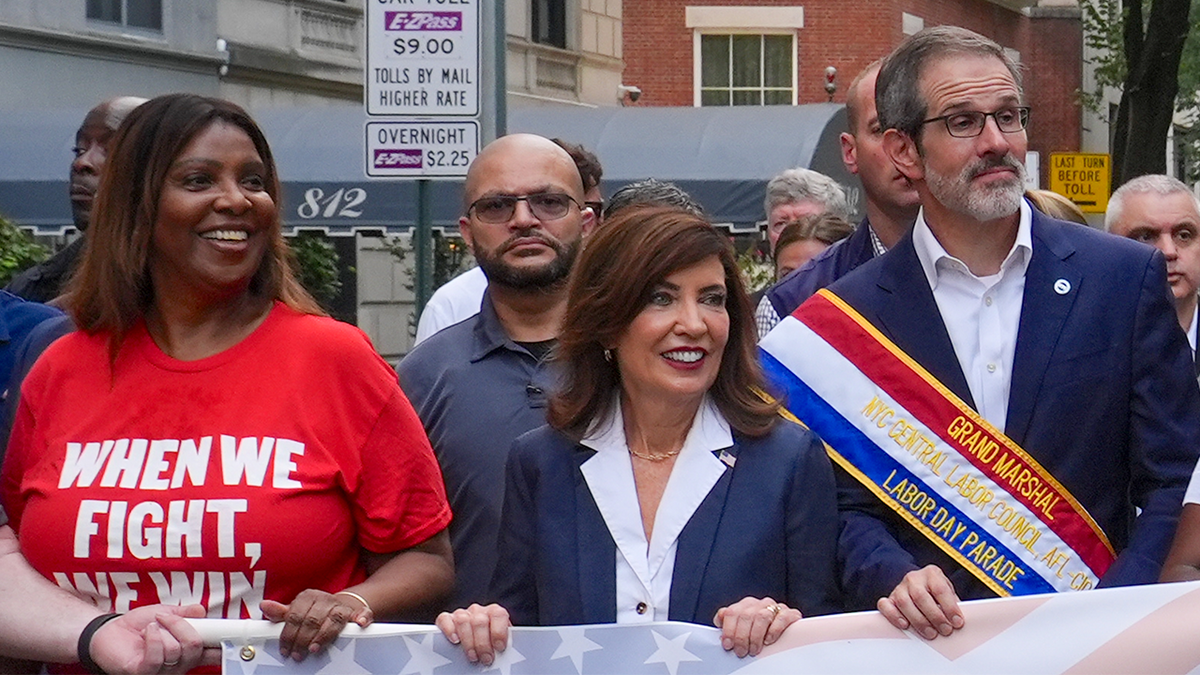
The legislative package, which Governor Hochul signed alongside several other bills aimed at bolstering labor rights, received enthusiastic endorsement from major trade union federations and labor leaders. Proponents characterized the measures as essential safeguards designed to protect vulnerable workers from predatory actors attempting to siphon away benefits or misrepresent collective bargaining representation.
Mario Cilento, president of the New York State American Federation of Labor and Congress of Industrial Organizations (NYS AFL-CIO), praised the governor’s actions, emphasizing that the new rules establish accountability for bad actors. In public statements, Cilento maintained that the slate of signed bills serves to prioritize the welfare of working-class New Yorkers by ensuring transparency and integrity in labor communications.
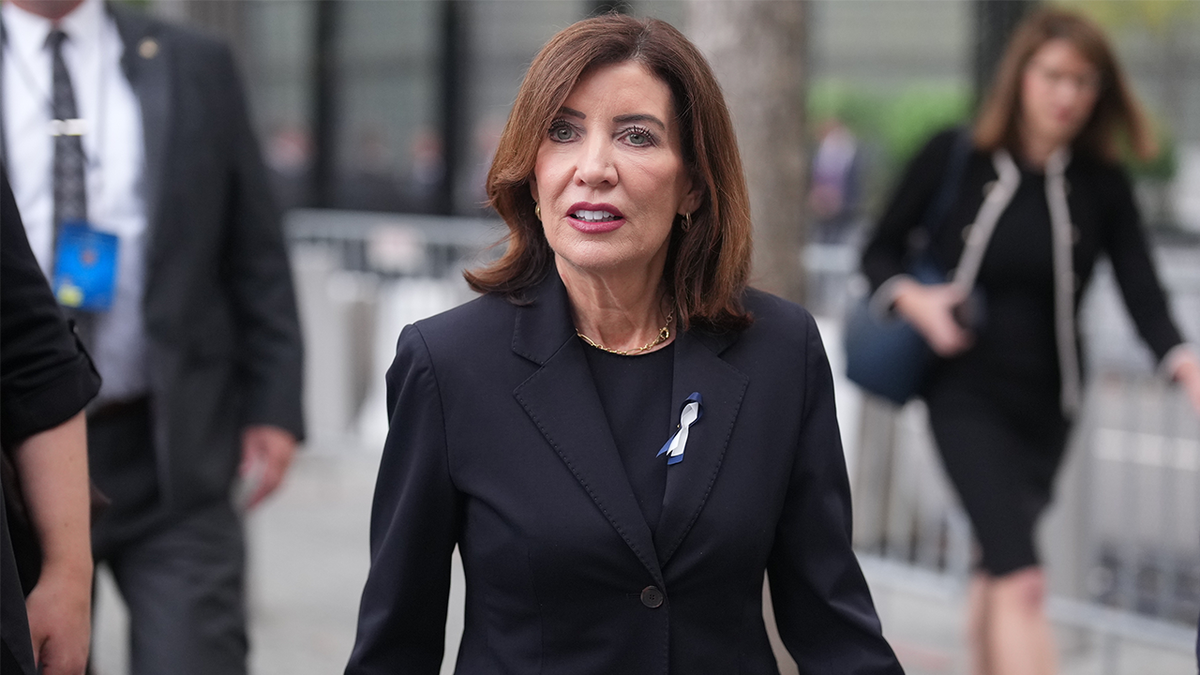
Governor Hochul similarly framed the legislation as a continuation of New York’s historical leadership within the American labor movement. Utilizing social media platforms to broadcast her administration’s pro-labor agenda, the governor underscored her commitment to defending union workers. "New York State gave birth to the labor movement," Hochul wrote on the platform X. "Over the last five years, I have continued that legacy by fiercely supporting the men and women of labor… Today marks a new day with even more protections, because I’ll never stop fighting for our workers."
Labor advocates argue that external advocacy groups often employ misleading branding, design elements, and terminology in their mailers to trick employees into opening correspondence or signing cancellation forms under false pretenses. From this perspective, the statute is not a restriction on political speech, but rather a consumer-protection measure safeguarding workers from fraudulent impersonation.
Free Speech Challenges and Counterarguments
Conversely, opponents of the law view the statute as a transparently partisan maneuver engineered to suppress dissenting viewpoints and protect the institutional interests of politically influential public-sector unions. Leadership within the Freedom Foundation has forcefully rejected the state’s characterization of their outreach as deceptive or fraudulent.
Aaron Withe, Chief Executive Officer of the Freedom Foundation, pulled no punches in his critique of the legislation, labeling the measure a calculated "hit job" orchestrated by lawmakers beholden to organized labor. "This isn’t about protecting anyone," Withe stated. "It exists because government unions in New York are terrified of an inconvenient fact: when public employees learn they don’t have to pay union dues, a lot of them stop. So instead of making their case to their own members, union bosses ran to their friends in the legislature and got them to write a law that makes speech illegal."
Withe emphasized that the informational materials distributed by his organization explicitly cite the constitutional rights affirmed by the United States Supreme Court in Janus v. AFSCME. He argued that telling public employees about statutory and constitutional protections that already exist cannot logically constitute impersonation or deception.
Furthermore, the Freedom Foundation highlighted the strategic provenance of the New York statute, noting that its legislative framework closely mirrors a similar measure previously enacted in Oregon. The Oregon statute is currently the subject of an ongoing federal lawsuit in the Ninth U.S. Circuit Court of Appeals, where the Freedom Foundation is challenging its constitutionality on First Amendment grounds. Organization representatives indicated that a comparable legal challenge will be filed in federal court to block the implementation of New York’s law.
Broader Implications for Education and National Politics
The controversy has also drawn commentary from national figures involved in education policy and governance. Ryan Walters, former superintendent of public instruction for Oklahoma and current CEO of the Teacher Freedom Alliance—the educational advocacy arm of the Freedom Foundation—argued that New York’s law represents a dangerous precedent for educational reform and political pluralism nationwide.
Walters characterized the statute as an authoritarian measure designed to insulate powerful teachers’ unions from accountability and reform. "This is such a canary in the coal mill moment where if New York is allowed to do this… it’s going to go on across the country, and our schools will not be able to improve in that kind of environment," Walters remarked during an interview. He contended that public education systems serve as a critical power base for the Democratic Party, asserting that labor unions utilize their institutional leverage to influence electoral outcomes and public policy.
Independent legal scholars and political analysts suggest that the legal battle over New York’s union communication law will likely wind its way through the federal judiciary, potentially culminating in a definitive Supreme Court review regarding the limits of state regulatory authority over political speech. As blue states and red states continue to implement divergent policies regarding labor rights, public-sector unions, and political advocacy, the outcome of the New York litigation will undoubtedly shape the operational environment for advocacy groups across the nation for years to come.