Nvidia CEO Jensen Huang Takes Impromptu Call from President Trump Onstage at All-In Summit, Igniting Debate Over AI Regulation and Infrastructure

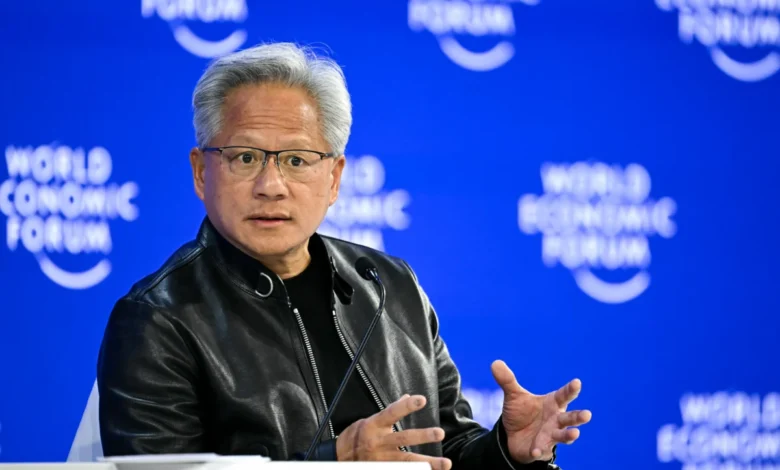
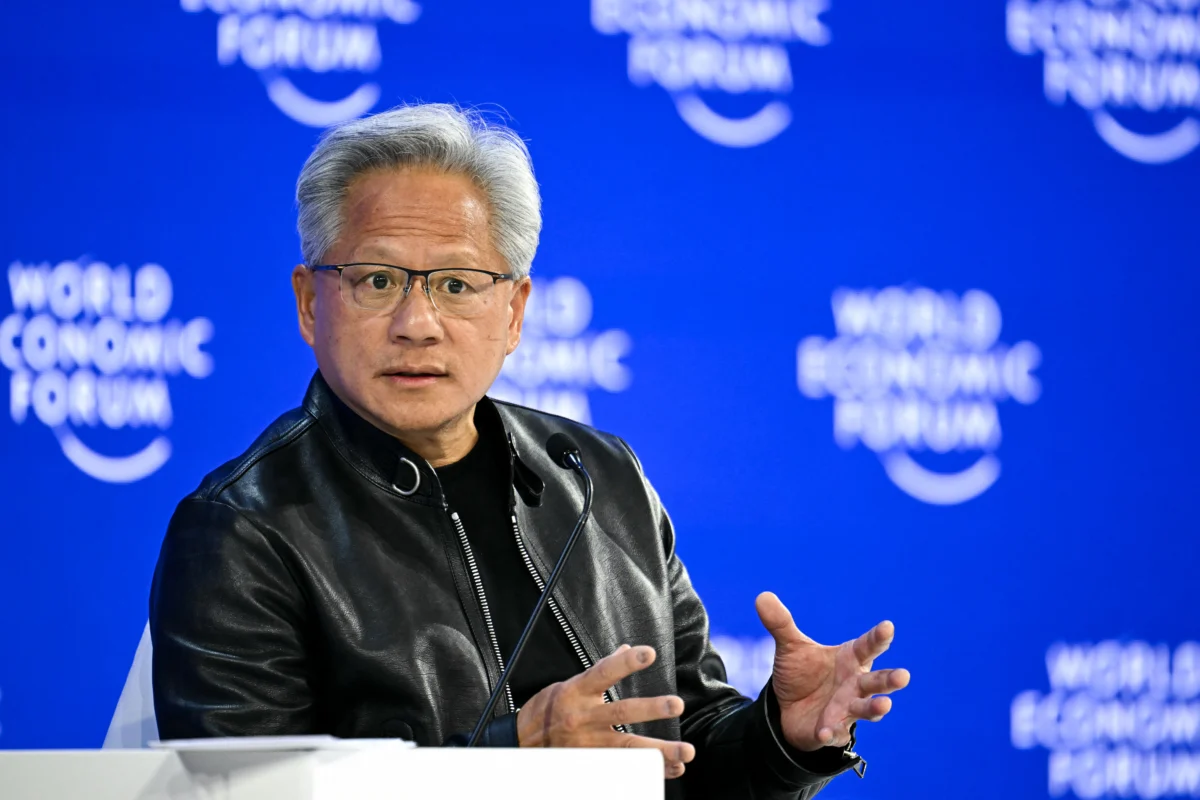
The intersection of artificial intelligence, high-stakes geopolitics, and corporate showmanship delivered an unforgettable moment during the All-In Summit in Los Angeles. Nvidia Chief Executive Officer Jensen Huang, while speaking live on stage before a packed audience of technology leaders, venture capitalists, and media figures, received an unexpected telephone call. The caller was none other than United States President Donald Trump.
Rather than sending the call to voicemail or stepping away from the microphone, Huang accepted the incoming communication on the spot. In an unorthodox move that sent immediate shockwaves through public relations professionals, Huang attempted to broadcast the conversation to the auditorium. What followed was a public exchange that underscored the deep alignment between the current presidential administration and key heavyweights in the semiconductor and artificial intelligence sectors, while simultaneously highlighting the growing friction between rapid technological expansion and local public resistance.
The unfolding live conversation quickly turned toward the contentious debate surrounding the regulation, pacing, and physical infrastructure of artificial intelligence. As the technology industry faces a mounting wave of public skepticism and regulatory scrutiny, the impromptu phone call served as a high-profile platform for both leaders to dismiss calls for slowing down AI development, framing such caution as a strategic vulnerability for the United States.
Chronology of the Live Stage Interruption
The events of that Monday morning began as standard conference programming. Huang was seated alongside the prominent venture capitalist hosts of the popular All-In podcast—a group widely known within the tech community as the “besties.” The panel included Chamath Palihapitiya, Jason Calacanis, David Friedberg, and David Sacks, the latter two of whom maintain prominent advisory roles related to science, technology, and artificial intelligence within federal circles.
Prior to the interruption, the panel had been engaged in a robust discussion regarding recent public commentary from Anthropic CEO Dario Amodei. Amodei had previously published an essay advocating for a deliberate slowdown in the pace at which artificial intelligence capabilities are scaled and enhanced, arguing that frontier models present unprecedented societal risks if developed too rapidly. This stance had drawn public support from high-profile technology executives, including SpaceX and Tesla CEO Elon Musk as well as OpenAI CEO Sam Altman. Huang, however, has consistently maintained a divergent perspective, emphasizing the necessity of relentless technological progression to maintain global competitiveness.
Midway through this conversation, Huang’s mobile device rang. Recognizing the identity of the caller, the Nvidia CEO paused the panel discussion and announced to the audience that he was receiving a call from President Trump.
Faced with the challenge of amplifying the president’s voice to the thousands of attendees in the auditorium, Huang briefly fumbled with the logistics of speakerphone technology before soliciting assistance from nearby stagehands for an extra microphone. Addressing the technical hiccup in real time, President Trump quipped over the line, “The great thing about life is Jensen can develop the most complex computer chip in the world… but he can’t figure out how to put you on speaker.”
The lighthearted remark broke the tension in the room before pivoting immediately to serious policy matters.
The Geopolitical Debate Over AI Pacing
Once the audio connection was successfully established across the venue’s sound system, the dialogue quickly shifted to the philosophical and strategic divide regarding how fast artificial intelligence systems should be allowed to evolve.
Trump addressed the recent proposals from figures like Amodei, Musk, and Altman to pace or temporarily cap the scaling of frontier AI models. The president offered a sharp critique of these precautionary measures, characterizing them as counterproductive strategies that would ultimately benefit rival nations.
“They’re just playing right in the hands of a lot of people that don’t want to see it happen,” Trump stated over the speakerphone, pointing directly to international competition. “That could be political people. It could also be China. And we’re not going to let that happen. It’s a hoax.”
The assertion resonated strongly with Huang, who immediately validated the president’s warning. “You’re right. We’re not going to let that happen, sir,” Huang responded, eliciting a wave of enthusiastic applause from the summit’s attendees.
The exchange highlights a core ideological split within Silicon Valley and Washington. On one side, proponents of deceleration argue that safety guardrails, alignment research, and systemic risk assessments cannot keep pace with exponential hardware scaling. On the other side, figures aligned with hardware manufacturing and aggressive commercial deployment argue that any artificial slowdown voluntarily surrenders technological dominance to foreign adversaries, particularly China, which has poured substantial state resources into its own domestic semiconductor and AI ecosystems.
Infrastructure Expansion and the Public Backlash
While federal leaders and corporate executives focus on geopolitical supremacy and hardware optimization, the physical reality of the artificial intelligence boom has run directly into a wall of grassroots opposition at the local level.
The conversation between Huang and Trump touched upon the escalating public pushback against the construction of massive data centers. These facilities—essential for training and operating the advanced graphics processing units (GPUs) manufactured by companies like Nvidia—require unprecedented amounts of electrical power and water resources.
Trump and various tech sector allies, such as Y Combinator CEO Garry Tan, have publicly suggested that the rising tide of local activism against data center development is not entirely organic. Some proponents of rapid AI growth have characterized the localized resistance as an international psychological operation or a coordinated campaign designed to choke off American economic vitality.
However, empirical sociological data reveals a much more pragmatic and domestic source of concern. Recent polling data published by Gallup indicates a significant disconnect between executive ambitions and community sentiment. According to the survey, approximately seven in 10 Americans explicitly oppose the construction of large-scale data centers within their local areas.
When asked to specify their concerns, more than 50% of respondents cited the severe environmental impact of data centers, particularly regarding the strain placed on local power grids, renewable energy targets, and municipal water supplies. Furthermore, roughly 20% of surveyed citizens expressed direct anxieties over rising utility costs, inflation in the local cost of living, and a general degradation of their day-to-day quality of life.
Despite these documented public concerns, the administration’s stance remains firm on prioritizing industrial expansion. Addressing the infrastructure bottleneck, Trump acknowledged the need for operational prudence while firmly rejecting any notion of halting the sector’s momentum.
“We have to be a little bit careful… We have to do things and we have to do them prudently, but that doesn’t mean we’re going to stop an industry,” Trump told Huang and the audience. “So I’m with you all the way. I didn’t even know how you felt about it. I just hoped you felt the same way as me. We’re going to lead.”
Analysis of Implications for the Tech Industry
The public phone call between the leader of the free world and the chief executive of the world’s most valuable semiconductor company carries profound implications for corporate governance, regulatory policy, and market dynamics.
First, the incident illustrates the increasingly blurred lines between private enterprise and statecraft in the modern technology landscape. Semiconductor manufacturing is no longer viewed merely as a commercial enterprise governed by supply and demand; it is treated as a critical pillar of national security. Nvidia’s hardware—specifically its high-performance GPUs—serves as the foundational infrastructure for nearly all major generative artificial intelligence models globally. Consequently, the close rapport between Huang and the White House signals that federal backing for the semiconductor industry will likely remain robust, even as regulatory bodies navigate antitrust inquiries, export controls, and environmental compliance.
Second, the dismissal of data center opposition as politically motivated or foreign-influenced risks alienating local communities whose cooperation is vital for infrastructural buildout. While federal policy can streamline permitting processes and provide national security justifications, utility companies and local zoning boards ultimately control the distribution permits, land use, and grid connections required to power these facilities. As local opposition hardens—driven by genuine fears of rolling blackouts, higher utility bills, and environmental degradation—tech companies may find that federal support alone is insufficient to overcome municipal resistance.
Finally, the public divergence between hardware manufacturers like Nvidia and model developers like Anthropic and OpenAI highlights an underlying tension within the AI ecosystem. While developers face mounting pressure to prove their models are safe, responsible, and environmentally sustainable, the hardware suppliers depend entirely on continuous, uninhibited expansion to sustain record-breaking market valuations.
As the debate over pacing, safety, and infrastructure continues to evolve, the impromptu All-In Summit phone call has cemented the reality that the future of artificial intelligence will not be decided solely in research laboratories or corporate boardrooms, but through a complex, high-stakes negotiation between federal ambition, industrial dominance, and the grassroots realities of local communities.