New York Governor Kathy Hochul Issues Nations First Statewide Moratorium on Large-Scale Data Centers Amid Grid and Cost Concerns

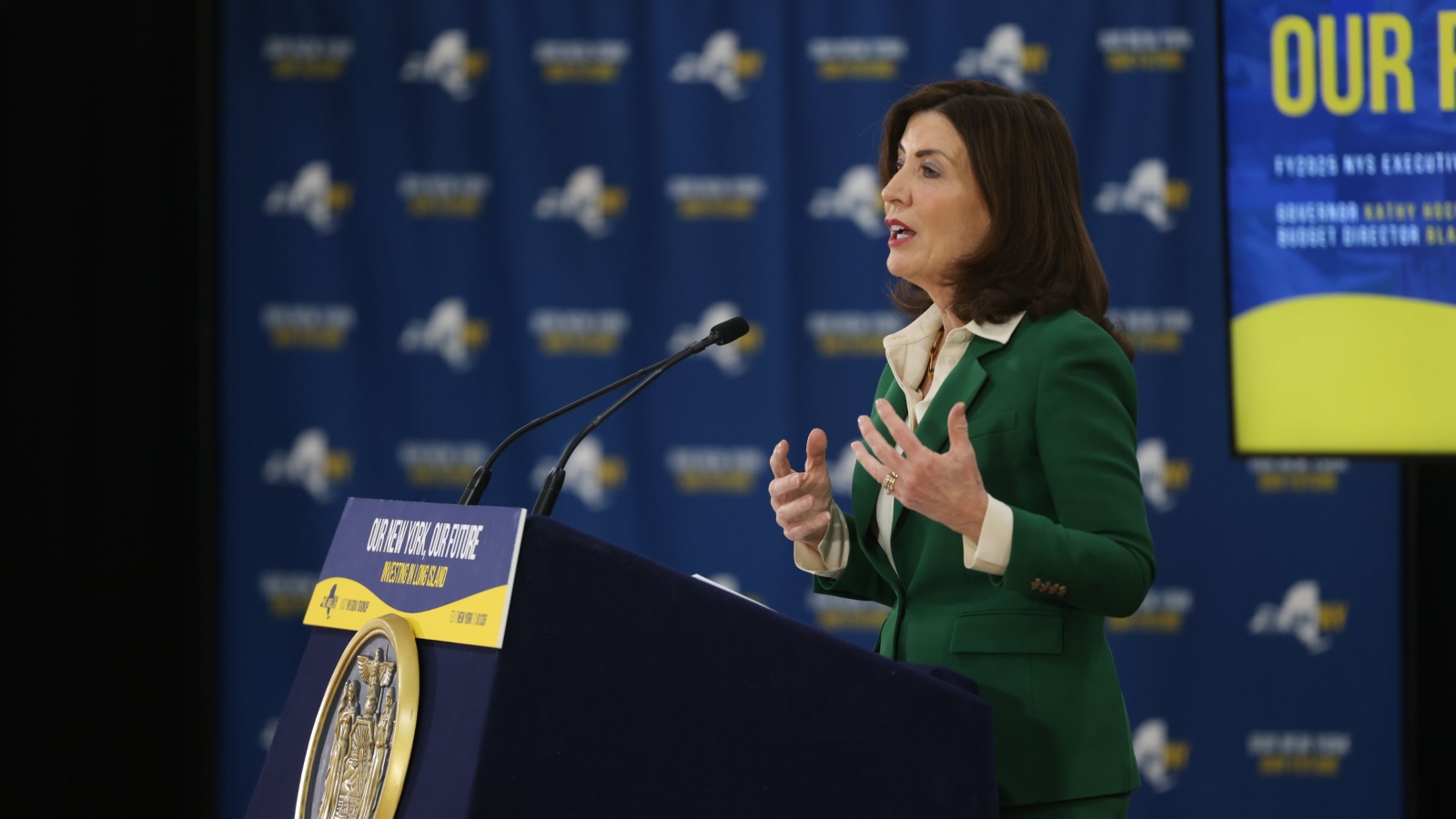
In a move that signals a significant shift in how states balance technological advancement with environmental and economic stability, New York Governor Kathy Hochul issued an executive order on Tuesday, July 14, 2026, establishing a one-year moratorium on the construction of large-scale, hyperscale data centers. This landmark directive makes New York the first state in the nation to implement a comprehensive pause on such facilities, reflecting growing anxieties over the strain these energy-intensive operations place on the public utility grid and the resulting upward pressure on consumer electricity rates.
The executive order, effective immediately, halts the issuance of new permits for data centers of a certain scale while the state conducts a rigorous assessment of their long-term viability within New York’s ambitious climate framework. Governor Hochul’s decision comes at a time when the rapid proliferation of artificial intelligence (AI) and cloud computing has triggered a global building boom of massive server farms, which require vast amounts of electricity and water to operate and cool.
“As data center development threatens to hike up utility bills, deplete our natural resources, and create uncertainty for New Yorkers, it’s my responsibility to take action and lead,” Governor Hochul stated in an official release. “We must ensure that the growth of the digital economy does not come at the expense of our residents’ financial security or our state’s commitment to a sustainable, green future.”
The Core Mandates of the Executive Order
The executive order directs the New York State Department of Public Service (DPS) to cease the approval of all new permits for large-scale data centers for a duration of 12 months. This period is designated for a dual-track investigation. First, the DPS will conduct a comprehensive environmental and grid-impact analysis to quantify the carbon footprint and energy demand of these facilities. Second, the agency will initiate a formal proceeding to develop new regulatory requirements. These requirements may include a "pay-to-play" model where data center operators are mandated to pay premium rates for energy consumption or, alternatively, are required to generate or procure their own independent renewable energy sources to offset their impact on the public grid.
Furthermore, Governor Hochul has instructed the state’s economic development agency, Empire State Development (ESD), to draft a standardized framework for local municipalities. This framework is intended to empower local communities to negotiate more effectively with multinational tech corporations. The guidelines will focus on securing community benefit agreements that include investments in local infrastructure, childcare facilities, and strict labor and wage standards for the construction and operation of these sites.
Chronology of the Data Center Debate
The path to this moratorium has been marked by escalating legislative tension and shifting policy priorities. While the 2026 executive order is the first of its kind to be enacted, it follows several years of debate regarding the role of "Big Tech" in New York’s energy landscape.
In early 2025, several local jurisdictions in Upstate New York began voicing concerns as former industrial sites were scouted for conversion into data centers. By late 2025, the New York State Legislature began drafting S10642, a bill aimed at curbing the unchecked growth of these facilities. In June 2026, just one month prior to the Governor’s order, the legislature passed a more extensive version of a data center moratorium. While the Governor’s executive order aligns with the spirit of that legislation, she has not yet signaled whether she will sign the legislative bill into law, opting instead for the immediate and more flexible tool of executive action.
The national context also played a role in the timing of New York’s decision. Earlier in 2026, Maine Governor Janet Mills, a fellow Democrat, faced a similar legislative push for a statewide ban. However, Governor Mills ultimately vetoed the measure in April 2024, citing concerns that a blanket ban might stifle innovation and deter high-tech investment. Governor Hochul’s decision to move forward with a moratorium suggests a different calculation in New York, where the state’s rigorous Climate Leadership and Community Protection Act (CLCPA) mandates a 70% renewable energy grid by 2030.
Supporting Data: The Energy Appetite of the AI Era
The urgency behind the moratorium is underscored by startling data regarding the energy consumption of modern data centers. According to recent industry reports, the training of a single large language model (LLM) can consume as much electricity as 100 average U.S. households use in a year. As companies like Microsoft, Google, and Amazon race to expand their AI capabilities, the demand for "hyperscale" facilities—sites capable of housing tens of thousands of servers—has skyrocketed.
In New York, the energy grid is already facing a delicate transition. As the state retires older fossil-fuel "peaker plants" to meet climate goals, the available margin of surplus energy has narrowed. Industry analysts estimate that a single large-scale data center can require between 100 and 500 megawatts of power. To put this in perspective, 500 megawatts is enough to power roughly 400,000 homes.
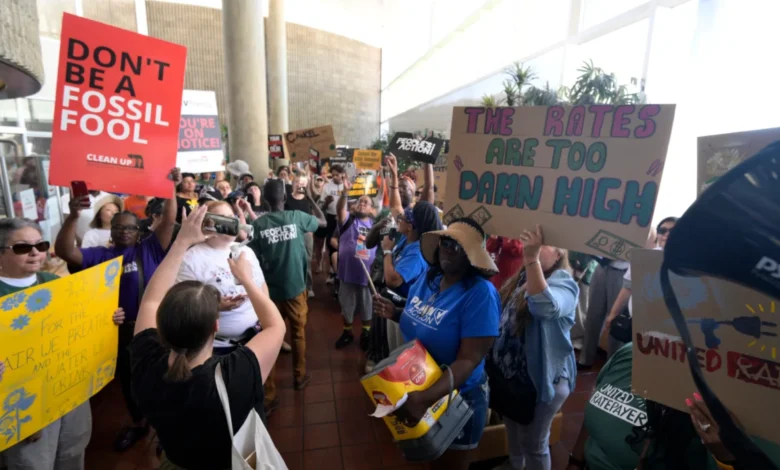
The concern for New York officials is twofold: reliability and cost. When massive industrial consumers enter a regional market, they can drive up the wholesale price of electricity, costs that are often passed down to residential and small-business consumers. Additionally, the sheer physical strain on transmission lines can necessitate billions of dollars in grid upgrades—costs that have historically been socialized across the entire ratepayer base.
Official Responses and Stakeholder Reactions
The moratorium has elicited a wide range of reactions from environmental advocates, industry groups, and labor unions.
Environmental organizations have largely lauded the move. "For too long, the tech industry has treated our energy grid as an infinite resource," said a spokesperson for a leading New York environmental coalition. "This pause allows New York to prioritize the needs of people over the needs of algorithms. We cannot meet our 2030 climate goals if we are siphoning off all our new wind and solar power to run server racks."
Conversely, tech industry trade groups have expressed concern that the moratorium could send a negative signal to the global business community. Representatives from the "Digital Infrastructure Association" argued that data centers are the backbone of the modern economy and that New York risks falling behind other states like Virginia or Ohio, which have traditionally been more welcoming to such developments. They contend that the state should focus on accelerating energy production rather than restricting demand.
On the labor front, the reaction is nuanced. While unions are eager for the high-paying construction jobs associated with these massive projects, many support the Governor’s inclusion of labor and wage standards in the new economic framework, viewing it as a way to ensure that these global corporations provide long-term value to the local workforce.
Financial and Tax Implications
A critical component of Governor Hochul’s announcement involves a fundamental shift in how data centers are taxed. Currently, New York offers significant sales tax exemptions for the purchase of data center equipment, a policy designed to attract investment. However, the Governor has now called on lawmakers to repeal these exemptions for large-scale facilities.
Additionally, the Governor announced the proposed creation of a "Grid Infrastructure Fund." Under this plan, any data center permitted after the moratorium expires would be required to pay into a fund dedicated to upgrading New York’s aging electrical infrastructure and subsidizing the development of new clean energy projects. This "impact fee" approach aims to ensure that the companies profiting from New York’s infrastructure are also the ones paying to maintain and modernize it.
Broader Impact and Future Outlook
The implications of New York’s moratorium extend far beyond state lines. As the first statewide ban of its kind, it provides a template for other states grappling with the "AI gold rush." States such as Arizona, Georgia, and Iowa, which have seen a massive influx of data center construction, are reportedly watching New York’s regulatory experiment closely.
The one-year pause will likely force tech giants to reconsider their expansion strategies. It may accelerate investments in "behind-the-meter" energy solutions, where data centers build their own dedicated nuclear or solar plants to avoid drawing from the public grid. It may also lead to a geographical shift, as companies seek out jurisdictions with fewer regulatory hurdles, though such options are becoming rarer as grid constraints become a national issue.
For New York, the next 12 months will be a period of intense data collection and policy drafting. The findings of the Department of Public Service will determine whether this moratorium is a temporary hurdle or the beginning of a permanent, highly regulated era for the digital infrastructure industry. By choosing to prioritize grid stability and consumer costs, New York is asserting that the digital future must be compatible with the physical and economic realities of its citizens.
As the moratorium takes effect, the eyes of the tech world remain on Albany. The outcome of this year-long study will likely define the relationship between state governments and the technology sector for the next decade, balancing the insatiable demand for computing power with the finite resources of the planet and the pockets of the public.