The enduring power of Michael Mann’s 1986 neo-noir thriller, Manhunter, is being brought back into the spotlight with a special 4K restoration and director’s cut, Manhunter: The Final Cut, receiving a limited theatrical release on July 24. This re-evaluation arrives as the film marks its 40th anniversary, a milestone that underscores its status as a pioneering work in the forensic thriller genre and a deeply influential, albeit often underappreciated, piece of cinematic art. While Mann’s later works, such as Heat and The Insider, often overshadow Manhunter in popular discourse, this anniversary offers a crucial opportunity to revisit the film’s groundbreaking contributions and its lasting resonance.
A Visionary Approach to the Criminal Mind
Manhunter, adapted from Thomas Harris’s 1981 novel Red Dragon, which first introduced the character of Hannibal Lecter, stands apart from its cinematic descendants, most notably the critically acclaimed The Silence of the Lambs. While The Silence of the Lambs achieved widespread commercial and critical success, winning the Academy Award for Best Picture, Manhunter has carved out a more cult following, often relegated to the shadow of its more famous successor. However, for many cinephiles and critics, Manhunter‘s distinct aesthetic, its profound exploration of psychology, and its innovative use of forensic science elevate it to a higher tier of cinematic achievement.
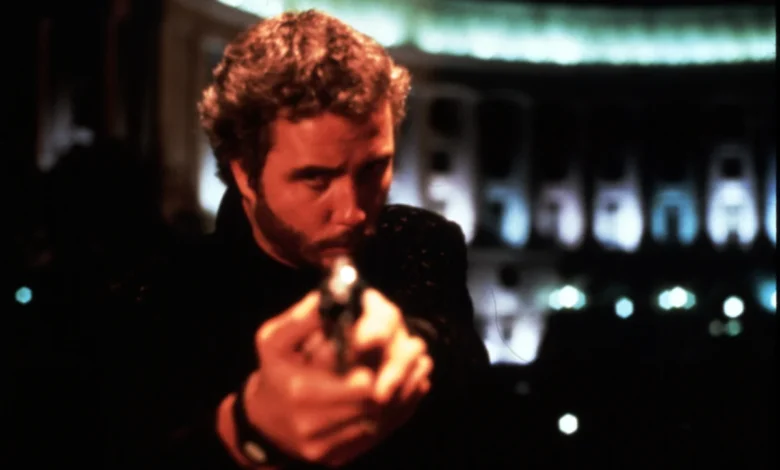
The film’s premise follows FBI profiler Will Graham (William Petersen), a man who possesses the uncanny ability to empathize with and think like serial killers. Pulled out of retirement, Graham must confront Francis Dollarhyde (Tom Noonan), a terrifyingly methodical killer dubbed "The Tooth Fairy" by the media, who systematically murders entire families. Graham’s investigation delves into the darkest corners of the human psyche, forcing him to confront his own vulnerabilities and the psychological toll of his unique gift.
Genesis and Evolution of a Thriller
The journey of Manhunter to the screen began with Thomas Harris’s Red Dragon, published in 1981. The novel’s success, particularly with the introduction of Hannibal Lecter, paved the way for further literary exploration of the criminal mind. Michael Mann, already establishing a reputation for his stylish and atmospheric direction, particularly through his executive producer role on the groundbreaking television series Miami Vice, saw the potential for a visceral and psychologically complex film adaptation.
Miami Vice, which premiered in 1984, revolutionized television with its cinematic visuals, contemporary music integration, and fashion-forward aesthetic. This sensibility directly informed Mann’s approach to Manhunter. While Miami Vice was celebrated for its "cool," it also drew criticism for being overly stylized, a perception that would later be applied to Manhunter. Mann’s directorial output prior to Manhunter included the critically acclaimed Thief (1981) and the less successful The Keep (1983), suggesting a director still solidifying his cinematic voice on the feature film level.
The film’s original release on August 15, 1986, coincided with a period when the forensic thriller genre was still in its nascent stages. While films had depicted investigations, Manhunter‘s emphasis on the scientific and psychological underpinnings of criminal profiling was remarkably ahead of its time. The film’s meticulous depiction of forensic techniques, such as infrared analysis and detailed crime scene reconstruction, was groundbreaking, offering audiences a glimpse into a more sophisticated understanding of criminal investigation.
Thematic Depth and Stylistic Innovation
One of Manhunter‘s most significant contributions is its pioneering portrayal of forensic science not merely as a plot device, but as a narrative engine and a thematic exploration of how technology intersects with human fallibility. The film meticulously illustrates the FBI’s cutting-edge methodologies of the era, showcasing how these tools are used to unravel the brutal tapestry of Dollarhyde’s crimes. From Will Graham’s initial immersion in the sterile, blood-splattered crime scenes to his use of forensic data to reconstruct the killer’s thought process, the film demonstrates how science can illuminate the darkest aspects of human behavior.
The film’s aesthetic, characterized by its vibrant neon palettes, atmospheric synth scores, and meticulously curated soundtrack, has been both a point of admiration and contention. Cinematographer Dante Spinotti’s work creates a visual language that is both sensual and clinical, a "lush neon fever dream" that mirrors the film’s exploration of perception and consciousness. This stylistic choice, while firmly rooted in the 1980s, has been re-evaluated as timeless, contributing to the film’s unique identity rather than dating it.
Character Studies in Darkness
William Petersen’s portrayal of Will Graham has been a focal point of discussion. While some critics found his performance "manned," others, including the author of the original piece, laud it as "spellbinding." Petersen embodies Graham’s internal struggle with profound empathy and dread, capturing the essence of a man whose greatest strength is also his greatest burden. His performance is marked by a quiet intensity, a "rock-steady aggression of his gaze," that conveys the immense psychological pressure of his task. The poignant scene in the supermarket, where Graham attempts to explain his ordeal to his stepson, Kevin, is a masterclass in understated emotional depth, highlighting the profound human cost of confronting extreme darkness.
Tom Noonan’s Francis Dollarhyde is a chillingly authentic portrayal of a serial killer. Noonan, who tragically passed away in February 2026, created a character who is not merely a monstrous force but a deeply damaged individual. His halting delivery, the palpable rage simmering beneath a veneer of superiority, and his unsettling pronouncements like "You owe me awe" create a truly terrifying and psychologically complex villain. Unlike later cinematic killers who often rely on gratuitous shock value, Dollarhyde’s menace stems from a profound sense of psychological damage and a distorted desire for connection, making him a more disturbing and resonant figure. His haunting presence, often framed by his scarred lip, underscores the film’s exploration of the "damage" that drives such individuals.
Brian Cox’s Hannibal Lecter provides a mesmerizing counterpoint to Graham’s investigation. In his first cinematic portrayal of the iconic cannibalistic psychiatrist, Cox delivers a performance that is both imperious and darkly amused. His Lecter, confined to a sterile white cell, emanates a diabolical intelligence and a chillingly precise sensory awareness. Cox’s masterful line readings, such as his observation about Graham’s aftershave or his cunning manipulation of the phone system, reveal Lecter’s formidable intellect and his unsettling intimacy with death. His philosophical musings on homicide as a "higher state of being" add a layer of profound, albeit terrifying, philosophical inquiry to the narrative.
The Power of Sound and Atmosphere
The musical landscape of Manhunter is as crucial to its impact as its visual design. Michael Mann’s innovative use of music, a hallmark of his work, elevates the film beyond a conventional thriller. While Mann was unable to secure the rights to Pink Floyd’s "Comfortably Numb," he ingeniously incorporated its concluding chord sequence into the film’s synth score, creating a haunting emotional resonance.
The soundtrack features a carefully selected array of post-punk songs that amplify the film’s thematic concerns. Shriekback’s "This Big Hush" underscores the hidden sadness and yearning within Dollarhyde, while the Prime Movers’ "Strong as I Am" builds a sense of ominous foreboding as he approaches Reba. The inclusion of Iron Butterfly’s "In-A-Gadda-Da-Vida" marks a pivotal moment where the film fully embraces its descent into madness. This sonic tapestry, interwoven with the visual style, creates an immersive experience that draws the audience deep into the characters’ psyches and the film’s unsettling atmosphere.
Manhunter: The Final Cut and its Legacy
The release of Manhunter: The Final Cut presents an opportunity for audiences to re-evaluate the film, particularly in light of the director’s revisions. The author of the original piece expresses a common sentiment among film critics: a skepticism towards director’s cuts, often finding them to be inferior to the original theatrical releases. The "Final Cut" reportedly adds minor scenes and dialogue, some of which are seen as over-explaining narrative elements that were more effective in their original, more elliptical form. The addition of a final scene featuring Graham visiting another family is particularly criticized as a misstep that detracts from the film’s potent conclusion.
Despite these reservations about the "Final Cut," the enduring power of Manhunter remains undeniable. Its exploration of empathy, the psychological cost of confronting evil, and the intersection of technology and the human condition resonate profoundly in contemporary society. The film’s ability to delve into the "damage" that drives serial killers, to make the audience feel the "damage," distinguishes it as a more profound and disturbing cinematic experience than many of its successors.
On its 40th anniversary, Manhunter stands as a testament to Michael Mann’s visionary direction and a pivotal moment in the evolution of the thriller genre. Its unique blend of stylistic innovation, psychological depth, and forensic detail continues to captivate and challenge audiences, solidifying its place as a seminal work that, while perhaps always destined for a more discerning audience, has undeniably earned its status as a cinematic masterpiece. The film’s enduring legacy lies in its unflinching gaze into the abyss of the human psyche, offering a stark and unforgettable vision of the darkness that makes the light visible.