Mapping the Epic Christopher Nolan and Ruth De Jong Detail the Global Production Locations for The Odyssey

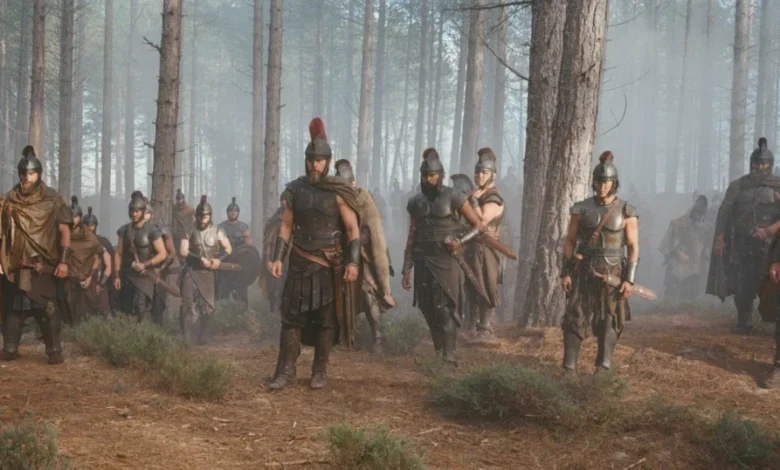
Christopher Nolan’s latest cinematic endeavor, an expansive adaptation of Homer’s The Odyssey, has officially transitioned from the realm of ancient myth to modern visual spectacle, utilizing a sprawling array of international locations to mirror the legendary ten-year journey of its protagonist. In a collaboration that reunites the director with production designer Ruth De Jong—following their acclaimed work on Oppenheimer—the production sought to move beyond the traditional "sun-bleached" Mediterranean aesthetic typically associated with classical epics. By integrating the rugged landscapes of Iceland and Scotland with the historical architecture of Greece, Italy, and Morocco, the production team has crafted a visual narrative that emphasizes the grueling, often nightmarish reality of Odysseus’s voyage.
The film stars Matt Damon as Odysseus, the resourceful King of Ithaca, who leads a dwindling crew through a series of supernatural and elemental trials following the fall of Troy. Supporting him is a high-profile ensemble including Anne Hathaway as the loyal Penelope, Tom Holland as their son Telemachus, and Lupita Nyong’o in a dual role as Helen of Troy and her sister Clytemnestra. To capture the scope of this journey, Nolan and De Jong opted for practical locations over soundstages whenever possible, a hallmark of Nolan’s directorial philosophy.
Production Philosophy and Global Scouting
The Odyssey is frequently described in literary circles as the ultimate travel narrative, albeit one defined by delays, mutiny, and disaster. For Nolan, the challenge lay in grounding these mythical events in a world that felt physically tangible. Production designer Ruth De Jong revealed that the scouting process was exhaustive, spanning multiple continents before the team finalized their list of locations. While the Mediterranean remains the narrative’s heart, the production team felt that relying solely on Greek or Italian vistas would fail to capture the otherworldly nature of Odysseus’s encounters with gods and monsters.

"We wanted to start in the Mediterranean, and we wanted to end in the Mediterranean," De Jong explained during a recent production briefing. "But Chris and I were not interested in an entire sun-bleached sort of vibe." This desire for visual diversity led the team to investigate beaches in Australia and woodlands in Japan before logistical considerations and specific atmospheric requirements pointed them toward a European and North African core. The resulting production schedule saw the crew move from the heat of the Atlas Mountains to the volcanic sands of Iceland, creating a visual contrast that underscores the protagonist’s displacement from his home.
The Foundation of the Journey: Greece and the Peloponnese
The production spent approximately one month filming in Greece, focusing largely on the Peloponnese region. This area served as the backdrop for several pivotal sequences involving Telemachus’s search for his father and Odysseus’s earlier exploits. One of the most significant locations used was Nestor’s Cave near Pylos. In the film, this site doubles as the lair of the Cyclops Polyphemus. The natural limestone formations provided a sense of scale that digital sets often lack, allowing the actors to interact with a genuine environment.
Further inland, the production utilized the olive groves of Messinia for a hunting sequence involving King Menelaus and Helen. The choice of Messinia allowed Nolan to capture the traditional "Old World" atmosphere of Sparta without the intrusion of modern infrastructure. For the return of Agamemnon, played by Benny Safdie, the production moved to the Methoni Castle in Messinia and the Acrocorinth near Athens. These monolithic structures provided the necessary gravitas for the tragic homecoming of the Greek general. De Jong noted that Nolan was particularly insistent on capturing the natural elements of these sites, specifically the relentless wind, which serves as a recurring motif throughout the film’s Greek sequences.
Ithaca and the Italian Logistics
While Ithaca is a real Greek island, the production team chose the island of Favignana, located off the coast of Sicily, to represent Odysseus’s ancestral home. De Jong had previously visited the island a decade prior and recalled its unique topography during the scouting phase. The centerpiece of the Italian shoot was the Castle of Santa Caterina, a 15th-century fortress perched atop a steep hill. This location provided a 360-degree view of the surrounding sea, allowing the production to film the arrival and departure of ships with minimal digital intervention.

The logistics of filming on Favignana became a point of discussion among the cast, particularly regarding the daily commute to the castle. Because the site was inaccessible by traditional vehicles, the entire crew, including Nolan and producer Emma Thomas, hiked thirty minutes uphill every morning. Construction materials and heavy equipment were transported via helicopter. This "off-season" shoot allowed the production to utilize the island’s quietude, though it required significant physical endurance from the actors. While the exteriors of the Ithacan palace were filmed on-site, the intricate interior sets were later reconstructed on a soundstage in Los Angeles to allow for controlled lighting and camera movement.
Reimagining Hades: The Icelandic Midnight Sun
In one of the film’s most striking departures from traditional imagery, Nolan chose Iceland to represent the Underworld, or Hades. Eschewing the trope of a dark, subterranean cavern, Nolan envisioned Hades as a vast, desolate expanse of black sand under the "Midnight Sun." Filming took place during the height of the Icelandic summer, where the sun never truly sets, creating an eerie, perpetual twilight.
The production bypassed the more famous "Diamond Beach" in favor of remote stretches of sand near the Hjörleifshöfði mountain, located roughly three hours east of Reykjavik. This location provided the isolation necessary for Odysseus’s encounter with the spirits of the dead. Additionally, Iceland served as the location for "Apollo’s Beach," where the crew encounters the sacred cattle of the sun god. De Jong went to great lengths to ensure historical and biological accuracy, sourcing a specific breed of cattle in Iceland that shares genetic lineage with ancient Mediterranean herds. This attention to detail reflects the production’s commitment to creating a "heightened reality" rather than a purely fantasy world.
The Fall of Troy: Practical Effects in Morocco
The opening of the film, depicting the final days of the Trojan War and the departure of the Greek fleet, was filmed in Morocco. The ancient village of Ait Benhaddou in the Atlas Mountains served as the foundation for the city of Troy. Rather than relying on a fully digital city, De Jong’s team constructed two and a half acres of practical sets directly adjacent to the existing village.

This approach allowed Nolan to film the burning of Troy using real fire. The production secured permission from local authorities to incinerate the sets, provided the historic village remained untouched. This sequence, featuring hundreds of extras running through the smoke and flames, provides a visceral opening to the film. The production also utilized the coastal town of Essaouira for the discovery of the Trojan Horse and the subsequent departure of the Greek ships. The Atlantic coast provided a more turbulent sea than the Mediterranean, symbolizing the beginning of Odysseus’s long and difficult voyage.
Circe’s Island and the Scottish Highlands
For the island of Aeaea, home to the enchantress Circe (played by Samantha Morton), the production moved to the Scottish Highlands. Specifically, the craggy cliffs near the town of Cullen were used to represent the isolated home of the witch. The choice of Scotland was driven by the desire for a lush, verdant, yet intimidating landscape that differed from the arid environments of Morocco and Greece.
The serpentine paths leading up to Circe’s home were practical locations, requiring the actors to navigate the rocky terrain as they moved toward the enchantress’s table. De Jong remarked that while Scotland is geographically distant from the Mediterranean, its "craggy" and "middle of nowhere" atmosphere was exactly what the narrative required for the scene where Odysseus’s men are transformed.
Broader Impact and Industry Implications
The production of The Odyssey marks a significant moment in modern epic filmmaking. By prioritizing global location filming and practical sets over the "Volume" technology or extensive green-screen environments popularized by recent franchises, Nolan continues to advocate for a traditionalist approach to cinema. This method not only provides a more immersive experience for the audience but also has a tangible economic impact on the regions involved.

Industry analysts suggest that the "Nolan Effect" often leads to a surge in location-based tourism, as seen with previous filming sites in Iceland and Italy. Furthermore, the decision to film in historically significant areas like Ait Benhaddou and the Peloponnese reinforces the connection between modern storytelling and cultural heritage. As the film prepares for its global release, the collaborative effort between Ruth De Jong’s design team and Christopher Nolan’s directorial vision stands as a testament to the enduring power of practical filmmaking on a grand scale. The Odyssey is not just a retelling of an ancient poem; it is a global logistical achievement that maps the journey of one of literature’s most enduring figures across the physical landscape of the modern world.