Illinois Stalls Landmark Climate Displacement Act as Global Migration Crisis Intensifies

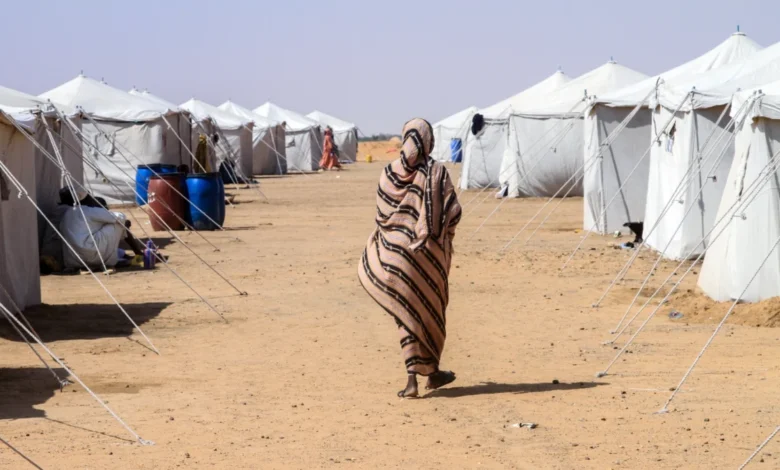
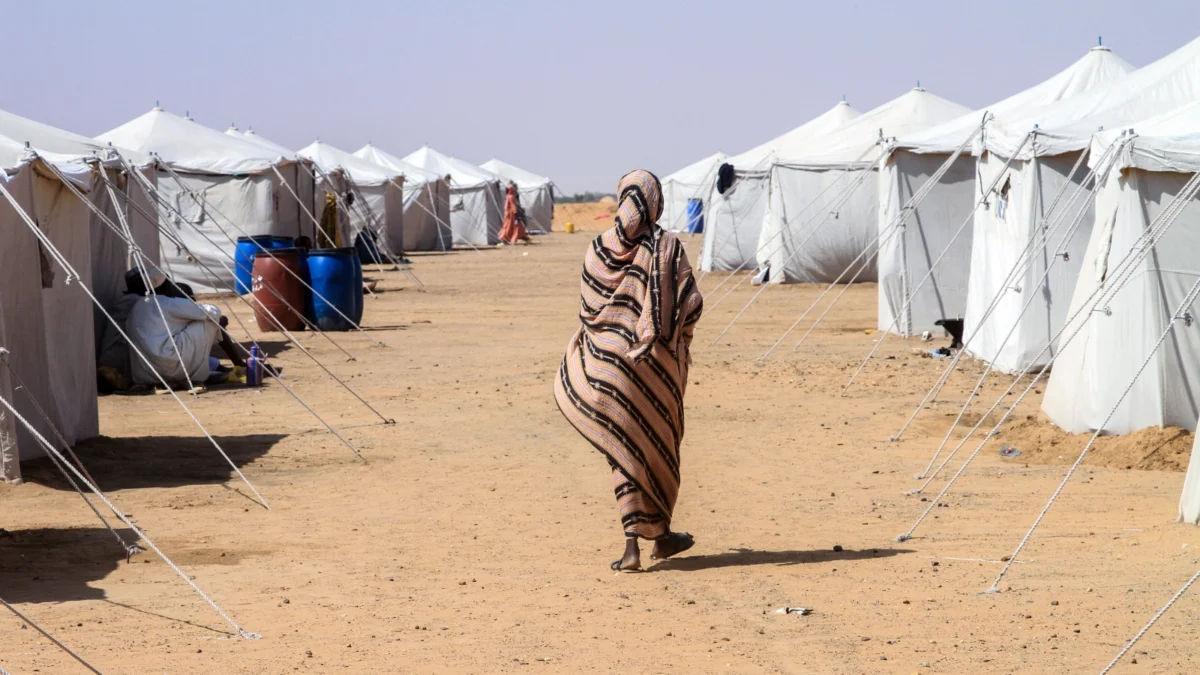
Every year, millions of people across the globe are uprooted from their homes by the compounding effects of climate change. Whether driven by the sudden, violent onset of floods and wildfires or the slow-motion attrition of drought and sea-level rise, these individuals constitute a new and rapidly growing category of displaced persons. Despite the scale of this phenomenon, climate migrants remain in a legal limbo, lacking the specific protections afforded to political refugees under international law. While most displacement occurs within national borders, the sheer volume of this human migration—estimated to reach at least 44 million people internally by 2050 according to the World Bank—is forcing governments to grapple with a new reality. In the United States, Illinois recently positioned itself at the forefront of this challenge by signing the Climate Displacement Act, a pioneering piece of legislation designed to prepare the state for the inevitable influx of new residents. However, more than a year after its enactment, the state’s efforts to implement this mandate have ground to a near-total halt, raising questions about the government’s commitment to long-term climate resilience.
A Legislative Milestone Left in Limbo
Last fall, Illinois Governor JB Pritzker signed the Climate Displacement Act into law, marking the first time any U.S. state had explicitly committed to assessing how climate-driven migration would impact its infrastructure, public resources, and social fabric. The law was celebrated as a visionary roadmap. It mandated the creation of a 17-seat task force tasked with producing two comprehensive reports: the first due in December of this year, and a final, long-term assessment due in 2027. The objective was to provide a blueprint for how a Midwestern state, often cited for its geographic advantages, could accommodate vulnerable populations while maintaining its own stability.

Despite the legislative fanfare, the reality of the task force’s progress has been starkly different. The law required state officials—including the Governor, key legislative leaders, and the heads of various state agencies—to appoint members to the board within 90 days of the bill’s signing. Yet, for over a year, that directive remained largely ignored. Out of the 17 designated seats, only one appointment was made during the initial 12-month window. As the deadline for the first report approaches, the task force has yet to convene, and the project appears to be drifting into bureaucratic obsolescence.
Chronology of a Stalled Initiative
The timeline of the Climate Displacement Act reveals a pattern of administrative inertia that has frustrated both the bill’s sponsors and environmental advocates:
- February 2025: Illinois State Senator Graciela Guzman introduces the bill, citing the existential anxiety felt by families in the wake of devastating wildfires in California.
- Late 2025: Governor Pritzker signs the Climate Displacement Act, establishing the 17-member task force.
- Early 2026: The 90-day window for appointments passes with virtually no action taken by the Governor’s office, legislative leadership, or state agency heads.
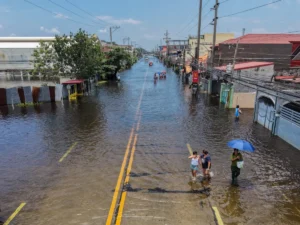
- Mid-2026: Chicago and the broader Midwest face a series of extreme weather events, including historic flooding and record-breaking heat, highlighting the urgency of the climate planning the act was intended to address.
- Late 2026: Following inquiries from journalists, Senate President Don Harmon appoints Senator Guzman to the board, but the remaining 16 seats remain vacant.
When questioned about the delay, spokespeople for the Governor’s office maintained that the administration remains committed to the spirit of the law. "Governor Pritzker remains committed to fighting climate change and preparing Illinois for its impacts, including climate-related migration," said Andres Correa, a spokesperson for the administration. "This work is important, and the administration will continue working with lawmakers, state agencies, and stakeholders to establish a timeline and move the task force forward." Despite these assurances, the administration has failed to provide a concrete date for when the task force will actually begin its work.

The Myth and Reality of the Climate Haven
The impetus for the legislation was, in part, the growing reputation of the Midwest as a "climate haven." With access to 20 percent of the world’s unfrozen freshwater, a robust agricultural economy, and relative safety from the immediate threats of coastal sea-level rise and large-scale wildfire corridors, Chicago has frequently been highlighted as a top-tier destination for those fleeing more volatile regions. A recent analysis by the firm AlphaGeo even ranked Chicago as the most climate-resilient large city in the world, citing its infrastructure and geography.
However, many experts caution against the "haven" narrative. Climatologists argue that there is no geographic location on Earth truly insulated from the systemic shocks of a warming planet. The past year has provided a sobering counter-argument to the idea that the Midwest is "climate-proof." Chicago’s massive Deep Tunnel and Reservoir Plan, intended to mitigate flooding, reached near-capacity levels during unprecedented rainfall events. Additionally, the region has been subjected to extreme heat waves and hazardous air quality caused by wildfire smoke originating hundreds of miles away.
"It’s all that anybody I’m around is talking about—just the incredible weather events that we have had in our state," said Senator Guzman. "It’s really laying bare why this kind of planning is important."

Broader Implications and the Global Context
The delay in Illinois reflects a deeper, systemic issue: the lack of a legal and conceptual framework for handling climate migration. Under the 1951 Refugee Convention, which governs modern asylum systems, the definition of a "refugee" is strictly limited to those fleeing persecution based on race, religion, nationality, or political opinion. Climate-driven displacement does not currently fit this definition, leaving the world without an international mechanism to support those whose homes have been rendered uninhabitable by rising seas or terminal drought.
Without federal or international guidance, states are increasingly forced to innovate on their own. While Illinois is the only state to pass such a comprehensive, mandate-driven law, other regions are beginning to take note. Maine has integrated climate migration into its statewide resilience strategies, while coastal states like California, New Jersey, and Hawaii are exploring property buyouts and infrastructure relocation. In Alaska, the state government has begun pledging direct support to indigenous communities like Kipnuk and Kwigillingok, which are currently being forced to relocate due to the increasing severity of storms and land erosion.
Byran Jones, a geographer and professor at Baruch College who specializes in climate displacement, notes that while the task of preparing for such population shifts is daunting, it is not optional. "It would be of tremendous service and certainly help to get the conversation started where there’s been limited conversation in this country, to this point," Jones said. He emphasizes that the complexity of the issue—which intersects with economics, housing policy, infrastructure, and social services—is precisely why the planning needs to start immediately.

The Road Ahead
The failure of the Illinois task force to meet its initial obligations is not merely a bureaucratic oversight; it represents a significant challenge for policymakers attempting to bridge the gap between long-term climate risk and short-term political cycles. The mandate created by the Climate Displacement Act did not include punitive measures for non-compliance, leaving little recourse for those who believe the state is failing to prepare for a looming demographic shift.
As the state moves toward the end of the year—the original deadline for the first phase of the reporting process—the pressure on the Governor and the legislature to fill the remaining 16 seats is expected to mount. Whether the state will treat the Climate Displacement Act as a living, actionable policy or allow it to become a symbolic gesture remains to be seen. For now, the "roadmap" for the future of climate-resilient migration in Illinois remains entirely unwritten, despite the mounting evidence that the environment that necessitates such a plan is already here.
Related posts: