Brightline Files for Bankruptcy Protection While Maintaining Full Operational Service Across Its Expanding Rail Network

The first thing Brightline wants you to know about its bankruptcy is that the trains will keep running. Following a strategic decision to file for Chapter 11 bankruptcy protection, the privately operated higher-speed rail company has moved quickly to reassure both its stakeholders and its growing passenger base that its Florida operations—and its ambitious western expansion projects—remain unaffected. The move, characterized by management as "business as usual," marks a pivotal moment for the United States’ most prominent private-sector experiment in modern passenger rail.
The Chapter 11 filing serves as a financial reset, intended to facilitate the restructuring of the company’s heavy debt load. According to recent disclosures, the company is seeking to borrow an additional $490 million to bolster its liquidity. This capital injection is designed to help the railroad manage the payments on $4.4 billion in accumulated debt, which was accrued during the intensive construction, expansion, and operational phases of its Florida corridor.
A Chronology of Growth and Financial Pressure
Brightline’s journey began in 2018 with the launch of its initial service between Miami and West Palm Beach. This segment proved the viability of a premium, privately funded rail model in a region long dominated by automobile travel. In 2023, the company reached a significant milestone by extending its service to Orlando, effectively bridging two of Florida’s most economically vital regions.
Despite this operational success, the financial model has faced significant headwinds. The company’s growth trajectory, while positive in terms of ridership and revenue, has not kept pace with the projections established during the project’s inception. Between January and August of this year, Brightline reported a 14 percent increase in ridership and a 17 percent increase in revenue compared to the same period in 2024. However, analysts point out that these figures fall short of original forecasts. Tim Hynes, head of Global Credit Research at Debtwire, noted that current ridership and income levels remain less than half and one-third, respectively, of what the company originally projected for the 2024 fiscal year.
Operational Independence and Future Outlook
Crucially, the bankruptcy filing is limited in scope. It does not include Brightline Trains Florida, the specific division responsible for the daily operation of the Miami-to-Orlando corridor. Similarly, the filing excludes Brightline West, the high-profile project currently developing a 218-mile high-speed line between Las Vegas and the Los Angeles suburb of Rancho Cucamonga.
Patrick Goddard, CEO of Brightline Florida, underscored the company’s stability in a public statement released following the news. "Brightline is a critical part of Florida’s transportation network that has changed the way people move around the state," Goddard said. "This transaction will be a catalyst for further growth in ridership and revenue." The company continues to move forward with its long-term expansion plans, including a proposed extension to Tampa and the addition of a new station in Cocoa.
The Human Cost and Safety Scrutiny
While the company focuses on financial restructuring, it continues to navigate public scrutiny regarding its safety record. As of early 2025, the rail line has been associated with 182 fatalities since its inception in 2018. The majority of these incidents involved collisions at grade crossings or unauthorized individuals on the tracks.
Brightline has consistently maintained that none of these tragic incidents were the result of internal operational failures or train malfunctions. In response to these concerns, the company has invested hundreds of millions of dollars into safety infrastructure, including enhanced signaling, fencing, and public awareness campaigns. Critics, however, argue that the integration of high-speed rail into existing urban corridors presents inherent risks that require ongoing mitigation strategies.

Passenger Perspectives and the "Luxury" Rail Market
For the average rider, the bankruptcy filing has yet to manifest in the form of service disruptions. Ivan Reich, a frequent commuter who utilizes the service to travel between West Palm Beach and Fort Lauderdale, describes the experience as a premium alternative to traditional transit.
"Brightline’s literally like going to the airport and being on a plane," Reich observed. "It’s a luxury experience. It’s nice. It’s pleasant. It’s comfortable." However, Reich’s testimony touches on a central tension in the company’s business model: affordability. While the service is efficient, the price point—often exceeding $100 for round-trip travel between Miami and Orlando—positions it more as a premium travel option than a mass-transit utility. For many, the cost remains a barrier to daily use, limiting the company’s ability to capture a broader demographic of commuters.
The Broader Implications for American Infrastructure
The financial situation at Brightline has reignited a long-standing debate among urban planners, economists, and policymakers regarding the role of private versus public capital in developing high-speed rail.
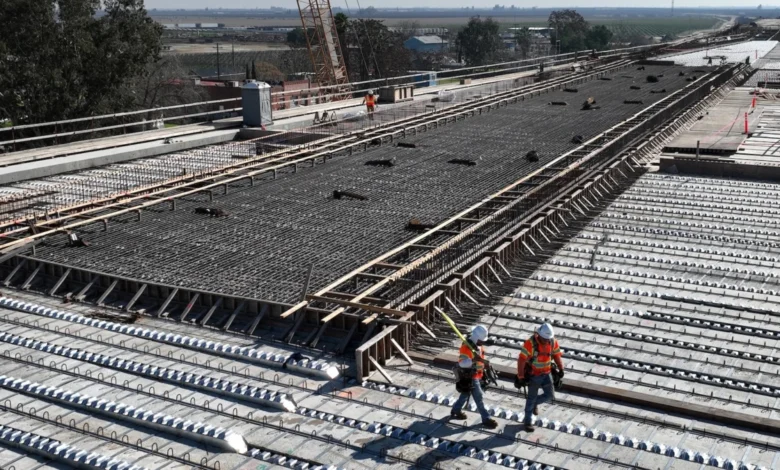
Across the country, the contrast between the private-led model of Brightline and the public-led model of California’s long-delayed high-speed rail project has become increasingly stark. California, which has spent nearly two decades attempting to connect San Francisco and Los Angeles via a state-funded system, is currently exploring ways to attract private investment to finish its project. Conversely, Brightline’s struggles demonstrate the immense difficulty of relying solely on private capital to fund the massive upfront costs of rail infrastructure.
Jim Mathews, president of the Rail Passengers Association, views the restructuring as a necessary evolution. "It probably gives Brightline breathing room to get out from under a crushing debt load," Mathews stated. However, he cautioned that the situation highlights a fundamental flaw in the current American approach to rail funding. "Building a railroad is very hard and very expensive," Mathews said. "This is a good example of why governments always have a legitimate role to play."
The "Public Good" Argument
Industry experts argue that the disparity between rail and other forms of transportation is a policy choice that must be addressed. Rick Harnish, head of the High Speed Rail Alliance, points out that the aviation and trucking industries are heavily subsidized through government-funded airports and interstate highway systems.
"Airlines don’t pay to build airports, and trucking companies don’t pay to build highways," Harnish noted. "Taxpayers do, because private capital will not invest in the kind of infrastructure you need to fund public transit." According to this view, the rising ridership on both Brightline and Amtrak proves that the demand for rail travel is robust. The missing component, according to advocates, is a federal commitment to high-quality, government-funded tracks that would allow rail to compete on a level playing field with air and road travel.
Integrating Systems: A Technical and Political Hurdle
Beyond funding, the physical integration of rail systems remains a complex challenge. Alon Levy, a research scholar at the New York University Marron Institute, noted that Brightline West’s decision to terminate in Rancho Cucamonga—rather than in the heart of Los Angeles—highlights the difficulties of fragmented transit planning. To truly succeed, such projects require extensive coordination with local public transit agencies, such as Metrolink, which necessitates "top-down federal action" to ensure connectivity.
As Brightline navigates its Chapter 11 proceedings, the company’s future remains tied to the success of its expansion efforts and the continued patience of its bondholders. For the United States, the ultimate takeaway from Brightline’s current situation may not be the failure of a specific company, but rather the realization that high-speed rail requires a sustainable partnership between private ingenuity and public infrastructure investment. Until a clear policy path is established for how these tracks are funded, the expansion of high-speed rail in America will likely remain an expensive and arduous endeavor.
Related posts: