A Federal Appeals Court Rules That the U.S. Constitution Does Not Guarantee the Right to Clean and Safe Drinking Water

In a landmark decision with far-reaching implications for public health and civil rights, the Fifth U.S. Circuit Court of Appeals has ruled that the United States Constitution does not provide a fundamental right to clean, safe, or reliable drinking water. The September 4 ruling effectively dismisses a lawsuit brought by residents of Jackson, Mississippi, who sought to hold local and state officials accountable for a systemic, decades-long water crisis that has repeatedly left the city’s majority-Black population without access to potable water.
The appellate court’s decision also struck down claims that the Constitution guarantees citizens the right to truthful information from government officials during public health emergencies. By affirming a lower court’s dismissal of the case, the panel has set a restrictive precedent that limits the ability of marginalized communities to seek constitutional remedies for the failure of essential public infrastructure.
The Jackson Water Crisis: A Chronology of Decay
The collapse of Jackson’s water system is not a sudden phenomenon but the culmination of decades of deferred maintenance, administrative neglect, and environmental injustice. The city, which is approximately 80% Black and maintains a poverty rate significantly higher than the national average, has struggled for years with aging, lead-leached pipes and deteriorating treatment plants.
The crisis reached a tipping point in March 2020, when the Environmental Protection Agency (EPA) issued an emergency order, declaring that the city’s water conditions presented an “imminent and substantial endangerment” to residents. The warning cited severe flaws in both the treatment and distribution infrastructure.
In February 2021, the situation escalated into a full-scale catastrophe. A severe winter storm caused pipes to burst and treatment equipment to freeze, leaving tens of thousands of residents without running water for weeks. The crisis was further exacerbated in 2022 when catastrophic flooding led to the failure of the O.B. Curtis Water Treatment Plant, forcing federal intervention and the appointment of a third-party manager to oversee the utility.
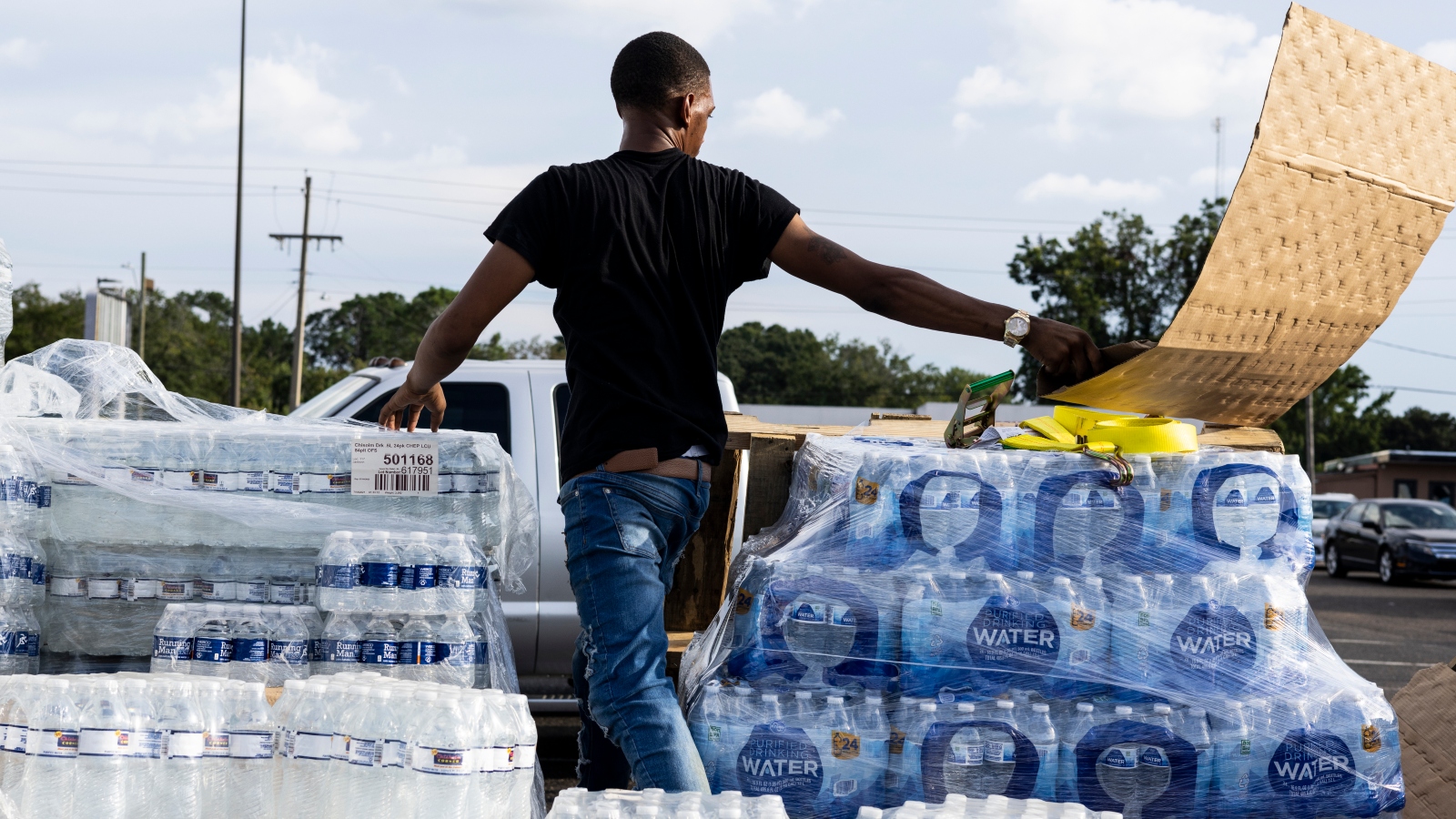
Despite these interventions, residents maintain that the damage—both to the infrastructure and the health of the citizenry—has already been done. For generations, families have navigated a cycle of "boil water" notices, brown-tinted tap water, and the necessity of purchasing bottled water for basic survival.
Legal Arguments and the Court’s Rationale
The lawsuit, initiated in 2022, targeted the city of Jackson and former Mayor Chokwe Antar Lumumba. Plaintiffs argued that officials had knowingly permitted lead-contaminated water to reach homes while simultaneously providing false assurances of safety. They alleged that these actions violated their constitutional right to "bodily integrity" under the 14th Amendment.
The Fifth Circuit’s rejection of this claim was anchored in a rigid originalist interpretation of the law. Judge Kurt Engelhardt, writing for the majority, acknowledged the gravity of the water crisis but concluded that access to clean water is not a right "deeply rooted in our Nation’s history and tradition." The court held that the Constitution does not mandate a remedy for every instance of government mismanagement, even when that mismanagement results in profound public suffering.
Perhaps most controversially, the court dismissed the argument regarding the right to truthful information. Judge Engelhardt wrote that "lying about the presence of lead in the water is a far cry from the state’s physically extracting evidence from a criminal suspect or conducting an invasive medical procedure without consent." This effectively limits the "bodily integrity" doctrine to direct, physical state violence, excluding systemic negligence that results in long-term chemical exposure.
Judge Catharina Haynes, in a partial dissent, offered a different perspective, arguing that the plaintiffs had successfully demonstrated a plausible claim that the city had knowingly placed residents in harm’s way, which should have been sufficient to warrant further judicial scrutiny.
Systemic Disparities and Federal Data
The ruling arrives amidst mounting evidence that water insecurity is disproportionately distributed across racial and economic lines. Federal data consistently reveals that Black communities are significantly more likely than white communities to be served by water systems that violate the Safe Drinking Water Act. Research indicates that systems in predominantly Black neighborhoods face longer wait times for repairs, fewer capital investments, and a greater prevalence of lead-service lines.

For Jackson residents, the intersection of race and poverty has resulted in a unique form of environmental disenfranchisement. Activists point to the fact that the EPA previously determined that the city could not receive support through the Civil Rights Act of 1965, leaving the community with few avenues for federal recourse.
"Jackson residents did everything this country tells poor people to do," said Danyelle Holmes, a senior national organizer with the Poor People’s Campaign. "They organized, they testified, they boiled their water, they filed suit, they trusted the courts. And at every step, the answer has been no. What it signals is that the law has told a majority-Black capital city that its suffering is real, but its remedy does not exist."
Economic Burdens on a Shrinking Tax Base
As the city struggles to rebuild its water infrastructure under the direction of JXN Water—the federally appointed management entity—the financial burden is increasingly falling on the residents. A court-approved 12% rate increase implemented in March raised the average monthly water and sewer bill for Jackson residents to approximately $88.
Financial planning documents for the utility suggest that this is only the beginning of a series of hikes, with proposed increases of 10% in 2027, 9% in 2028, and 8% in 2029. In a city where a large percentage of the population lives in poverty, these costs represent a significant portion of household income. Critics argue that this financing model essentially forces the victims of the crisis to pay for the system’s previous failures, further destabilizing the economic viability of the city.
The Broader Implications for Public Health
The long-term health consequences of the Jackson water crisis remain a primary concern for public health officials and residents alike. Lead, a potent neurotoxin, has been identified in the system’s water at various intervals over the past decade. Medical studies consistently link lead exposure to permanent cognitive impairment, developmental delays, and chronic health conditions, including kidney issues.
Gwendolyn Reed-Davis, a longtime resident, has spoken publicly about the personal cost of the crisis, linking her own health struggles and the learning difficulties faced by her children to years of reliance on contaminated tap water. For many, the court’s ruling serves as a final, bitter confirmation that their physical health is not a protected interest under the current constitutional framework.
Looking Ahead: The Future of Water Governance
The Fifth Circuit’s ruling is likely to discourage similar litigation in other parts of the country where water infrastructure is failing. By setting a high bar for what constitutes a constitutional violation, the court has signaled to local governments that the federal judiciary will remain largely deferential to municipal failures, provided they do not involve overt, physical state intervention.
However, the ruling has also galvanized local organizers. In the wake of the decision, advocacy groups in Jackson have pledged to shift their focus from the courtroom to electoral and grassroots organizing. The sentiment, as expressed by activists like Brooke Floyd, is that the crisis in Jackson serves as a warning for the rest of the nation.
"The problem the rest of America needs to worry about is, while they were making sure not to guarantee me my rights, they were quietly taking yours, too," Floyd noted.
As Jackson continues to operate under federal oversight, the tension between the necessity of modernizing a failing utility and the economic realities of its residents will remain a defining feature of the city’s governance. The legal path to redress may have been closed by the Fifth Circuit, but the political and social questions surrounding the government’s obligation to provide basic life-sustaining resources remain as urgent as ever.
The City of Jackson, through the office of the Mayor, has stated it remains committed to the safety of its residents, despite the legal victory in having the lawsuit dismissed. For now, the city’s water remains a symbol of both the persistence of its people and the profound failures of a system that has, according to the courts, no constitutional obligation to provide the very water needed to sustain life.
Related posts: