Generate Barcode Google Sheets Excel Tools

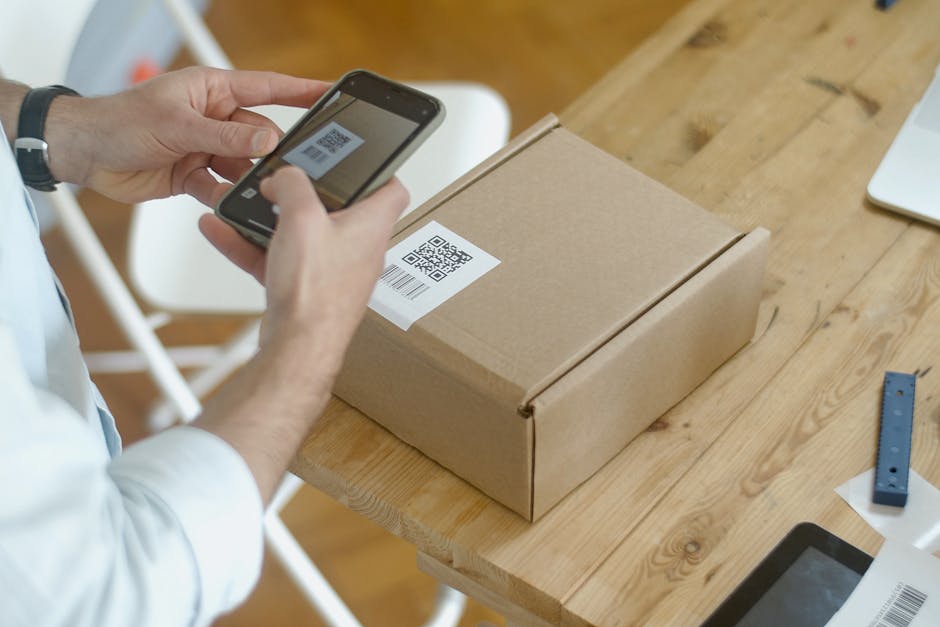
Unlock Efficiency: Generating Barcodes in Google Sheets & Excel with Powerful Tools
The ability to generate barcodes directly within spreadsheet applications like Google Sheets and Microsoft Excel offers a significant leap in operational efficiency for businesses and individuals alike. Whether managing inventory, tracking assets, creating product labels, or streamlining data entry, a robust barcode generation system integrated into familiar spreadsheet environments is invaluable. This article explores the various methods, tools, and considerations for generating barcodes in Google Sheets and Excel, emphasizing SEO-friendly strategies for maximizing visibility and utility.
Understanding Barcode Generation in Spreadsheets
At its core, barcode generation in spreadsheets involves converting alphanumeric data from a cell into a scannable visual representation. This process can be achieved through several primary mechanisms: custom fonts, online generators integrated via scripts or add-ons, and dedicated software or plugins. Each approach has its own advantages, disadvantages, and suitability depending on the user’s technical expertise, the volume of barcodes required, and the desired level of customization.
Method 1: Utilizing Barcode Fonts
One of the most straightforward and cost-effective methods for generating barcodes in Excel and Google Sheets is by employing specialized barcode fonts. These fonts are designed to render standard barcode symbologies (like Code 128, Code 39, UPC-A, EAN-13, etc.) directly from text data. The principle is simple: you input your data into a spreadsheet cell, apply the appropriate barcode font to that cell, and the software converts the text into a barcode image.
How Barcode Fonts Work:
- Install the Font: First, you need to download and install a barcode font on your operating system. Many free and paid options are available. Popular choices include "Libre Barcode 39," "Free 3 of 9," "Code 128," and various proprietary fonts. Ensure the font supports the barcode symbology you intend to use.
- Format Your Data: In your spreadsheet, prepare the data you want to convert into barcodes. For some symbologies (like Code 39), you might need to add an asterisk (*) at the beginning and end of your data string for the font to interpret it correctly. Other symbologies have more complex start/stop characters or checksum calculations. Always consult the font’s documentation for specific requirements.
- Apply the Font: Select the cell(s) containing your barcode data and apply the installed barcode font from your spreadsheet’s font dropdown menu.
- Adjust Formatting: You may need to adjust cell formatting, such as font size and row height, to ensure the barcode is legible and scannable.
Advantages of Barcode Fonts:
- Simplicity: Relatively easy to implement for basic needs.
- Cost-Effective: Many high-quality barcode fonts are available for free.
- Offline Generation: Once the font is installed, barcodes can be generated without an internet connection.
- Dynamic Updates: Barcodes automatically update as the underlying data changes.
Disadvantages of Barcode Fonts:
- Symbology Limitations: Not all fonts support all barcode types.
- Checksums and Start/Stop Characters: Requires manual intervention or helper columns to ensure correct formatting for certain symbologies.
- Print Quality Dependency: Barcode readability is highly dependent on print resolution and scanner quality.
- Limited Customization: Offers minimal control over barcode appearance beyond basic font sizing.
- Compatibility Issues: Can sometimes lead to font rendering issues across different versions of spreadsheets or operating systems.
SEO Considerations for Barcode Fonts:
When discussing barcode fonts, use keywords such as "barcode font Excel," "barcode font Google Sheets," "free barcode font," "Code 128 font," "Code 39 font," "install barcode font spreadsheet," and "generate barcode text font." Emphasize the ease of use and cost savings.
Method 2: Leveraging Online Barcode Generators with Scripts and Add-ons
For more advanced barcode generation capabilities, particularly for generating actual image files rather than relying on font rendering, integrating with online barcode generators is a powerful approach. This often involves using scripts (like Google Apps Script for Google Sheets) or dedicated add-ins/plugins for Excel.
Google Sheets with Google Apps Script:
Google Apps Script is a JavaScript-based scripting language that allows you to extend Google Workspace applications. For barcode generation in Google Sheets, you can write or use pre-built scripts that:
- Fetch Data: Read data from selected cells.
- Connect to an API: Utilize a free or paid online barcode generation API (e.g., Google Charts API – though this is being deprecated, alternative APIs exist).
- Generate Barcode Image: The API processes the data and returns a barcode image URL or the image data itself.
- Insert Image: The script then inserts this image into a designated cell in your Google Sheet.
Example Workflow (Conceptual):
- User enters data: In column A, the user enters product codes.
- Script triggers: A custom menu item or an
onEdittrigger initiates the script. - Script reads data: Reads the product code from a cell in column A.
- API call: Sends a request to a barcode API (e.g.,
https://barcodeapi.example.com/code128?data=YOUR_DATA) - Image insertion: Receives the image and inserts it into column B.
Excel with VBA or Add-ins:
Similar to Google Sheets, Excel users can achieve this using:
- VBA (Visual Basic for Applications): You can write VBA code to interact with online APIs or COM objects that generate barcode images. This requires programming knowledge.
- Excel Add-ins/Plugins: Numerous third-party add-ins are available that integrate barcode generation directly into the Excel ribbon. These often offer user-friendly interfaces, support for various symbologies, and advanced customization options. Some are free, while others are premium.
Popular Online Barcode APIs and Services:
- Google Charts API (Deprecating): Historically used for generating QR codes and other barcodes, but its long-term support is uncertain.
- Various Third-Party APIs: Numerous commercial and some free APIs offer barcode generation services. These often require API keys and might have usage limits for free tiers. Examples include Barcode TEC-IT, Scandit, and many others.
- Cloud-based Barcode Generation Platforms: Services like Dynamsoft offer SDKs and APIs for integrating barcode scanning and generation into applications, including potentially workflows involving spreadsheets.
Advantages of API/Script-Based Generation:
- Actual Image Files: Generates actual image files, ensuring better consistency and compatibility.
- Wide Symbology Support: APIs typically support a vast array of barcode types and configurations.
- Customization: Often allows for customization of size, color, resolution, and inclusion of human-readable text.
- Automation: Can be fully automated through scripts.
- Scalability: Suitable for generating large volumes of barcodes.
Disadvantages of API/Script-Based Generation:
- Internet Dependency: Requires an active internet connection to fetch barcode images from APIs.
- API Costs/Limits: Free APIs may have usage limitations, and paid APIs incur costs.
- Technical Expertise: Requires scripting knowledge (Apps Script, VBA) or the willingness to install and configure add-ins.
- API Reliability: Dependent on the uptime and performance of the chosen API provider.
SEO Keywords for API/Script-Based Generation:
Use phrases like "Google Sheets barcode API," "Excel barcode add-in," "generate barcode image Google Sheets," "VBA barcode generator Excel," "barcode generation script," "automate barcode creation Excel/Sheets," and specific symbology names like "generate QR code Google Sheets" or "generate Code 128 Excel."
Method 3: Dedicated Barcode Software with Spreadsheet Integration
For businesses with extensive barcode needs or those requiring highly specialized barcode types and advanced features (like serialization, batch generation, and label design), dedicated barcode software that offers integration with Excel and Google Sheets is often the most robust solution.
These software packages typically allow you to:
- Import Data from Spreadsheets: Directly import data from CSV files or by connecting to Excel/Google Sheets.
- Design Labels: Use built-in label design tools to create professional-looking labels with barcodes, text, logos, and other graphics.
- Generate Barcodes in Bulk: Produce thousands of barcodes at once based on your imported data and designs.
- Print Labels: Directly print labels to various printers.
- Export Barcode Images: Export barcodes as individual image files (PNG, JPG, etc.) for insertion back into spreadsheets or other documents.
Examples of Dedicated Barcode Software:
- Bartender: A widely recognized professional label design and barcode printing software that integrates seamlessly with databases and spreadsheets.
- Loftware NiceLabel: Another leading platform for enterprise labeling, offering robust data integration and barcode generation capabilities.
- ZebraDesigner: Software from a prominent barcode printer manufacturer, often tailored for their printers but capable of generating standard barcodes.
Advantages of Dedicated Software:
- Comprehensive Features: Offers the most advanced features for design, generation, and printing.
- High-Quality Output: Produces professional-grade barcode labels.
- Reliability and Scalability: Designed for high-volume, enterprise-level use.
- Support and Training: Typically comes with professional support and documentation.
- Offline Operation: Most operations can be performed offline.
Disadvantages of Dedicated Software:
- Cost: These are often expensive, premium solutions suitable for business use.
- Learning Curve: Can be more complex to learn and master than simpler font-based methods.
- Overkill for Simple Needs: May be excessive for users who only need to generate a few barcodes occasionally.
SEO Keywords for Dedicated Software:
Target keywords such as "barcode label software," "enterprise barcode generation," "barcode printing software Excel integration," "professional barcode designer," "bulk barcode creation tool," and specific industry terms like "inventory barcode software" or "product label printing software."
Choosing the Right Method: A Decision Framework
The optimal method for generating barcodes in Google Sheets and Excel depends on several factors:
-
Volume of Barcodes:
- Low Volume (Few barcodes occasionally): Barcode fonts or simple online generators are sufficient.
- Medium Volume (Regular use, hundreds of barcodes): Google Apps Script/VBA with APIs, or a moderately priced add-in, might be best.
- High Volume (Thousands of barcodes daily/weekly): Dedicated barcode software is usually the most efficient and scalable solution.
-
Technical Skill Level:
- Beginner: Barcode fonts or user-friendly add-ins.
- Intermediate: Google Apps Script or VBA, with guidance.
- Advanced: Custom scripting, API integration, or enterprise software.
-
Budget:
- Free/Low Budget: Free barcode fonts, free online API tiers, or free trial versions of add-ins.
- Moderate Budget: Paid barcode fonts, premium add-ins, or lower-tier API subscriptions.
- High Budget: Enterprise-grade barcode software.
-
Required Barcode Symbology and Customization:
- Standard Symbologies (Code 39, Code 128, QR): Most methods can handle these.
- Niche or Complex Symbologies (e.g., pharmaceutical, industrial): Dedicated software or specialized APIs are often necessary.
- Advanced Customization (Logos, human-readable text variations): Dedicated software or robust APIs.
-
Need for Image Files vs. Font Rendering:
- Image Files (for sharing, printing labels): API/script-based methods or dedicated software.
- On-the-fly rendering within the sheet: Barcode fonts.
Best Practices for Barcode Generation in Spreadsheets:
- Data Integrity: Ensure your source data is clean and accurate. Barcodes are only as good as the data they represent.
- Symbology Choice: Select the appropriate barcode symbology for your needs. Consider data capacity, error correction, and industry standards.
- Human-Readable Text: For most applications, include human-readable text below the barcode for manual verification.
- Quiet Zones: Maintain sufficient white space (quiet zones) around the barcode for proper scanning. This is crucial for font-based generation and can be controlled in API settings.
- Print Quality: Use high-resolution printers and appropriate media. Low-quality prints can render even perfectly generated barcodes unscannable.
- Testing: Always test your generated barcodes with a reliable scanner before deploying them in a live environment.
- Scalability Planning: If your needs are likely to grow, choose a method that can scale with your business.
SEO Strategy for Barcode Generation Content:
To ensure this article (and related content) ranks well in search engines, focus on:
- Targeted Keywords: Integrate primary keywords like "generate barcode Google Sheets," "generate barcode Excel," and secondary keywords like specific symbologies ("Code 128 generator," "QR code Google Sheets"), methods ("barcode font," "barcode add-in"), and use cases ("inventory barcode," "product labeling").
- Long-Tail Keywords: Address specific user queries like "how to add barcode to Google Sheet," "Excel formula for barcode generator," or "free barcode label maker for small business."
- Clear Structure and Headings: Use H1, H2, and H3 tags effectively to break down information and improve readability for both users and search engines.
- High-Quality Content: Provide detailed, accurate, and actionable information.
- Internal Linking: Link to other relevant articles on your site (e.g., about specific barcode types, spreadsheet tips).
- External Linking: Link to reputable sources for fonts, APIs, or software if appropriate.
- Image Alt Text: Use descriptive alt text for any images of barcodes or interfaces.
- Mobile-Friendliness: Ensure the content is easily accessible on all devices.
Conclusion
The integration of barcode generation into Google Sheets and Excel empowers users with powerful tools for data management and operational efficiency. From simple barcode fonts for quick tasks to sophisticated software for enterprise-level needs, the available solutions cater to a wide spectrum of requirements. By understanding the different methods, their pros and cons, and employing a strategic approach to selection and implementation, individuals and businesses can unlock significant benefits, streamline workflows, and reduce errors. The ongoing evolution of online APIs and spreadsheet add-ins continues to make barcode generation more accessible and powerful than ever before, making it an essential capability for modern data-driven operations.


