The decision, issued on September 4 by the Fifth U.S. Circuit Court of Appeals, marks a significant legal setback for the residents of Jackson, a city where over 80 percent of the population is Black and the poverty rate is more than double the national average. By affirming a lower court’s dismissal of a class-action lawsuit, the appellate court determined that neither access to potable water nor the right to receive truthful information from public officials during a public health emergency are protected under the U.S. Constitution.
The Legal Battle: A Pursuit of Bodily Integrity
The litigation originated in 2022, following years of systemic failures within the Jackson water system. Plaintiffs argued that city and state officials knowingly allowed lead-contaminated water to reach households while publicly misrepresenting the safety of the supply. The suit specifically invoked the 14th Amendment, asserting a constitutional right to bodily integrity.
Attorneys for the residents contended that the state’s alleged failure to provide safe water—coupled with the diversion of federal funds to predominantly white, wealthier communities—constituted a violation of their civil rights. They sought both compensatory damages for the health impacts suffered by families and a mandate for systemic operational changes.
However, writing for the majority, Judge Kurt Engelhardt drew a sharp distinction between government negligence and constitutional protections. While acknowledging that access to safe water is a societal good, the court ruled it does not meet the high threshold of being “deeply rooted in our Nation’s history and tradition,” the standard required for a right to be recognized under the Due Process Clause. Furthermore, the court dismissed the claim regarding misinformation, suggesting that lying about lead levels in public water does not rise to the level of unconstitutional bodily intrusion, such as the state performing an involuntary medical procedure.
A Legacy of Infrastructure Decay
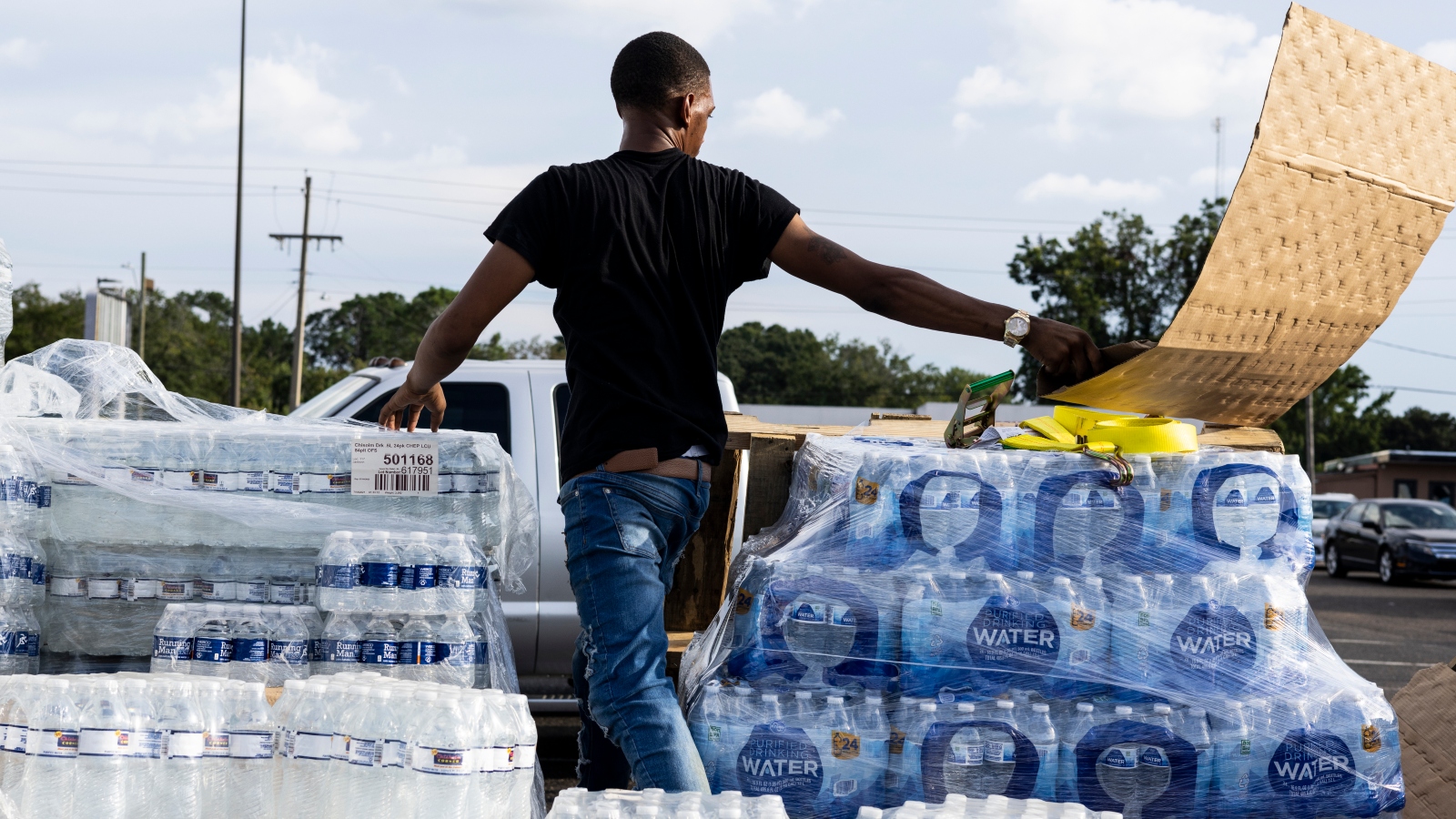
To understand the gravity of the court’s ruling, one must examine the decades-long deterioration of Jackson’s water infrastructure. The city’s crisis is not a singular event but the result of a "perfect storm" of deferred maintenance, aging pipes, and a shrinking tax base.
The chronology of the crisis includes:
- Early 2000s: Years of deferred maintenance and lack of capital investment began to plague the city’s aging treatment plants.
- March 2020: The Environmental Protection Agency (EPA) issued an emergency order, noting that the Jackson water system presented an “imminent and substantial endangerment” to residents due to equipment failures and poor water quality.
- February 2021: A severe winter storm caused pipes to rupture throughout the city, leaving tens of thousands of residents without running water for weeks.
- August 2022: Catastrophic flooding and failures at the O.B. Curtis Water Treatment Plant caused a total system collapse, leaving the entire city without potable water and prompting federal intervention.
- 2023–Present: The appointment of a third-party manager, JXN Water, to oversee the stabilization of the system, funded through federal appropriations and local rate hikes.
Data-Driven Disparities
The Jackson case is emblematic of a broader, nationwide trend regarding environmental justice. Federal data consistently reveals that water systems serving predominantly Black communities are more likely to experience violations of the Safe Drinking Water Act than those serving white communities.
Research published by organizations like the American Association for the Advancement of Science suggests that racial composition is often a stronger predictor of lead contamination than income levels. When systems in Black communities fail, they frequently face longer recovery times and receive less state or federal support compared to similar incidents in white, affluent areas. For Jackson residents, this reality manifests as a cycle of health issues, including documented cases of kidney infections, skin rashes, and potential long-term cognitive impairment in children due to lead exposure.
Perspectives from the Frontlines
For activists like Danyelle Holmes of the Poor People’s Campaign, the court’s ruling is not just a legal loss; it is a moral abdication. “Jackson residents did everything this country tells poor people to do,” Holmes noted. “They organized, they testified, they boiled their water, they filed suit, they trusted the courts. And at every step, the answer has been no.”

Local residents, including Brooke Floyd and Gwendolyn Reed-Davis, have expressed a deep sense of betrayal. For Reed-Davis, who has spent years hauling water for basic tasks like laundry and bathing, the impact is personal and lasting. She attributes her children’s developmental challenges to the years of uncertainty surrounding the city’s water quality.
Conversely, city officials have maintained a more guarded position. Mayor John Horhn released a statement following the ruling, stating, “We are pleased that the Fifth Circuit upheld the dismissal of these claims. The City remains committed to the health, safety, and well-being of every Jackson resident.”
Broader Implications for Environmental Justice
The Fifth Circuit’s decision creates a precarious legal landscape for environmental advocates. By affirming that the Constitution does not provide a remedy for “every governmental wrongdoing,” the court has effectively signaled that federal courts are not the venue for addressing systemic environmental inequities.
This leaves the burden of reform largely on administrative agencies like the EPA and state-level policy changes. However, the EPA’s own recent determinations—including findings that the city could not be adequately supported through the Civil Rights Act of 1965—suggest that even federal regulatory bodies may struggle to provide the necessary leverage for marginalized cities.
As the city of Jackson moves forward under the management of JXN Water, the financial burden is increasingly shifting to the residents. With a court-approved rate increase already in effect and further hikes scheduled through 2029, the city’s poorest residents are being asked to fund the repairs for an infrastructure system they were historically denied.
Conclusion: A Question of Right and Wrong
The legal conclusion of the Jackson water lawsuit highlights a profound disconnect between the lived reality of American citizens and the interpretation of constitutional law. While the courts have determined that the government has no constitutional obligation to provide clean water, the residents of Jackson continue to emphasize that the issue transcends legal jargon.
“This is not about left and right,” Holmes stated. “It is about right and wrong, and everybody knows which one Jackson has received.” As the city continues to navigate the technical and financial hurdles of rebuilding its water system, the broader national conversation on whether access to clean water should be a fundamental human right—and whether the law should reflect that—remains as urgent as ever. Without constitutional protection, communities facing similar infrastructure collapses across the United States may find themselves with the same limited options: to continue organizing, to continue paying, and to wait for a political solution that may be years, or even generations, away.
Related posts: