May El-Toukhy Claims Venice Golden Lion for Woman Unknown as Festival Concludes with Historic Wins and Powerful Political Statements

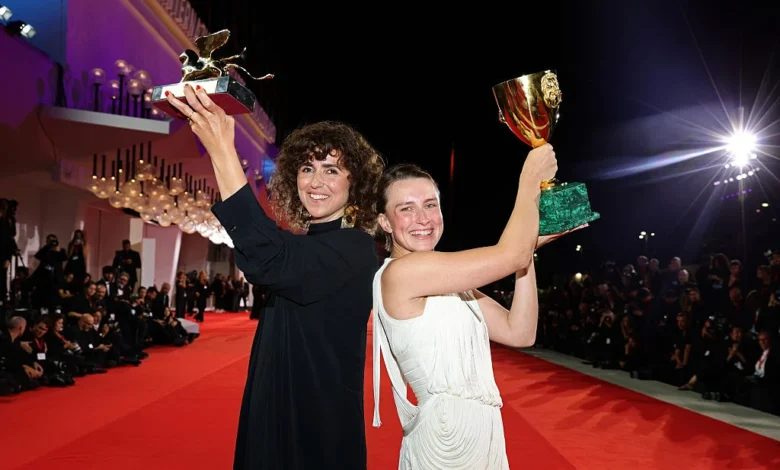
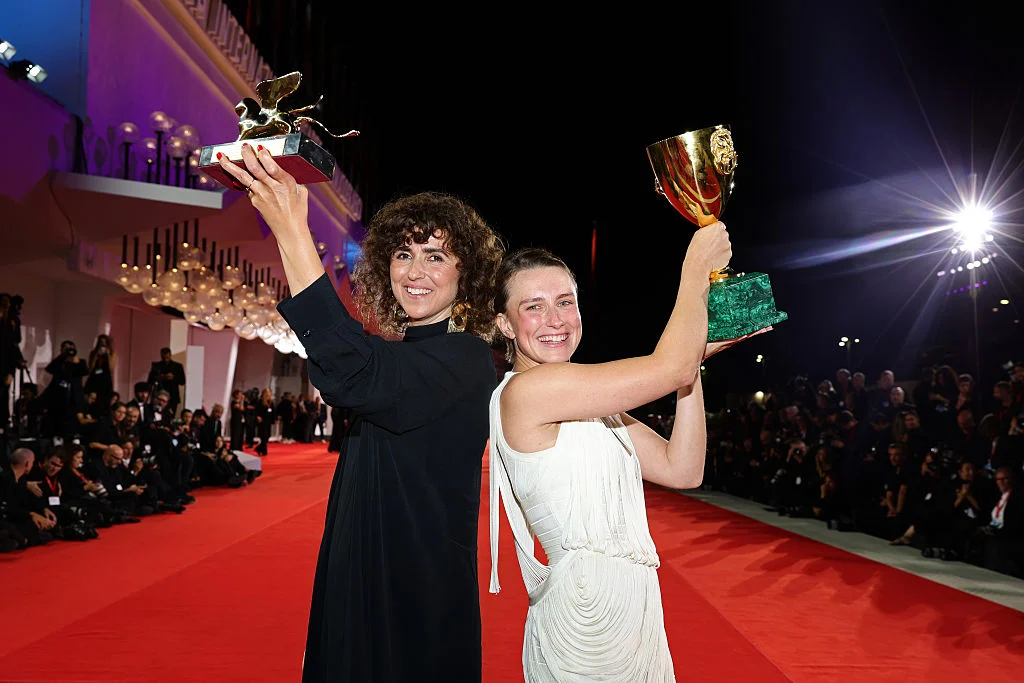
The 83rd Venice International Film Festival concluded its prestigious run with a powerful statement on gender parity, artistic resilience, and geopolitical accountability. Danish filmmaker May El-Toukhy captured the festival’s highest honor, the Golden Lion, for her gripping post-war drama-thriller Woman Unknown. However, the victory sparked a broader industry-wide conversation regarding the systemic underrepresentation and persistent marginalization of female directors on major international festival prediction circuits.
Alongside El-Toukhy’s triumph, the Lido played host to emotionally charged tributes, fierce political discourse surrounding the conflict in Gaza, and poignant recognitions of cinematic legends past and present. The evening encapsulated the intersection of high art and sociopolitical reality, leaving an indelible mark on the European film calendar.
A Historic Golden Lion Victory Underscores Industry Bias
Woman Unknown, a taut exploration of sexual shame and political paranoia set in postwar Denmark, captivated the international jury led by actor and director Maggie Gyllenhaal. Gyllenhaal lauded the feature during the closing ceremonies as a "brilliantly made movie that felt like a laser beam," praising its psychological precision and visual command.
In a rare double-triumph for the festival, Danish actress Mathilde Arcel secured the Volpi Cup for Best Actress for her riveting performance as a woman harboring dangerous secrets while desperate to elude mob justice. Venice festival regulations rarely see the top Golden Lion winner overlap with major acting categories. Gyllenhaal clarified that the cross-over occurred because the jury reached a unanimous consensus that Arcel’s lead portrayal was indispensable to the film’s overarching achievement.
Despite the monumental success of Woman Unknown, El-Toukhy addressed the media with measured candor regarding pre-festival expectations. She revealed that prior to the official lineup announcement and throughout the early stages of critical forecasting, her film languished at the very bottom of major prediction boards, routinely pegged at 39th or 40th out of roughly 40 anticipated titles.
"It doesn’t surprise me that some people would say, ‘Oh, did she get it?’ Because that’s part of everyday life as a woman in this industry," El-Toukhy remarked during her post-win press conference.
The director expanded on her critique, identifying the predicament as a systemic issue embedded within film journalism and curation. She pointed out that prediction columns typically corral female directors into a restrictive, hyper-competitive sub-category rather than viewing them as contenders across the broader cinematic landscape.
"When I look to those lists, we would be four women, and I would feel that I had to compete with those four women and not my male peers," El-Toukhy noted. "That’s a systemic issue, and that’s something that all of us need to think about, including journalists, the media, my male peers. How can we make it easier for women to be part of this industry? I don’t have the feeling that my male colleagues aren’t interested in having women in the industry, but still, there are structures in place that we haven’t found a way to solve."
Geopolitical Tensions and Cinematic Truth: The Case of Naza
Artistic expression frequently serves as a mirror to contemporary crises, and the 2026 Venice Film Festival proved no exception. The Special Jury Prize was awarded to Naza, a hard-hitting documentary feature centering on the Israel Defense Forces’ (IDF) military operations and the resulting casualties in Gaza.
Following the award presentation, director Yuval Abraham addressed the film’s profound humanitarian stakes, expressing a fervent desire for the project to find distribution and viewership within Israel.
"It’s definitely important to show it to Israelis in as wide a way as possible. I hope we will be able to," Abraham stated. "It’s important as Israelis that we recognize what our government has done in Gaza."
The film has faced preemptive pushback, drawing official criticism from the IDF. Addressing these rebukes, Abraham defended the documentary’s editorial integrity, emphasizing its collaborative investigative reporting alongside international journalistic institutions.
"In terms of the IDF comments, our reporting in the film is rigorous. It’s being done in partnership with The Guardian," Abraham asserted. "To me, it seems like an attempt to not face reality. In just these 10 days of the festival, Israel, our country, has killed multiple Palestinian children in Gaza. This is the reality described by Palestinian journalists from the very start. And I think it’s important we talk about it."
Mourning a Cinematic Icon: Riccardo Scamarcio Honors Jeremy Thomas
The Lido ceremonies also paused to reflect on profound personal and professional loss within the global film community. Italian actor Riccardo Scamarcio was awarded the Orizzonti sidebar prize for Best Actor for his commanding performance in The House of the Monkey. However, his victory was intrinsically tied to the heavy shadow of recent news.
The evening prior to the closing gala marked the passing of revered British independent producer Jeremy Thomas, a towering figure in world cinema known for championing boundary-pushing auteurs and fiercely protecting artistic autonomy. Visibly emotional, Scamarcio dedicated a significant portion of his media availability to honoring Thomas’s legacy.
"He was a pirate. He was a free man, a great man of cinema," Scamarcio said, his voice thick with emotion. "He made movies that are part of the history of cinema, and he behaved like an independent producer, like the father of the movie he produces, protecting directors and creators. But he did so protecting the freedom of the artists to express themselves. When I heard the news this morning, I was glad to come to Venice to get my award, but I cried for Jeremy."
Thomas’s death marks the end of an era for independent cinema, leaving behind a filmography characterized by uncompromising creative vision and financial daring that shaped modern arthouse standards.
Iranian Cinema and the Courage of Small Steps
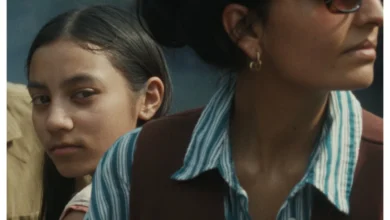
The international scope of the Orizzonti section was further highlighted by Iranian actress Laleh Marzban, who clinched the Best Actress prize for her powerful performance in Falling House. The film has drawn international attention—and potential domestic scrutiny—for its unflinching critique of patriarchal state structures and governmental oppression.
During the press conference, trade journalist Melanie Goodfellow of Deadline queried Marzban on the anxieties surrounding how the film might be received upon its release in her homeland, given its explicit challenge to authoritarian norms.
Marzban responded with a measured meditation on collective resilience and incremental progress under restrictive regimes.
"This question is very important for me as an actress, and as all other women in Iran, whether they be doctors, artists, whatever profession women can perform, we can only make one step at the time, one step towards our objective," Marzban reflected. "If we give our small contribution, maybe we will reach our objective. I have made my small part. I have given my contribution. I really hope many other people can make small steps towards our common objective."
Broader Industry Implications
The conclusion of the 83rd Venice International Film Festival underscores a shifting paradigm within the global cinematic landscape. While major festival juries increasingly reward bold, politically resonant, and formally adventurous storytelling—as evidenced by the sweeping success of May El-Toukhy and her collaborators—the underlying mechanics of film distribution, critical pre-awareness, and institutional equity remain subjects of fierce debate.
El-Toukhy’s critique of predictive bias serves as a wake-up call for cultural critics, festival programmers, and studio executives alike. By forcing the industry to confront the invisible ceilings and systemic pigeonholing that female directors navigate, Venice 2026 has provided both a celebration of artistic triumph and a blueprint for necessary institutional reform. As films like Woman Unknown, Naza, and Falling House prepare to enter the global theatrical market, their reception will undoubtedly continue to challenge audiences, test political sensitivities, and redefine the boundaries of socially conscious filmmaking.