As Winter Approaches Millions of Americans Face a Historic Heating Oil Crisis Driven by Global Conflict

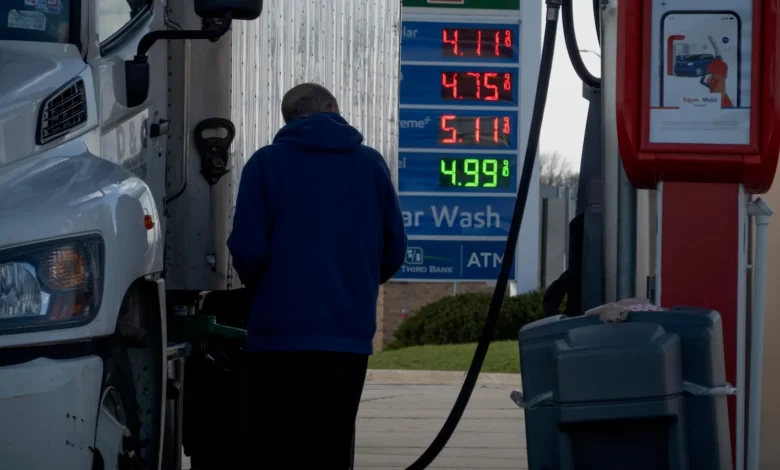
As the seasonal transition toward colder weather settles across the United States, millions of households are confronting an unprecedented financial challenge. The traditional markers of autumn—vibrant foliage, local harvests, and the preparation of heating systems—have been overshadowed by the grim reality of record-setting energy prices. For the more than 4 million households that rely on heating oil, particularly across the Northeast, the impending winter represents a potential humanitarian and economic crisis. With costs reaching as high as $6 per gallon, the intersection of geopolitical instability and energy supply constraints has created a volatile landscape that threatens the well-being of the most vulnerable citizens.
The Geopolitical Roots of the Price Surge
The current crisis is not a localized anomaly but a direct consequence of a volatile global energy market exacerbated by the ongoing conflict with Iran. Heating oil, chemically similar to diesel, has seen its price point climb dramatically from the mid-$3 range observed as recently as February. This surge is fundamentally tied to the disruption of global shipping routes and supply chains.
The stalemate in the Mideast has effectively curtailed tanker traffic in the Strait of Hormuz. Historically, this narrow chink in global commerce served as the transit point for roughly 10 percent of the world’s water-borne diesel. As vessels are diverted or delayed, the global supply of refined distillates has tightened significantly. This supply-side crunch is compounded by regional conflicts elsewhere; specifically, repeated Ukrainian strikes on major Russian oil refineries have removed a critical secondary source of diesel from the global market. Because the United States remains integrated into the global energy trade, these international shocks are felt immediately at the residential pump in New England and the Mid-Atlantic.
Data Trends and Regional Vulnerabilities
The Northeast remains the epicenter of this crisis, as roughly 82 percent of American homes that burn heating oil are concentrated in this region. According to data provided by the National Energy Assistance Directors Association (NEADA), the cost of warming a home this winter is projected to climb by an average of 50 percent across these states. In monetary terms, this translates to an additional $878 per household, aggregating to a staggering $3.8 billion increase in total consumer expenditure.
The burden is not distributed evenly. States with harsher, more prolonged winters are seeing more extreme projections. Vermont and Maine, for instance, face the prospect of a 76-percent surge in heating costs compared to previous years. This sharp upward trend in fuel pricing has left both energy providers and consumer advocates in a state of alarm. Mark Wolfe, executive director of NEADA, noted that the volatility of this product just weeks before the onset of the heating season is a rare and dangerous phenomenon. "This is the tangible, domestic cost of international war," Wolfe stated, emphasizing that the speed of the price increase has outpaced most earlier economic models.
Chronology of the Crisis
The escalation of this crisis can be traced through a series of key events:
- February 2026: Heating oil prices remained relatively stable in the mid-$3 range, allowing households to budget based on standard seasonal fluctuations.
- Summer 2026: Increased tension in the Strait of Hormuz and reports of damage to key refineries began to tighten global distillate supplies.
- September 2026: NEADA issued an updated forecast, warning that the cost of heating would rise significantly, revising their previous projections upward.
- Late September 2026: A bipartisan group of 31 senators formally requested that the Department of Health and Human Services (HHS) expedite the release of federal aid.
- October 2026: Massachusetts Governor Maura Healey declared a state of emergency, citing the urgent need to protect low-income and middle-class residents from energy poverty.
The Federal Response and Legislative Friction
The Low Income Home Energy Assistance Program (LIHEAP) serves as the primary federal safety net for those unable to afford home heating costs. However, the program is currently facing a dual challenge: the rapid erosion of its purchasing power due to high fuel prices and political uncertainty regarding its future.
The Trump administration has historically viewed LIHEAP as a target for elimination, and while the program has survived, it has been subjected to administrative delays. Last spring, the administration withheld certain federal aid payments, raising concerns among lawmakers that fall disbursements might be slowed as well. In response to these fears, a coalition of 31 senators, led by members of both parties, urged Secretary of Health and Human Services Robert F. Kennedy Jr. to release the $4 billion in currently available LIHEAP funds well before the November 1 deadline.

While the HHS has responded by assuring the public that they possess the staff and capacity to distribute these funds in a timely manner, the adequacy of these funds remains in question. A legislative effort is currently underway in the House of Representatives to inject an additional $1 billion into the program, but analysts note that no concrete legislative action is likely to occur before the midterm elections.
Socioeconomic Implications and Public Health Concerns
The implications of this price surge extend far beyond simple household budgeting. Experts like Wolfe are warning of a potential public health crisis. When low-income households are faced with the choice between heating their homes and purchasing food or life-saving medication, the societal cost is profound.
"People’s benefit will have less purchasing power," explained Miranda Gray, deputy commissioner at the Vermont Department for Children and Families. Gray’s agency, which manages state-level distribution of federal aid, has expressed deep concern that when the limited LIHEAP funds are exhausted, there will be no secondary safety net, forcing families to rely on community nonprofits that are already operating at capacity.
In Massachusetts, the state government has taken a proactive, albeit reactive, stance. Governor Maura Healey’s state of emergency declaration is designed to provide immediate relief to 156,000 low-income households and expand eligibility to 50,000 middle-class families. The order also includes provisions to curb price gouging, which often occurs during periods of severe supply chain stress. However, even with state-level interventions, the structural problem of global energy costs remains unresolved.
Consumer Sentiment and Adaptation Strategies
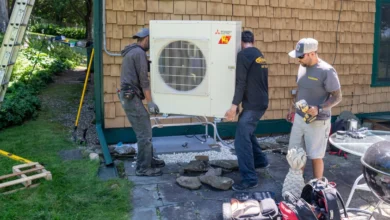
For the individual consumer, the options are limited and often inefficient. Homeowners with oil-fired boilers are essentially "locked in" to their current heating systems, as the cost of switching to natural gas or installing high-efficiency electric heat pumps remains prohibitive for many, requiring years to recoup the initial investment.
Some consumers have considered space heaters, but energy analysts warn that electricity rates, while more stable than oil, are not low enough to offset the extreme inefficiency of resistive heating. Others have considered burning wood, though this requires access to equipment and a steady supply of fuel, which is not feasible for many urban or suburban residents.
Social media forums and local community groups have become hubs for a growing sense of anxiety. Discussions on platforms like Reddit reflect a widespread feeling of helplessness. Many users are inquiring about the feasibility of "pre-buying" fuel to lock in a price, only to find that dealers—also fearing market volatility—are hesitant to offer such contracts. As one Massachusetts resident summarized, "I feel like I am playing chicken with fuel prices and the impending cold weather."
Looking Toward the Future
The only immediate variable that could mitigate the crisis is the weather itself. Meteorologists have noted that an El Niño pattern could potentially result in a warmer-than-average winter for the Northeast. While such a shift would undoubtedly ease the volume of oil required by households, it does not address the core issue of market volatility.
The combination of the global energy supply crisis and the potential for a long, cold winter has created a precarious situation. With the federal government under pressure to release funds and state governments scrambling to fill the gaps, the coming months will serve as a significant test of the nation’s social safety net. As the temperature drops, the gap between the cost of essential energy and the ability of the average American to pay for it continues to widen, setting the stage for what many fear will be a winter of significant economic and social hardship. For now, millions of households are left to hope for a mild season, while preparing for a financial burden that has few historical precedents in the modern era.