The Unavoidable Reckoning: Tech’s Trillion-Dollar AI Boom Ignites Debate on Wealth Redistribution


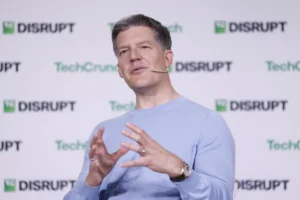
In late May, at the inaugural Panathenea tech festival in Athens, Greece, a profound statement from Neil Rimer, co-founder of the influential venture capital firm Index Ventures, sent ripples through the tech and financial communities. Amid discussions surrounding the unprecedented accumulation of wealth generated by the artificial intelligence (AI) revolution, Rimer voiced a strong conviction: "There will be some sort of a redistribution." He elaborated, "It’ll either be voluntary or it’ll be involuntary, but it’ll happen, and I hope it’s voluntary," adding that he believes tech leaders are uniquely positioned to spearhead this shift. Coming from a figure of Rimer’s stature – a titan of venture capital whose firm has backed some of the most transformative tech companies of the last three decades – this was far from standard populist rhetoric; it was a striking public declaration from within the very heart of the wealth-generating machine.
The Catalyst: A Visionary’s Perspective from Athens
Rimer’s remarks were delivered at a vibrant new tech festival, Panathenea, an event designed to foster innovation and dialogue in the ancient city of Athens, which has increasingly emerged as a burgeoning tech hub. His choice of venue and timing underscored the global nature of the AI boom and the conversations it is sparking beyond Silicon Valley. Rimer himself has deep ties to Athens, having stepped back from day-to-day investing at Index Ventures in 2021 and relocating there, where his wife’s family resides and his children hold cherished Greek passports. His appearance at the interview, clad in a rumpled button-down and jeans, contrasted sharply with the more conventional attire often associated with his peers, hinting at a grounded perspective that perhaps allows for such candid observations.
Index Ventures, co-founded by Rimer, has a storied history of identifying and nurturing groundbreaking companies. Since its inception, the firm has raised approximately $15 billion from outside investors, yielding exceptional returns. For instance, in 2021 and 2022 alone, Index Ventures reportedly netted an estimated $9 billion from significant exits, including Figma’s proposed acquisition by Adobe and Google’s purchase of the cybersecurity firm Mandiant. This financial success places Rimer and his partners at the epicenter of the very wealth creation he now believes demands redistribution, lending considerable weight to his pronouncements.
The AI Wealth Explosion: A New Gilded Age?
The context for Rimer’s call for redistribution is the staggering and rapidly accelerating wealth generated by the AI sector. The pace of this accumulation is unprecedented, pushing market valuations to historic highs and creating a new class of billionaires at an astonishing rate. Just last month, the IPO of SpaceX reportedly propelled Elon Musk’s net worth past the $1 trillion mark, making him the first individual in history to achieve this milestone.
The Forbes 2026 rankings alone identified 45 new AI billionaires, collectively holding a staggering $2.9 trillion in wealth. This figure is set to climb even higher, as major AI players like Anthropic and OpenAI have yet to go public. Financial analysts are already grappling with the implications. For example, Business Insider reported that once Anthropic and OpenAI complete their anticipated IPOs, the combined wealth of their employees could be sufficient to purchase nearly a third of all residential homes in the San Francisco metropolitan area – a stark illustration of concentrated wealth and its potential impact on housing markets and local economies.
This concentration of wealth is not merely anecdotal; it is reflected in broader economic data. According to the Federal Reserve, the share of wealth held by the top 1% of U.S. households reached 31.7% in the third quarter of last year, a record high since the data began being tracked in 1989. This figure is roughly equivalent to the combined wealth of the bottom 90% of U.S. households, highlighting a significant divergence in economic prosperity. While this percentage is still below the estimated 45% commanded by the top 1% during the peak of the Gilded Age in 1916, a closer look at the "tippy top" reveals an even more striking picture. Renowned economist Gabriel Zucman calculates that around 1910, at the height of the first Gilded Age, America’s four largest fortunes represented a combined 4% of U.S. GDP. Today, a slightly larger group of 19 households controls a staggering 14% of the nation’s GDP, suggesting that while the base of extreme wealth may be broader, the absolute concentration at the very apex is arguably more pronounced than ever before.
The Philanthropic Paradox: Declining Giving Amidst Soaring Fortunes
Rimer’s appeal for voluntary redistribution arrives at a moment when traditional philanthropic efforts among the ultra-wealthy appear to be faltering. The Giving Pledge, initiated in 2010 by Warren Buffett and Bill Gates to encourage billionaires to commit at least half their fortunes to charity, is experiencing a noticeable decline in relevance. In its first five years, 113 families signed the pledge. This number dropped to 72 in the subsequent period, then 43, and a mere four in all of 2024, as reported by The New York Times in March. The report underscored a growing skepticism towards traditional philanthropy among some of the richest tech moguls. Notably, Elon Musk, the world’s wealthiest individual, has famously stated that his businesses "are philanthropy," implying that wealth creation and job generation supersede direct charitable giving.
This pattern extends beyond the Giving Pledge. Despite a record $592.5 billion in total American charitable giving in 2024, the number of Americans actually donating has steadily declined for five consecutive years, dropping by 4.5% in 2024 alone, according to the Stanford Social Innovation Review. In 2000, two-thirds of U.S. households donated to charity; today, that figure stands at roughly half. Even among affluent households, Bank of America and Lilly Family School data indicate a slip in giving participation, from 90% in 2017 to 81% last year.
This trend is visible even within Index Ventures’ own portfolio, which includes Anthropic, a leading AI firm. Business Insider recently interviewed financial planner Alex Caswell about his newly wealthy clients, many of whom are Anthropic employees influenced by the effective altruism movement. While Anthropic matches employee donations of up to 25% of their equity to charity, and some clients have utilized this, Caswell observed that most were not integrating significant philanthropy into their long-term financial plans. Instead, their focus was predominantly on angel investing or launching their own startups. "That’s what I’m seeing more than the desire to become philanthropic," he told the outlet, highlighting a potential shift in how new wealth is being deployed.
Rimer, however, has demonstrated a personal commitment to giving back. He serves on the board of Endeavor Greece, an organization dedicated to mentoring entrepreneurs in emerging markets, and previously chaired the board of Human Rights Watch from 2019 to 2025. In late 2021, he, along with his father and two brothers, made a significant $13 million donation to McGill University. This gift funded the renovation of a campus building, now aptly named the Rimer Building, and established a new Institute for Indigenous Research and Knowledges, reflecting a diverse range of philanthropic interests.
The Involuntary Path: Taxation and Government Stakes
The apparent decline in voluntary philanthropic engagement is now directly clashing with growing political momentum for legislative solutions. In California, voters are set to decide this year on a controversial 5% one-time wealth tax targeting the state’s billionaires. This proposal, if passed, would calculate net worth based on an individual’s worldwide assets as of the end of this calendar year, creating a powerful incentive for some to preemptively relocate. Indeed, prominent figures, including Google co-founders Sergey Brin and Larry Page, have already moved their primary residences to South Florida, a state with no income or wealth tax, to mitigate potential liabilities.
The specter of such taxes may also be influencing corporate strategies. OpenAI, for example, is reportedly considering going public in 2027. While various factors drive IPO decisions, a cynical interpretation suggests that accelerating the timeline could allow founders and major shareholders to establish residency outside California before the proposed wealth tax potentially takes effect, thereby minimizing their exposure.
Unsurprisingly, widespread opposition to wealth redistribution measures of this scale has emerged. California Governor Gavin Newsom has voiced his concerns, and economists have pointed to historical precedents. Many industrialized nations, including France and Germany, have repealed similar wealth taxes since 1990 after observing their wealthy residents and capital "skedaddle" to more favorable tax environments, leading to unintended economic consequences and reduced tax revenues.
Other proposed mechanisms for sharing AI’s upside are equally contentious. OpenAI has reportedly engaged in discussions about granting the U.S. federal government a 5% equity stake in the company. CEO Sam Altman has framed this as a means of sharing the benefits of AI with the public, ensuring a broad societal dividend from the technology’s advancements. Critics, however, view it with skepticism, interpreting it as a strategic move to secure political favor and regulatory protection in Washington. The idea of "Uncle Sam" becoming a significant shareholder in Silicon Valley’s private enterprises is deeply unsettling to many in the tech community. As veteran investor Roelof Botha of Sequoia Capital famously quipped during a separate sit-down last year, echoing a common sentiment, "[Some] of the most dangerous words in the world are: ‘I’m from the government, and I’m here to help.’"
Historical Echoes: Lessons from the First Gilded Age
The dilemma of wealth concentration and the two paths – voluntary or forced redistribution – are not new to American history. They echo profoundly from the nation’s first Gilded Age, when industrial titans amassed fortunes on a scale previously unimaginable.
In 1889, at the peak of that era, steel magnate Andrew Carnegie published his seminal essay, "The Gospel of Wealth." In it, Carnegie argued that a rich man’s fortune was a trust, to be administered and distributed for the public good during his own lifetime. He famously declared it a "disgrace" to die wealthy. This essay became a foundational document for modern philanthropy, serving as the intellectual ancestor to initiatives like the Giving Pledge, advocating for the moral imperative of the wealthy to proactively address societal needs.
However, voluntary giving alone proved insufficient to stem the tide of social unrest and economic inequality. By the mid-1930s, amidst the Great Depression, Louisiana Senator Huey Long gained a national following with his populist "Share Our Wealth" program. Long’s radical platform demanded steep taxes on the rich, aiming to cap personal fortunes and fund a guaranteed income for every American family, along with other social welfare programs. His growing popularity, particularly among the working class, deeply concerned President Franklin D. Roosevelt.
Worried about losing crucial political support to Long’s charismatic movement, Roosevelt pushed through what the press dubbed the "soak-the-rich tax." This legislative package significantly raised the top marginal income tax rate, soaring as high as 79%. While it didn’t achieve the radical redistribution Long envisioned, it stands as the clearest and most forceful example in American history of politically mandated redistribution occurring when voluntary efforts failed to adequately address the immense social and economic pressures building from below.
The Moral Center of Tech: A Shifting Landscape
For Neil Rimer, whose career has unfolded entirely within the tech sector, these historical parallels and contemporary debates are not abstract. He expresses a deep fascination with what he terms "the moral center of tech companies." His perspective is rooted in his own experience as a Stanford undergraduate in 1984, when Apple famously offered discounts on the first Macintosh to students. At that time, Rimer recalls, Steve Jobs and Apple’s other founders were "heroes" for building something he genuinely believed was good for the world, embodying a sense of purpose beyond pure profit.
What troubles him now, he confessed, is hearing his own children speak about certain contemporary tech companies in a manner akin to how an earlier generation might have discussed defense contractors or cigarette manufacturers. This shift in public perception, from aspirational innovation to skepticism and even moral critique, signals a significant challenge for the industry.
While critics might point out that Rimer, as a highly successful investor in Anthropic and numerous other tech ventures, is a direct beneficiary of the very windfall he discusses, his message remains consistent. He would rather see his fellow beneficiaries proactively choose to return a portion of their wealth to society than have it forcibly taken from them through legislative action. There is, in his view, an "easy way" and a "hard way" to navigate this impending redistribution. Rimer is betting on the tech community to embrace the former before the inexorable forces of history compel the latter. The question remains whether the industry will heed this call, or if the lessons of the past will once again be learned through more disruptive means.