Donald Trump Delivers Lengthy, Uneven Speech at Rescheduled White House Correspondents’ Dinner

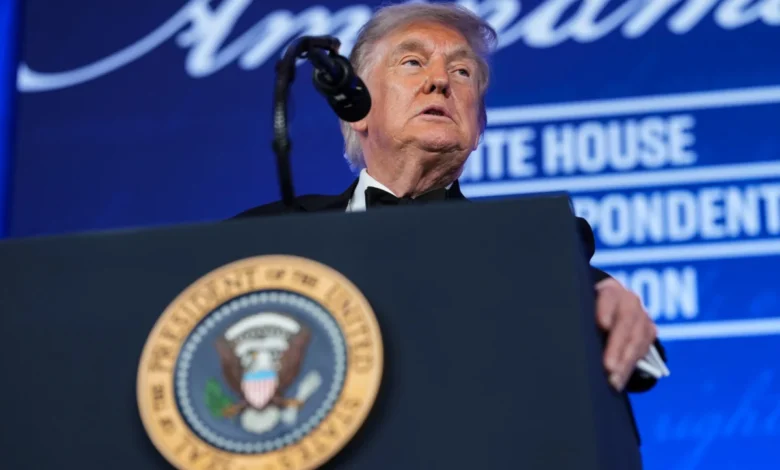
Donald Trump, in his first appearance as president at the White House Correspondents’ Association Dinner, delivered an hour-long address that straddled the line between familiar campaign rhetoric and attempts at humor, often falling flat with the assembled press corps and dignitaries. The event, rescheduled from its traditional April slot due to a security incident, took place Friday evening at the Waldorf-Astoria, a venue with personal significance for the president.
A Rescheduled Affair Marked by Tension and Uneasy Laughter
The White House Correspondents’ Association Dinner, a long-standing tradition that typically brings together the President, members of the media, and political figures for an evening of lighthearted roast and recognition of journalistic achievement, carried an undercurrent of tension this year. The original April gathering was abruptly halted when a lone gunman attempted to breach security outside the ballroom at the Washington Hilton. The incident, which involved audible shots and a swift response from the Secret Service to extract the President and Vice President, cast a somber shadow, leading to the rescheduling of the event.
The decision to move the dinner to the Waldorf-Astoria, a landmark that once operated as a Trump property, added another layer to the evening’s proceedings. While presidents have historically used the keynote address to playfully jab at the press, Trump’s approach veered sharply into territory more reminiscent of his signature campaign rallies. His remarks, a sprawling narrative that touched upon a variety of political themes, were punctuated by attempted jokes that frequently failed to elicit significant laughter or positive reaction from the audience. The president himself seemed to acknowledge the lukewarm reception, at one point remarking on the perceived failure of a joke about a senator’s sex life and questioning why it didn’t land with the audience. "I thought that was actually great," he commented, adding, "That was actually the only thing I thought was good in this whole frickin’ stupid speech. It was the only good one, and that went down with not exactly great laughter.” This self-awareness, however, did little to alter the overall tone of the address, which observers described as meandering and often met with discomfort or fidgeting.
A Speech Marked by Familiar Tropes and Personal Broadside
Throughout the lengthy speech, which was made available for viewing on Deadline, Trump frequently departed from prepared remarks, or found personal anecdotes in his prepared material that led to extended asides. The content often revisited established political grievances and critiques, including pointed comments about the appearance of figures like Congressman Adam Schiff. The president also dedicated a segment of his speech to discussing his vision for a White House ballroom, drawing attention to the chandeliers at the Waldorf-Astoria, a subtle nod to his own history with the venue.
The evening was not without moments of direct confrontation with individual journalists. Trump singled out Josh Dawsey of The Wall Street Journal, an award recipient for his reporting on the Jeffrey Epstein scandal, and CNN host Kaitlan Collins, delivering what were intended as personal barbs. These attacks, however, were met with near silence from the room, highlighting a disconnect between the president’s comedic intentions and the audience’s reception. Weijia Jiang, the outgoing president of the White House Correspondents’ Association, maintained a stoic demeanor throughout these digressions.
In response to the personal attacks on its journalists, CNN issued a statement during the dinner, a move that underscored the heightened tensions between the administration and segments of the press. This was not the first instance of the Trump administration taking public stances against news organizations; the president has a documented history of challenging media outlets, including threatening to revoke broadcast licenses and his Justice Department pursuing subpoenas against reporters in an effort to uncover sources. Notably, in the week prior to the dinner, the Department of Justice announced its intention to withdraw subpoenas issued to New York Times reporters concerning their coverage of the Air Force One project, a decision that followed significant criticism from a federal judge regarding the manner in which the subpoenas were originally sought.
Attendees and Awards: A Mix of Politics and Journalism
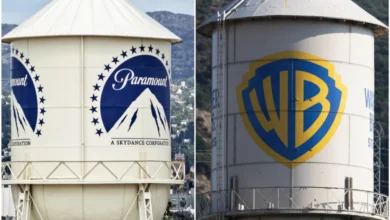
The rescheduled dinner saw a notable presence of Trump administration officials, including members of his cabinet, mingling with members of the press. Among those present at the Waldorf-Astoria were Chief Legal Officer Makan Delrahim, who attended just hours after Paramount’s planned merger with Warner Bros. Discovery was reportedly delayed due to antitrust concerns. Also at the event were cabinet members Pete Hegseth and presidential advisor Stephen Miller, accompanied by his wife Katie Miller. Other high-profile attendees included Secretary of Health and Human Services Robert Kennedy Jr. and his wife Cheryl Himes, Commerce Secretary Howard Lutnick, Department of Homeland Security Secretary Markwayne Mullin, and Acting Attorney General Todd Blanche, who was later a participant in a mentalist act.
The evening’s proceedings also included the presentation of annual awards, recognizing significant journalistic work. This year, awards were presented to journalists whose investigations delved into sensitive and controversial topics, including the reporting by Wall Street Journal reporters on a letter attributed to Trump and sent to Jeffrey Epstein. Trump has publicly denied sending the letter and has initiated legal action against the publication and its owner, Rupert Murdoch, seeking $20 billion in damages. Wolf Blitzer, who presented one of the awards, highlighted Trump’s lawsuit against the Wall Street Journal for this story, a fact that underscored the complex and often adversarial relationship between the president and the press.
The President’s Future Attendance and Broader Implications
As the evening drew to a close, mentalist Oz Pearlman, who performed after Trump’s remarks, alluded to the president’s future engagement with the event. Pearlman quipped that Trump had announced his intention to attend next year’s dinner, adding, "I thought he was going to be speaking until next year, actually." This statement, delivered with a hint of humor, suggested a potential continuation of Trump’s engagement with the Correspondents’ Dinner, despite the often contentious nature of his appearances.
The president had previously skipped the WHCA dinners during his first term, sometimes opting to hold counter-programming events. His decision to attend this year placed him at the center of an event designed to celebrate the very journalists he has frequently criticized and attacked. The dinner, in its rescheduled format and venue, served as a microcosm of the broader, often fraught relationship between the current administration and the American press. The presence of Trump cabinet members and the president himself at an event honoring journalistic investigations, coupled with his own critical remarks and ongoing legal disputes with media outlets, highlights the persistent tension and the evolving landscape of presidential-press relations. The prolonged silence that punctuated many of his attempted jokes, contrasted with the later exodus of some attendees as the mentalist took the stage, painted a picture of an audience grappling with a speech that defied conventional expectations of the event. The implications of such interactions, particularly in an era of heightened political polarization and scrutiny of information, continue to be a subject of significant public and media interest. The administration’s engagement with the press, whether through direct addresses, policy announcements, or events like the Correspondents’ Dinner, remains a critical barometer of transparency and accountability in government.