Brightline Files for Chapter 11 Bankruptcy Protection as Financial Strain Meets High Passenger Demand

The first thing Brightline wants you to know about its bankruptcy is that the trains will keep running. As the private operator navigates the complex legal and financial terrain of a Chapter 11 bankruptcy filing, the company is doubling down on its commitment to uninterrupted service. For the thousands of daily commuters who rely on the high-speed rail line to traverse the Florida corridor, the message from corporate leadership is unequivocal: it is business as usual.
The decision to seek bankruptcy protection follows a grueling period of negotiations with bondholders, a process that underscored the inherent difficulties of financing major infrastructure projects through private capital. By initiating this restructuring, Brightline aims to secure an additional $490 million in financing. This infusion of capital is deemed essential for the company to maintain its operational momentum while managing a staggering $4.4 billion debt load, which was primarily accumulated during the capital-intensive phases of construction, expansion, and initial operation.
A Chronology of Modern American Rail Ambition
Brightline’s journey has been defined by a series of aggressive expansions and technological milestones. Launched in 2018, the service initially connected Miami and West Palm Beach, offering a premium alternative to the congested I-95 corridor. By 2023, the system achieved a significant milestone by extending its reach to Orlando, creating a high-speed link between Florida’s two most vital economic hubs.
This rapid expansion was intended to serve as a proof-of-concept for the private sector’s ability to deliver high-speed rail in regions previously starved of transit options. However, the operational reality has proven far more demanding than early projections suggested. While ridership saw a 14 percent increase and revenue grew by 17 percent between January and August compared to the same period in the previous year, these gains have not been sufficient to satisfy the company’s debt obligations.
Financial Realities and Market Performance
The financial architecture of Brightline has faced intense scrutiny from market analysts. According to data provided by Tim Hynes, head of Global Credit Research at Debtwire, the company currently generates roughly $240 million in annual revenue. While this figure is substantial for a private rail venture, it represents less than half the projected ridership and one-third of the anticipated income the company had forecasted for 2024.
This shortfall is not necessarily an indictment of the product’s popularity, but rather a reflection of the massive capital intensity required to build rail infrastructure. As the company prepares for further expansion—specifically toward Tampa and a new station in Cocoa—the necessity of restructuring its balance sheet became unavoidable.
Patrick Goddard, CEO of Brightline Florida, framed the filing as a strategic move rather than a defeat. "Brightline is a critical part of Florida’s transportation network that has changed the way people move around the state," Goddard said in a public statement. "This transaction will be a catalyst for further growth in ridership and revenue."
Safety and Public Perception
While financial viability remains the primary concern for investors, the railroad has also grappled with ongoing safety challenges. As of January, the system reported 182 fatalities since its inception in 2018. The vast majority of these incidents involved collisions at grade crossings or unauthorized individuals on the tracks.
The company maintains that none of these tragedies were the result of internal operational failures. To mitigate future risks, Brightline has invested hundreds of millions of dollars into safety infrastructure, including advanced crossing gates, additional fencing, and public awareness campaigns. Despite these efforts, the frequency of incidents has remained a point of friction between the railroad and local municipalities, further complicating the company’s public and regulatory standing.
The Passenger Perspective
For the end user, the financial turmoil in the boardroom is largely invisible. Commuters like Ivan Reich, a bankruptcy attorney who frequently utilizes the train for his travel between West Palm Beach and Fort Lauderdale, view the service as a premier mode of transport.
"Brightline is literally like going to the airport and being on a plane," Reich noted. "It’s a luxury experience. It’s nice. It’s pleasant. It’s comfortable."

However, Reich’s testimony highlights a key tension in the Brightline model: accessibility versus cost. With round-trip tickets between Miami and Orlando often costing upwards of $120, the service occupies a niche as a premium travel option rather than a mass-transit utility. While enthusiasts point to the high level of service, the pricing structure creates a ceiling on ridership that may hinder the company’s long-term financial targets.
The Broader Implications for National Infrastructure
The situation with Brightline has reignited a long-standing debate regarding the role of private enterprise versus government intervention in the development of American passenger rail. As Amtrak continues to shatter historical ridership records, the demand for rail travel is clearly trending upward. The core question, however, is who bears the burden of building the foundational infrastructure.
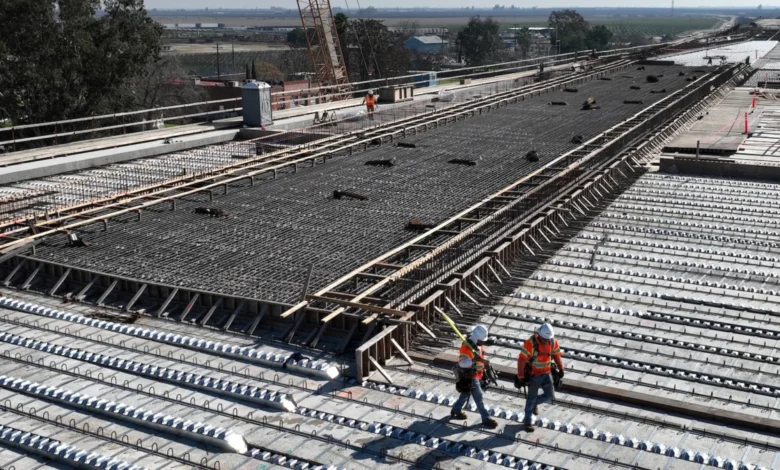
Brightline West, the company’s ambitious project to connect Las Vegas and the Los Angeles suburb of Rancho Cucamonga, provides a window into the current state of public-private partnerships. The $21 billion project has secured a $3 billion federal grant and is currently seeking a $6 billion federal loan. This reliance on public funds suggests that even the most "private" rail projects require significant government support to achieve feasibility.
Contrast this with California’s state-led high-speed rail project, which has faced decades of delays and funding hurdles. While California is now looking toward private investors to complete its vision, the state’s struggles illustrate that reliance on either purely private or purely public funding models comes with distinct risks.
Expert Analysis: The Role of Government
Jim Mathews, president of the Rail Passengers Association, views the Chapter 11 filing as a pragmatic necessity. "It probably gives Brightline breathing room," Mathews stated. He argues that by shedding excessive debt, the company can focus on the long-term goal of increasing passenger access. However, Mathews also warns that there are inherent limits to what the private sector can achieve alone.
"Building a railroad is very hard and very expensive," Mathews said. "This is a good example of why governments always have a legitimate role to play."
This perspective is echoed by Alon Levy, a research scholar at the New York University Marron Institute. Levy points out that operational integration remains a major hurdle. The decision to terminate the Las Vegas-to-LA line at Rancho Cucamonga, rather than a central hub in Los Angeles, highlights the complexities of coordinating with existing public transit authorities like Metrolink. According to Levy, achieving a truly seamless network will require top-down federal action to mandate coordination between private operators and public systems.
Rick Harnish, executive director of the High Speed Rail Alliance, offers perhaps the most critical assessment of the current landscape. Harnish argues that the United States has historically treated rail as an outlier, whereas highways and airports are treated as public goods.
"Airlines don’t pay to build airports, and trucking companies don’t pay to build highways," Harnish noted. "Private capital will not invest in the kind of infrastructure you need to fund public transit. It’s time for both the feds and states to start investing in good, high-quality tracks."
Conclusion: A Fork in the Road
As Brightline moves through the restructuring process, it finds itself at a pivotal juncture. The company has proven that there is an enthusiastic market for high-quality, high-speed rail in the United States. It has successfully demonstrated that passengers are willing to pay for speed, comfort, and reliability.
However, the bankruptcy filing is a stark reminder that the financial physics of railroad construction are daunting. If the goal of national policy is to expand rail access to a broader segment of the population, the model of the privately funded railroad may prove insufficient. The path forward likely requires a fundamental shift in how the United States views infrastructure: moving away from the expectation that a single private company can carry the financial weight of the nation’s transit future, and toward a model where government and industry act as integrated partners in the maintenance and expansion of the tracks beneath us.
For now, the trains in Florida will continue to run at 125 mph, serving as a high-speed reminder of both the potential and the peril of the American rail revival.
Related posts: