Who Eats Whom: Citizen Science is Mapping the Hidden Complexity of Global Ecosystems

The traditional model of the food chain taught in primary school—a linear progression from producers to primary consumers and eventually apex predators—is a convenient pedagogical tool that fails to capture the chaotic, interconnected reality of biological life. In the wild, nature is a dense, tangled web of interactions where the lines between hunter and prey, scavenger and host, and even predator and self-consumer are perpetually blurred. While textbooks describe a simple hierarchy, the biological world is defined by a "messiness" that scientists are only now beginning to quantify at a global scale. A new citizen science initiative, Who Eats Whom, is leveraging the power of collective digital observation to map these interactions, providing researchers with an unprecedented dataset to track how climate change and invasive species are restructuring the natural world.
The Limitations of Traditional Field Research
For decades, the standard methodology for documenting ecological interactions was both arduous and inherently limited. Field biologists spent thousands of hours in remote locations, physically observing nest sites to catalog prey items brought back to young, or, more unglamorously, performing necropsies and scat analysis to identify undigested remains. These traditional methods, while scientifically rigorous, suffer from significant constraints: they are geographically isolated, time-consuming, and limited by the human capacity for observation. A single researcher or even a small team can only monitor a finite number of individuals, making it impossible to capture the "ephemeral" interactions that occur across diverse biomes globally.
As Peter Roopnarine, curator of invertebrate zoology and geology at the California Academy of Sciences, notes, the primary challenge in ecological study has always been data acquisition. Many critical interactions are "once-in-a-lifetime" events that are dispersed across vast, inaccessible territories. Relying on professional scientists alone meant that researchers were essentially working with tiny, fragmented snapshots of a much larger, dynamic system.
The Emergence of Digital Crowdsourcing
The launch of Who Eats Whom marks a paradigm shift in how ecological data is gathered. By integrating with iNaturalist—a nonprofit social network that utilizes artificial intelligence to identify species in user-uploaded, geotagged photographs—the project transforms thousands of amateur nature enthusiasts into a global network of biological monitors.
The platform operates on a simple but powerful premise: every high-quality photograph of an animal consuming another organism, or even interacting with a resource, is a data point. To date, the project has incorporated over 17,000 documented interactions involving approximately 5,700 species across more than 100 countries. This scale of data collection would be logistically and financially impossible for any single academic institution to achieve.
The project was developed by ecologist Bradley Allf, formerly of North Carolina State University and currently at Colorado State University, alongside computer scientist Aditi Mallavarapu. Their work, recently published in the journal PLOS Biology, outlines how these crowdsourced snapshots serve as more than just a digital curiosity. They provide a foundational "interactive food web" that allows researchers to visualize energy flow across ecosystems. By searching for a specific species, such as a red-tailed hawk or a western honey bee, users can instantly see the web of life that sustains those organisms—from the specific pollinators they rely on to the predators that hunt them.
Chronology of Ecological Change
The value of the Who Eats Whom database increases exponentially over time. By establishing a longitudinal record, the researchers aim to identify shifts in feeding behaviors that correlate with environmental stressors. Aditi Mallavarapu emphasizes that the platform is designed to track not only what is being observed but also what is conspicuously absent.
In recent years, the scientific community has observed rapid changes in animal migration patterns and feeding habits as the planet warms. Species are shifting their ranges toward the poles in search of cooler temperatures, a phenomenon that forces existing ecosystems to reorganize. When a new species arrives in a habitat, it inevitably disrupts established relationships. Who Eats Whom provides a baseline, a digital "before and after" map that allows ecologists to monitor these shifts in real-time. If a bird species suddenly disappears from the diet of a local predator in a specific region, or if a new invasive species begins to dominate, the crowd-sourced data acts as an early warning system for local conservationists.
Supporting Data and Biological Nuance
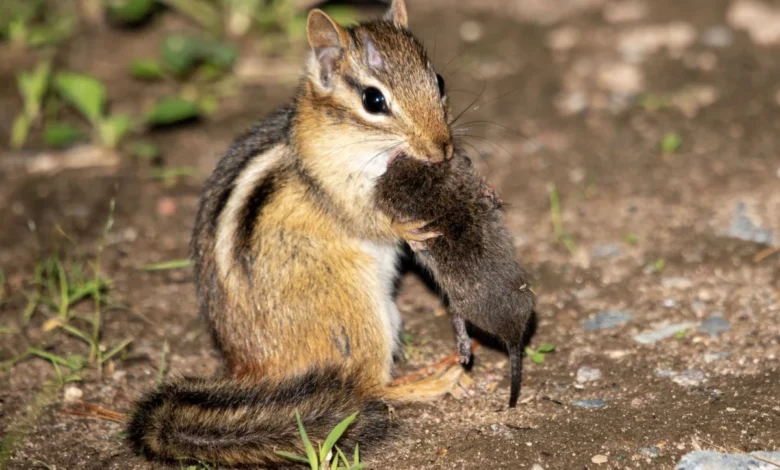
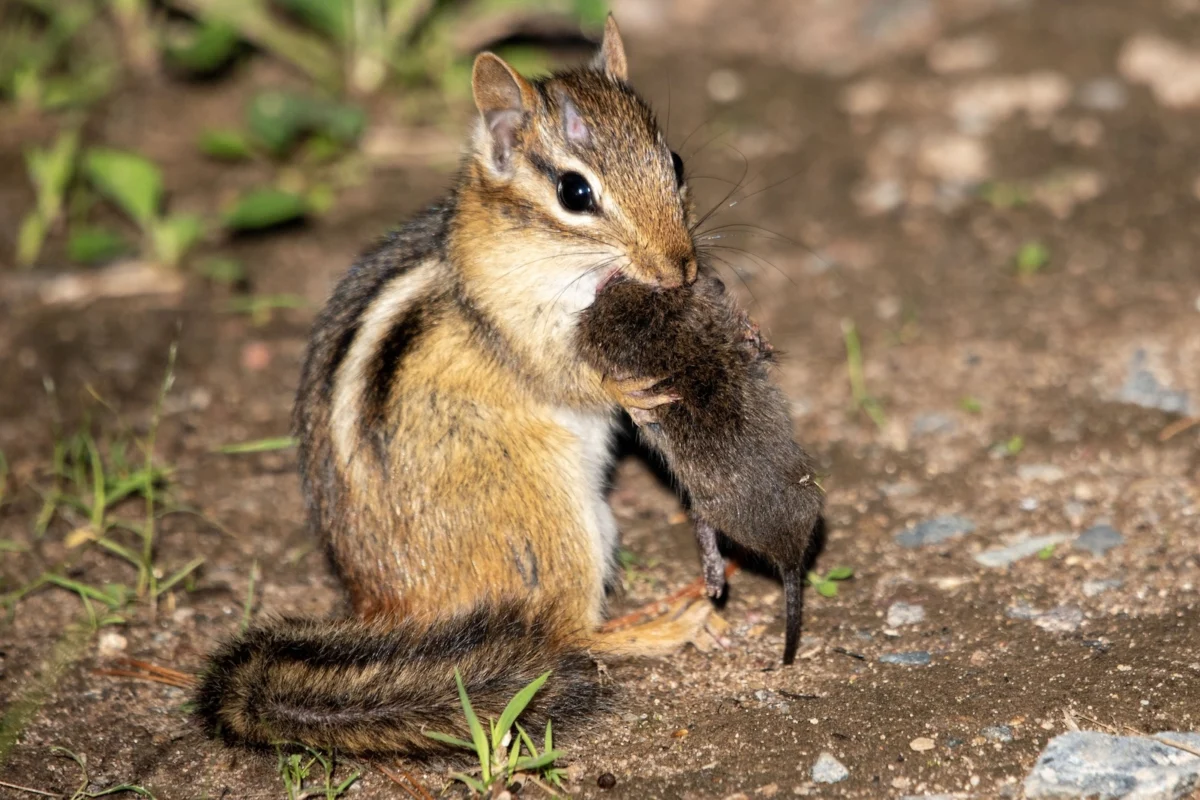
The platform has already yielded data that challenges common perceptions of wildlife. For instance, while most people associate rats with garden damage, biological data confirms that rats frequently engage in infanticide, acting as predators of their own kind. Similarly, the project has documented rare feeding events, such as a New World vulture consuming a deceased baby white shark on a beach in San Luis Obispo, California.
These observations are critical for understanding how energy moves through an ecosystem. Consider the goldenrod crab spider: through Who Eats Whom, users can observe the spider preying on honey bees, which in turn are documented visiting a variety of flora like thistles and honeysuckles. These links create a comprehensive map of nutrient cycling and pollination services. Documenting this "messiness" is essential for conservationists who are increasingly moving away from a "single-species" focus toward an "ecosystem-service" model.
Implications for Global Conservation
The rise of invasive species represents one of the most significant threats to modern biodiversity. Species like the lionfish, which have devastated native reef populations in the Atlantic and Caribbean, are often successful because they occupy a niche where they have few natural predators. Conservationists must understand the full diet of these invaders to predict which native populations are at the highest risk. As Roopnarine suggests, knowing exactly what is on the "menu" of an invasive species is the first step toward effective intervention.
The implications for land management are profound. Conservation is no longer just about setting aside acreage for protection; it is about protecting the functional relationships that allow species to survive. If a predator is protected but its primary prey has been displaced by drought or habitat loss, the protection of the predator becomes moot.
"Species don’t just need space—they don’t just need a habitat," says Bradley Allf. "They need the relationships that allow them to survive."
The Future of Community Science
The success of Who Eats Whom highlights the untapped potential of the modern, smartphone-equipped public. By providing a structured, scientific framework for casual observations, the project has turned the act of nature photography into a meaningful contribution to climate science.
For the average participant, the platform offers a deeper engagement with their local environment. As Rebecca Johnson, director of the Center for Biodiversity and Community Science at the California Academy of Sciences, points out, the platform changes the way people view their surroundings. It shifts the perspective from seeing a single animal in a vacuum to recognizing that the animal is a vital component of a complex, living machine.
As the database grows, it will likely become an indispensable tool for policy makers and conservation biologists. By aggregating thousands of disparate observations, Who Eats Whom is creating a "living" record of the planet’s biological health. This digital repository of interactions ensures that even as the climate shifts and ecosystems are fundamentally altered, there will be a clear, empirical record of how those changes occurred, providing the information necessary to protect the delicate, often invisible threads that hold the natural world together. In an era of rapid environmental transition, this crowdsourced intelligence may be the most effective defense against the collapse of biodiversity.
Related posts: