San Diego, CA – The hallowed halls of San Diego Comic-Con, a beacon for pop culture enthusiasts, played host to a significant moment for the enduring legacy of "The Big Bang Theory." HBO Max’s highly anticipated spinoff, "Stuart Fails to Save the Universe," made its grand debut with an exclusive first-episode screening on Thursday night, offering fans a tantalizing glimpse into the latest expansion of this beloved franchise. The event, held within the bustling convention center, not only provided a preview of the series but also served as a potent reminder of the franchise’s deep connection to the annual gathering, which has been a consistent platform for major announcements and fan engagement for years.
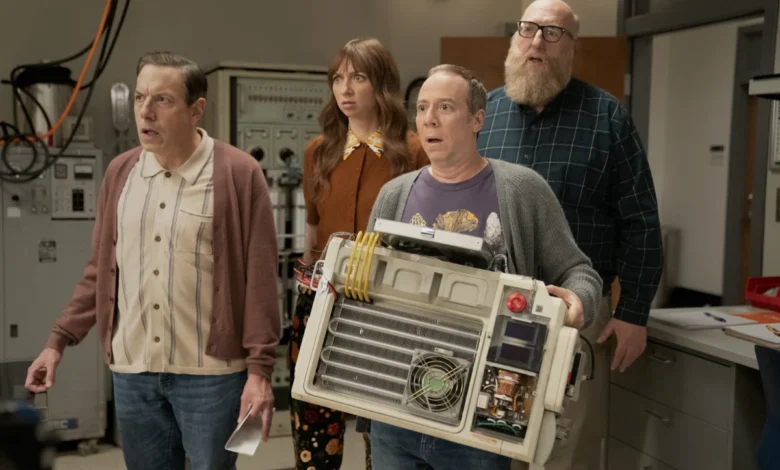
The panel, skillfully moderated by the charismatic Felicia Day, brought together key figures instrumental in bringing "Stuart Fails to Save the Universe" to life. Kevin Sussman, reprising his fan-favorite role as the perpetually beleaguered comic shop owner Stuart Bloom, anchored the discussion. He was joined by his new co-stars, Lauren Lapkus, who portrays Denise, a character poised to play a significant role in Stuart’s multiversal misadventures, and Brian Posehn, lending his comedic talents as the geologist Bert. Also present was John Ross Bowie, returning as the prickly but brilliant quantum physicist Barry Kripke, whose scientific acumen will undoubtedly be put to the test. The creative architects behind the original phenomenon, co-creators, executive producers, and writers Chuck Lorre, Zak Penn, and Bill Prady, were also in attendance, underscoring the collaborative spirit driving this new venture.
The premiere episode itself was a masterclass in fan service, punctuated by a series of surprise guest appearances from beloved members of "The Big Bang Theory" ensemble. These cameos, strategically woven into the narrative, served to bridge the gap between the original series and its new iteration, offering a comforting familiarity while simultaneously introducing fresh storylines. Bill Prady, speaking at the panel, alluded to further such surprises throughout the season, hinting at the return of even more cherished supporting characters. This approach is a deliberate strategy to leverage the established goodwill and expansive universe that "The Big Bang Theory" meticulously built over its twelve-season run. The franchise’s return to San Diego Comic-Con after the main series concluded in 2019 marks a significant milestone, demonstrating the continued appetite for its universe and the strategic importance of major pop culture events for launching new projects.
A notable departure for "Stuart Fails to Save the Universe" is its adoption of a single-camera filming format, a stark contrast to the traditional four-camera sitcom model that defined "The Big Bang Theory." This technical shift, explained by Chuck Lorre, is a direct response to the creative ambitions for the new series. "The four-camera audience show is putting on a play every week, and beyond sitting on a couch and talking to one another, there’s not a lot you can do," Lorre articulated. "As you just saw, I wanted to do a lot. The simple solution to that was to shoot it like a movie." This move signals a more dynamic visual style and potentially more elaborate storytelling, allowing for greater flexibility in setting, action, and character interaction beyond the confines of a traditional soundstage. The panel also featured a special appearance by Jim Lee of DC Comics, who unveiled exclusive cover art for a comic book tie-in to "Stuart Fails to Save the Universe," further integrating the series into the broader landscape of comic book culture, a core element of the franchise’s identity.
The official logline for "Stuart Fails to Save the Universe" paints a vivid picture of the ensuing chaos: "comic bookstore owner Stuart Bloom is tasked with restoring reality after he breaks a device built by Sheldon and Leonard, accidentally bringing about a multiverse Armageddon. Stuart is aided in this quest by his girlfriend Denise, geologist friend Bert, and quantum physicist/all-around pain in the ass Barry Kripke. Along the way, they meet alternate-universe versions of characters we’ve come to know and love from ‘The Big Bang Theory.’ As the title implies, things don’t go well." This synopsis promises a narrative rich in science fiction tropes, character-driven comedy, and the signature witty banter that fans have come to expect. The premise of a multiversal threat, triggered by Stuart’s accidental meddling, provides ample opportunity for exploring alternate realities and encountering beloved characters in new and unexpected forms, a narrative device that has proven highly popular in contemporary entertainment.
The production of "Stuart Fails to Save the Universe" is helmed by Chuck Lorre Productions in association with Warner Bros. Television. Kyle Newacheck serves as an executive producer and has directed multiple episodes, bringing his directorial expertise to the series. The commitment to a weekly release schedule, with new episodes dropping every Thursday at 6 p.m. PT on HBO Max, ensures sustained audience engagement and allows for ongoing discussion and fan theories. This staggered release strategy is a common and effective model for streaming services aiming to build momentum and retain subscribers.
"Stuart Fails to Save the Universe" represents the fourth distinct series to emerge from the fertile ground of "The Big Bang Theory" universe. The original show, which aired for an impressive twelve seasons on CBS, concluded in 2019, leaving a significant void in the network’s primetime lineup. Its prequel, "Young Sheldon," which chronicles the formative years of Sheldon Cooper, has also enjoyed substantial success, running for seven seasons and providing a heartwarming exploration of family dynamics and early scientific curiosity. The expansion continues with "George & Mandy’s First Marriage," a spinoff of "Young Sheldon," which has already secured a third season renewal, underscoring the enduring appeal and profitability of this interconnected narrative world. The franchise’s ability to spawn successful offshoots speaks volumes about the depth of its character development and the broad appeal of its thematic elements.
Background and Context: The Evolution of the Big Bang Theory Universe
The genesis of "The Big Bang Theory" can be traced back to the mid-2000s, a period when the landscape of television comedy was undergoing a subtle shift. The show, created by Chuck Lorre, Bill Prady, and initially developed by Dave Goetsch and Rob Liefeld, premiered on CBS in September 2007. It distinguished itself by centering its narrative on a group of highly intelligent but socially awkward scientists and their aspiring actress neighbor, Penny. This juxtaposition of intellectual prowess and everyday social challenges formed the core of its comedic appeal. The show’s initial reception was mixed, but through a combination of strong writing, relatable characters, and effective marketing, it gradually built a substantial audience.
The series’ consistent presence at San Diego Comic-Con over the years cemented its status as a cultural phenomenon. These panels often served as crucial touchpoints for the show to connect with its dedicated fanbase, offering behind-the-scenes insights, Q&A sessions with the cast and creators, and sneak peeks of upcoming episodes. For many fans, attending a "Big Bang Theory" panel at Comic-Con was an integral part of their convention experience, a tradition that underscored the show’s deep roots in fan culture. The decision to launch "Stuart Fails to Save the Universe" at this same iconic venue is a strategic move designed to tap into that existing enthusiasm and reintroduce the franchise to a new generation of viewers through HBO Max.
The transition from a traditional multi-camera sitcom to a single-camera format for the spinoff is a significant creative decision that reflects broader trends in television production. Single-camera shows often allow for a more cinematic feel, greater visual variety, and a less constrained comedic style. This format is frequently employed in contemporary comedies aiming for a more naturalistic or adventurous tone. For "Stuart Fails to Save the Universe," this shift suggests an ambition to move beyond the familiar apartment settings and delve into more expansive and visually dynamic scenarios, fitting for a multiversal adventure.
Timeline of the Big Bang Theory Franchise Expansion
- September 24, 2007: "The Big Bang Theory" premieres on CBS, introducing the world to Sheldon, Leonard, Penny, Howard, and Raj.
- May 16, 2019: "The Big Bang Theory" airs its series finale after 12 seasons, concluding the main storyline.
- September 25, 2017: "Young Sheldon," a prequel series focusing on Sheldon Cooper’s childhood, premieres on CBS.
- February 23, 2023: "George & Mandy’s First Marriage," a spinoff of "Young Sheldon," premieres on CBS.
- July 21, 2023: "Stuart Fails to Save the Universe" receives its world premiere at San Diego Comic-Con with a screening of the first episode and a subsequent panel discussion.
- August 3, 2023: "Stuart Fails to Save the Universe" begins its weekly release schedule on HBO Max.
Supporting Data: The Enduring Popularity of the Franchise
"The Big Bang Theory" consistently ranked among the most-watched television programs during its run. In its final season (2018-2019), it was the most-watched comedy and the third most-watched scripted program on U.S. broadcast television, averaging over 18 million viewers per episode in live + same day ratings. Its syndication success across various networks and streaming platforms further attests to its global appeal. "Young Sheldon" has also performed exceptionally well, often ranking as one of the top-rated comedies on broadcast television, demonstrating the franchise’s ability to attract and retain a significant audience across different demographics. The renewal of "George & Mandy’s First Marriage" for a third season further solidifies the financial viability and creative strength of this expanding universe.
The move to HBO Max for "Stuart Fails to Save the Universe" is also a strategic decision by Warner Bros. Discovery to leverage its intellectual property on its own streaming service. This aligns with a broader industry trend of media companies prioritizing their streaming platforms for new content and extensions of popular franchises. The digital-first release model allows for a different kind of audience engagement and data collection compared to traditional broadcast television.
Official Responses and Inferred Reactions
The enthusiasm from the cast and creators at the Comic-Con panel was palpable. Kevin Sussman, having played Stuart for over a decade, expressed his excitement about delving deeper into the character’s narrative. "It’s incredibly rewarding to see Stuart take center stage," he likely conveyed, reflecting the sentiment of many actors who have a strong connection to their long-running characters. The presence of Lorre, Prady, and Penn signifies their continued investment in the universe they created, suggesting a shared vision for the future of these characters and stories.
Felicia Day, known for her own contributions to the online and sci-fi communities, likely brought a level of authentic fan engagement to the moderation, bridging the gap between the creators and the audience. Her role as host would have been to facilitate discussion and highlight the key aspects of the new series for both long-time fans and potential new viewers.
The decision to center a series on Stuart Bloom, a character often relegated to supporting status, is a deliberate creative choice. His shop, The Comic Center of Pasadena, served as a central hub for many of the original series’ interactions. Giving him a leading role in a multiversal adventure offers a fresh perspective and allows for exploration of his character beyond his usual comedic relief. His inherent optimism and resilience, often tested by misfortune, make him a compelling protagonist for a story involving cosmic stakes.
Broader Impact and Implications
The success of "Stuart Fails to Save the Universe" could have significant implications for the future of the "Big Bang Theory" franchise. If the series resonates with audiences, it could pave the way for further explorations of different characters or concepts within this established universe. The single-camera format and multiversal premise also signal a willingness to experiment with the show’s established formula, potentially attracting a wider demographic of viewers who may not have been drawn to the original multi-camera sitcom.
Furthermore, the franchise’s continued presence at major pop culture events like San Diego Comic-Con reinforces the enduring power of these gatherings as crucial platforms for launching and promoting entertainment properties. The ability to generate immediate buzz and fan engagement through exclusive screenings and panels remains an invaluable tool in the modern media landscape. The successful integration of a comic book tie-in also highlights the symbiotic relationship between television and comic book properties, a cornerstone of the pop culture ecosystem.
The narrative of "Stuart Fails to Save the Universe" also offers an opportunity to reflect on themes of heroism, friendship, and the consequences of one’s actions, albeit through a comedic lens. Stuart’s journey from a somewhat overlooked character to a potential universe-saver provides a compelling arc, allowing for character growth and development that can be both humorous and surprisingly poignant. The inclusion of his girlfriend, Denise, suggests a potential exploration of romantic relationships within the context of extraordinary circumstances, adding another layer of character interaction and development. The presence of established characters like Bert and Kripke, each with their unique quirks and expertise, promises a dynamic ensemble cast that can deliver both comedic and narrative momentum. The challenges presented by a multiversal Armageddon are sure to test the bonds of friendship and the limits of scientific and personal ingenuity, making for an engaging and potentially heartwarming viewing experience.