The Legislative Impasse: Why the Farm Bill Remains a Casualty of Partisan Gridlock in Washington



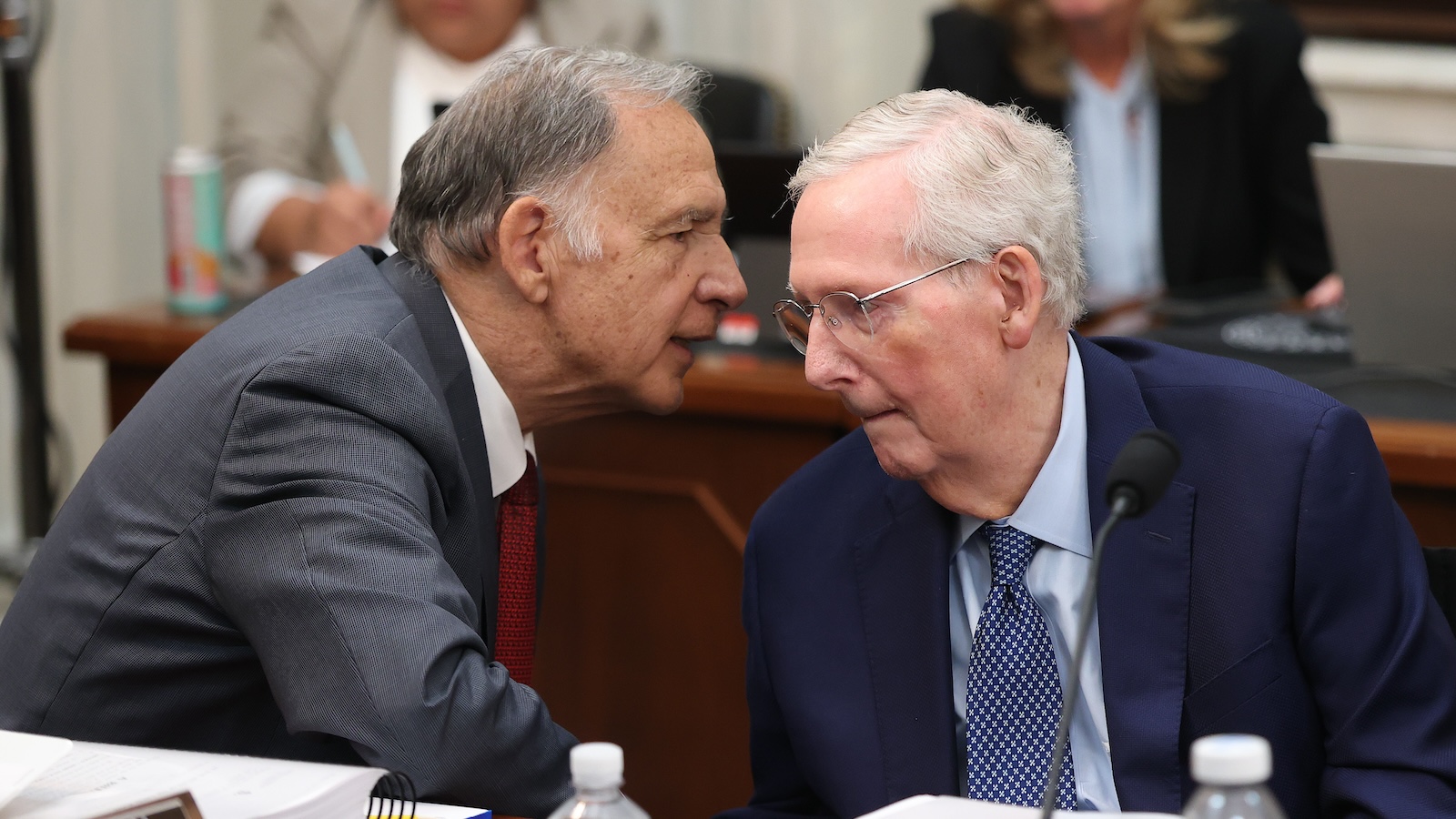
Last Tuesday, Senate Minority Leader Mitch McConnell made a notable return to Capitol Hill following a three-month absence, immediately signaling his intent to break the legislative deadlock surrounding the nation’s agricultural policy. His presence allowed the Republican-led Senate Agriculture Committee to cast a deciding vote on the latest iteration of the farm bill. While this move provided a procedural victory for the committee’s leadership, the broader outlook for the legislation remains bleak. With the midterm elections looming in November and deep-seated disagreements over federal nutrition spending, Washington appears poised to miss the deadline for renewing the nation’s primary agricultural framework for the fourth consecutive year.
The farm bill, historically a bipartisan hallmark of congressional cooperation, has become a victim of the widening chasm between the two parties. Although Republicans hold a slim majority with 53 seats in the Senate, the rules of the chamber necessitate a 60-vote threshold to overcome a filibuster and move toward final passage. This math leaves GOP leadership in a precarious position, requiring the cooperation of several Democratic colleagues to push the package through the floor—a feat that seems increasingly unlikely given the current political climate.
A Chronology of Stagnation
The failure to pass a comprehensive farm bill is not a sudden development but the culmination of years of legislative drift. The previous authorization, which was signed into law in 2018, was intended to provide stability for farmers, conservationists, and low-income families through 2023. However, repeated extensions have left the agricultural sector in a state of suspended animation.
In August, Senate Democrats successfully stalled the committee’s progress, citing fundamental objections to the bill’s treatment of the Supplemental Nutrition Assistance Program (SNAP). Despite the recent committee vote, those foundational grievances remain unaddressed. The current impasse mirrors the broader fiscal battles of the last two years, most notably the fallout from the "One Big Beautiful Bill Act." Signed into law by President Donald Trump last summer, that legislation implemented a massive restructuring of federal spending, including $186 billion in cuts to SNAP—the nation’s primary food assistance program.
The SNAP Debate and Economic Consequences
The central point of contention in the current draft of the farm bill is the refusal of Republican leadership to restore the SNAP funding stripped away in the previous year’s budget reconciliation package. For Senate Democrats, the restoration of these funds is a non-negotiable prerequisite for their support. Furthermore, they are demanding a delay in a scheduled change to the program’s cost-sharing structure, which would shift a greater administrative burden onto the states.
The implications of these cuts extend far beyond the immediate reduction in benefits for millions of low-income Americans. Economists and agricultural policy experts have pointed out a "ripple effect" that threatens the stability of rural economies. Because SNAP benefits are frequently used at local grocery stores and markets that source goods from regional producers, a decline in purchasing power among SNAP recipients directly translates to reduced revenue for small- and medium-sized farms.
"The farmers in our network live in rural areas," explains Jody Osmund, a founding member of the FACE Ag Network, a coalition of pasture-based livestock producers. "Rural areas have a higher uptake of SNAP participation than urban areas. So it is hurting our community directly."
The fiscal pressure on states is equally concerning. Mike Lavender, policy director of the National Sustainable Agriculture Coalition, notes that the current proposal forces states to make impossible trade-offs. "States are going to have to rethink their budgets," Lavender said. "They are looking at whether to fund education at the current level, or SNAP, or transportation. This is forcing difficult decisions that will inevitably impact state departments of agriculture."
The Burden on Small-Scale Agriculture
While industrial-scale corporate farms have the capital reserves to weather market fluctuations, small- and medium-sized farmers are uniquely vulnerable to the current policy environment. They are currently navigating a "perfect storm" of rising input costs—most notably record-high diesel prices—and the instability caused by volatile international trade markets.
The lack of a long-term, stable farm bill makes it difficult for these farmers to secure operating loans or plan for long-term investments in their land. When the federal government relies on short-term stopgap measures rather than comprehensive policy, it is the smaller, independent producer who suffers the most from the resulting lack of predictability.
The "Save Our Bacon" Provision and Conservation Priorities
Despite the gridlock, some agricultural groups have identified a singular positive development in the current Senate draft: the explicit exclusion of the "Save Our Bacon Act." This provision, had it been included, would have significantly lowered federal standards for the humane treatment of livestock, specifically concerning the caging and confinement of animals.
"It’s encouraging," said Osmund, who led a coalition of producers to Washington to lobby against the measure. The exclusion suggests that even in a polarized environment, targeted advocacy can still influence the fine print of the legislation.
However, concerns persist regarding the bill’s approach to environmental conservation. The proposed legislation includes significant cuts to the Environmental Quality Incentives Program (EQIP) and the Conservation Stewardship Program (CSP). Critics argue that these programs, even when fully funded, are in need of a structural overhaul. There is a growing movement to pivot federal conservation dollars away from the waste-management needs of industrial livestock operations and toward climate adaptation strategies that benefit smaller, more sustainable farms.
Looking Toward 2027
As the midterm elections approach, the political incentive for bipartisan compromise is rapidly diminishing. Many observers now believe that a total failure to pass a new farm bill this year is inevitable. In this context, some industry stakeholders are viewing the legislative gridlock as a "lesser of two evils" scenario.
"A continuation of the 2018 farm bill may be better," Osmund argued. "It’s not ideal, but no deal on the current version of the farm bill is much better than a very, very bad deal."
If Congress fails to act before the end of the year, the legislative clock will effectively reset. Any hope for a modernized, adequately funded, and sustainable agricultural policy will be pushed into 2027, forcing the next session of Congress to grapple with the same entrenched issues under a potentially new political mandate. For the nation’s farmers and the millions of citizens who rely on federal nutrition assistance, the wait for a resolution continues, leaving a foundational pillar of the American economy in a state of prolonged, and costly, uncertainty.
Related posts: