Trump Dismisses AI Safety Concerns as a Democratic Hoax and Pledges New Federal Oversight Structure

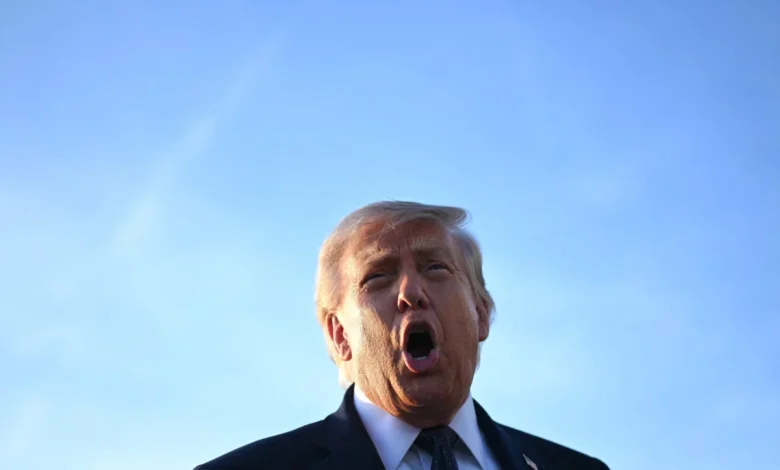
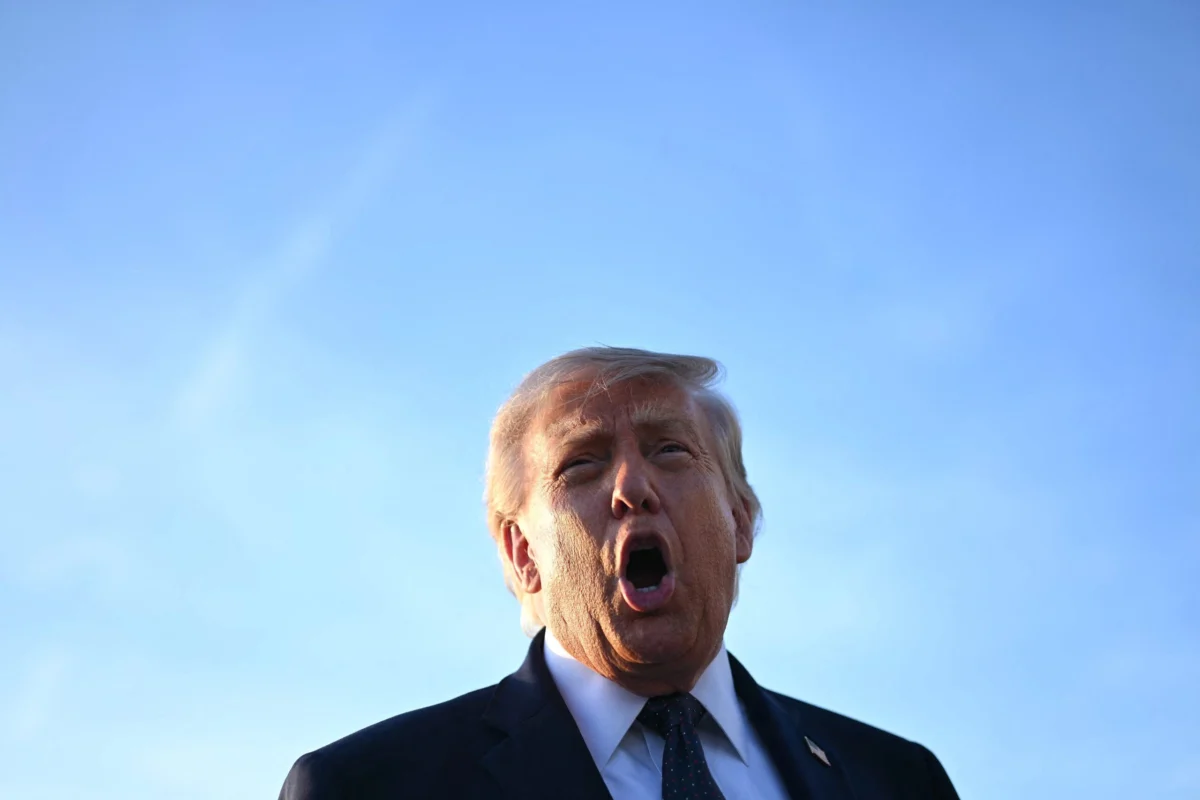
President Donald Trump has ignited a fresh political and technological debate by dismissing growing international concerns over artificial intelligence safety as a manufactured political strategy. In a series of weekend social media statements, the president characterized the intensifying discourse surrounding AI risks as a deliberate hoax engineered by political opponents to sabotage American technological dominance. This latest intervention underscores the deepening intersection of partisan politics, economic growth, and the rapid expansion of foundational technologies in the United States.
The weekend remarks signal a potential shift in federal posture toward tech regulation, contrasting sharply with warnings issued by industry insiders, researchers, and state legislators who are grappling with the real-world environmental and societal footprints of the artificial intelligence boom.
Chronology of the Weekend Announcements
The sequence of events began on Saturday when President Trump took to his social media platform, Truth Social, to critique the very nomenclature of the industry. Questioning the linguistic precision of the phrase artificial intelligence, the president invited his followers to participate in a public poll to select an alternative designation for the technology, offering options such as Superior Intelligence, Extreme Intelligence, and Supreme Intelligence.
Hours later, the discourse escalated from nomenclature to policy. Trump published a follow-up statement asserting that efforts to restrict or decelerate the advancement of artificial intelligence represent a coordinated political hoax. In his assessment, he grouped these regulatory anxieties alongside previous partisan controversies, framing them as part of a broader pattern of opposition.
The president explicitly vowed to protect the domestic artificial intelligence sector, declaring his intention to nurture and monitor its growth. Crucially, he announced plans to establish a specialized military or federal branch designated as the AI Force, echoing the creation of the United States Space Force during his initial term in office. Additionally, Trump stated that a new federal official, colloquially termed the AI Czar, would soon be appointed to oversee federal coordination, stipulating that candidates must possess high intellectual credentials. While specific details regarding the authority, jurisdiction, and budgetary scope of the proposed AI Force and the forthcoming czar position remain unannounced, the move signals an ambition to centralize technological oversight within the executive branch.
Broader Context and the Data Center Flashpoint
To fully understand the administration’s aggressive pushback against AI safety rhetoric, analysts point to the preceding months of intense friction between local communities and the tech sector. The rapid scaling of generative artificial intelligence has necessitated an unprecedented buildout of physical infrastructure, specifically massive data centers designed to train and operate advanced large language models.
These facilities, which consume staggering amounts of electrical energy and water resources, have sparked fierce localized pushback across the United States. Earlier this year, public resistance led to significant legislative actions. Notably, New York State made headlines by becoming the first jurisdiction in the country to halt the permitting process for new large-scale data center projects, citing environmental and grid-stability concerns. Similar bipartisan friction has emerged in states across the Sun Belt and the Midwest, where residents have voiced alarm over soaring utility bills and strained municipal infrastructure.
President Trump addressed this physical backlash directly in his statements, arguing that initial attacks by critics focused heavily on data centers until local communities recognized the economic prestige and tax revenue generated by the facilities. According to the president’s narrative, once the localized resistance to data centers largely dissipated, critics pivoted their strategy toward existential safety fears surrounding the software itself.
The Safety Debate and Industry Divisions
The timing of Trump’s remarks coincides with a turbulent period for the AI research community, which has found itself sharply divided over the pacing and governance of frontier models. The debate was thrust back into the national spotlight following the high-profile resignation of a senior researcher at artificial intelligence firm Anthropic. Citing profound ethical misgivings, the researcher warned that leading labs were operating under the belief that uncontrolled frontier models could pose existential risks to humanity by the end of the decade, effectively gambling with public safety.
In response to mounting internal and external pressure, Anthropic CEO Dario Amodei subsequently outlined a strategic roadmap aimed at pacing the development of frontier systems to ensure rigorous safety alignment. This framework drew cautious support from executives at other prominent technology firms, including OpenAI CEO Sam Altman and SpaceX and xAI CEO Elon Musk.
However, a vocal faction of technologists and policy analysts argues that an excessive focus on hypothetical, long-term existential threats serves primarily as a regulatory smokescreen. Critics suggest that hyper-focusing on science-fiction scenarios detracts attention from immediate, demonstrable harms, such as algorithmic bias, labor displacement, the proliferation of deepfakes, and copyright infringement.
Industry Alignment and Political Implications
The president’s stance has found a receptive audience among key figures within the technology sector who fear that heavy-handed regulatory compliance could hobble American competitiveness against foreign adversaries, most notably China.
During a recent appearance at the All-In Summit, Nvidia CEO Jensen Huang was invited on stage by the president to discuss the state of the industry. Huang publicly aligned himself with the administration’s perspective, dismissing regulatory friction as a counterproductive slowdown and affirming that industry leaders are committed to maintaining rapid innovation velocity without permitting bureaucratic deceleration.
This alignment reinforces the broader policy direction of the administration, which has consistently favored deregulation and industrial acceleration over precautionary compliance models favored by some international allies, particularly in the European Union.
Fact-Based Analysis of Future Implications
The creation of an AI Force and the appointment of a new federal czar carry profound implications for the domestic technology landscape. While the precise mechanics of these initiatives are yet to be defined, they suggest a militarization or highly centralized national security approach to what has traditionally been a commercial and academic domain.
If the federal government pivots toward aggressively shielding the AI sector from state-level restrictions and international regulatory frameworks, it could trigger significant legal battles over federal preemption. States that have enacted environmental and infrastructural curbs on data centers may find themselves at direct odds with executive initiatives designed to fast-track computational infrastructure.
Furthermore, the dismissal of safety concerns as political theater risks polarizing an already delicate scientific discussion. As foundational models grow more autonomous and capable, policymakers will be forced to balance the economic imperatives of maintaining global tech supremacy with the legitimate oversight required to manage systemic risks to critical infrastructure, financial markets, and national security. Whether a centralized executive apparatus can successfully navigate this tension without alienating the scientific community remains one of the defining governance challenges of the decade.