Methane is a colorless, odorless, and highly potent greenhouse gas that currently ranks as the second most significant driver of the climate crisis, trailing only carbon dioxide. While often overshadowed by the pervasive focus on CO2, methane’s chemical structure—one carbon atom bonded to four hydrogen atoms—allows it to trap heat with exceptional efficiency. As global atmospheric concentrations of this gas reach record highs, scientists and policymakers are increasingly identifying its rapid mitigation as the most effective "fast-action" lever for curbing global temperature rise in the short term.
The Science and Measurement of Methane Emissions
Methane enters the atmosphere through both biological and geological pathways. Biologically, it is produced through methanogenesis, a process where microorganisms known as archaea break down organic matter in anaerobic, or oxygen-free, environments. This occurs naturally in wetlands and the digestive tracts of ruminant livestock, but it is also accelerated by human waste management practices. Geologically, methane is a byproduct of high-pressure heat applied to organic matter over millions of years, forming the fossil fuel deposits that humans extract for energy.

Measuring these emissions has historically been a challenge, leading to significant discrepancies in official reporting. Scientists rely on two primary methodologies: "bottom-up" and "top-down." Bottom-up assessments involve calculating emissions by multiplying the number of sources—such as the count of cattle or the number of valves at a gas terminal—by an estimated average emission rate. Conversely, top-down approaches utilize satellite imagery, high-altitude aircraft, and ground-based sensors to measure actual atmospheric concentrations.
Recent satellite data has revealed that the "bottom-up" method often underestimates total output because it fails to account for "super-emitters." Studies have shown that a small fraction of leaks—often just 5 percent of infrastructure failures—can account for more than 50 percent of total methane leakage volume. This gap explains why direct measurements frequently find emissions to be 60 percent higher than those reported in national inventories by agencies like the U.S. Environmental Protection Agency (EPA).
A Chronology of the Methane Challenge
The trajectory of atmospheric methane has changed drastically since the Industrial Revolution. By 2023, concentrations had soared by 265 percent compared to pre-industrial levels, reaching 1,934 parts per billion (ppb).

- 1990s–2000s: Global attention remained firmly fixed on CO2, with methane treated as a secondary concern.
- 2016: The United States lifted its ban on liquefied natural gas (LNG) exports, triggering a massive surge in infrastructure development.
- 2021: At the COP26 climate conference in Glasgow, the Global Methane Pledge was launched. Participating nations committed to a 30 percent reduction in methane emissions by 2030, a goal seen as critical to keeping the 1.5°C global heating target within reach.
- 2022: Researchers identified over 1,000 "super-emitter" incidents, including a single event in Turkmenistan that released 427 metric tons of methane per hour—a volume equivalent to the hourly emissions of an entire nation like France.
- 2023–2025: Despite international pledges, atmospheric methane concentrations continued to set new records, exposing a widening gap between climate policy rhetoric and industrial reality.
The Triple Threat: Agriculture, Fossil Fuels, and Waste
More than 90 percent of human-caused methane emissions originate from three distinct sectors: agriculture, fossil fuel extraction, and waste management.
Agriculture is the leading contributor, responsible for approximately 40 percent of anthropogenic methane. Ruminant livestock, particularly cattle, generate methane through enteric fermentation. As the global demand for meat and dairy continues to rise, these emissions are projected to grow by six million metric tons annually by 2030. Additionally, rice cultivation in flooded paddies creates ideal conditions for methane-producing microbes, accounting for roughly 8 percent of human-caused emissions.
Fossil fuel operations—spanning oil, gas, and coal—contribute about 35 percent of human-caused methane. This occurs through intentional venting, where gas is released during extraction, and accidental leaks throughout the supply chain. The "bridge fuel" narrative, which posits that natural gas is a cleaner alternative to coal, is increasingly under fire. Research indicates that when leakage rates exceed 0.2 percent, the climate-warming impact of natural gas can equal or exceed that of coal over a 20-year horizon.

Waste management accounts for 20 percent of emissions. As populations grow in developing economies, the volume of solid waste sent to landfills is expected to increase by 73 percent by 2050, potentially making waste-related methane the fastest-growing source of emissions in the coming decade.
Feedback Loops and Tipping Points
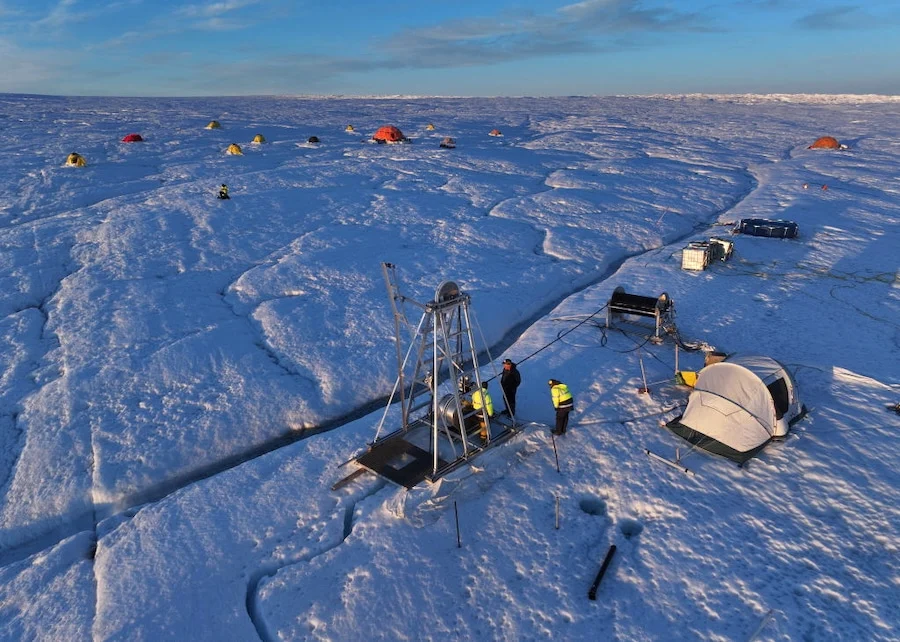
Perhaps the most concerning aspect of methane is its role in "positive climate feedback loops." As the planet warms, ecosystems that store carbon begin to release it. Arctic permafrost, which contains 2.5 times more carbon than exists in the atmosphere, is beginning to thaw. This process releases stored methane from both decaying organic matter and destabilizing methane hydrates beneath the seafloor.
Furthermore, the increasing frequency of climate-fueled wildfires creates a self-reinforcing cycle. Large-scale fires in regions like California have been shown to contribute significantly to annual methane budgets, with a single record-breaking fire season accounting for up to 14 percent of a state’s total annual emissions.

Public Health and Economic Implications
Methane is not merely a climate threat; it is a direct hazard to human health. When methane reacts in the atmosphere, it contributes to the formation of ground-level ozone, a potent respiratory irritant. This pollutant is linked to approximately half a million premature deaths annually.
Economic analyses suggest that the cost of inaction is mounting. Every million metric tons of methane mitigated would theoretically prevent thousands of asthma-related emergencies and hospitalizations, while also protecting agricultural yields of wheat, soy, and rice from ozone damage. The Global Methane Assessment concludes that curbing methane is the single most effective strategy for decreasing the rate of warming over the next two decades.
Policy Responses and the Implementation Gap
While the Global Methane Pledge has gained 159 signatories, the translation of this promise into concrete regulation remains insufficient. Only about 13 percent of global methane emissions are currently covered by comprehensive reduction policies.

The International Energy Agency (IEA) has emphasized that 70 percent of methane emissions from the oil and gas sector could be eliminated using existing technologies, with 40 percent of those cuts achievable at zero net cost. These solutions include basic infrastructure maintenance, such as leak detection and repair (LDAR) programs, and the phasing out of pneumatic devices that vent gas.
A Path Forward: Individual and Systemic Action
Addressing methane requires a two-pronged approach: large-scale industrial regulation and individual lifestyle shifts. On a systemic level, the expansion of LNG infrastructure must be halted to prevent "locking in" decades of future emissions. Transitioning toward renewable energy sources that do not rely on methane-leaking infrastructure is the most definitive long-term solution.
For individuals, the most impactful actions include reducing personal consumption of meat and dairy, which lessens the demand for industrial livestock production. Furthermore, reducing food waste—which currently accounts for 30 to 40 percent of all food produced—is a highly effective way to prevent methane generation in landfills. For homeowners, transitioning from gas-powered appliances to electric heat pumps and induction ranges directly reduces the demand for natural gas and minimizes leak risks within the domestic environment.

Ultimately, methane represents a unique challenge in the climate crisis. Its extreme potency, combined with a relatively short atmospheric lifespan of about 12 years, means that rapid, decisive action can produce tangible results within a generation. By closing the gap between climate commitments and operational reality, the global community has a rare opportunity to decelerate the warming process and protect both public health and global ecosystems from the most severe consequences of climate change.
Related posts: