The Urgent Climate Imperative: Understanding the Role and Reality of Methane Emissions

Methane, an invisible and odorless hydrocarbon, has emerged as the most critical focal point in the global effort to slow the pace of climate change. While carbon dioxide (CO2) remains the most abundant greenhouse gas, methane possesses a short-term warming potential that dwarfs its more famous counterpart. As the primary component of natural gas—a fuel source that powers roughly 25 percent of the world’s electricity—methane is inextricably linked to both global energy systems and the natural biological processes of the planet.
The Science of Potency and Persistence
Methane consists of one carbon atom bonded to four hydrogen atoms. Its contribution to the climate crisis is defined by a paradoxical relationship between potency and lifespan. While CO2 persists in the atmosphere for centuries, methane remains for approximately 12 years before breaking down into water vapor and carbon dioxide.

However, during that 12-year window, methane is significantly more effective at trapping heat. Scientific assessments, including those from the Intergovernmental Panel on Climate Change (IPCC), indicate that over a 20-year timeframe, methane traps 86 times more heat per unit of mass than CO2. Over a century, this effect is estimated at 28 times more potent. This reality creates a high-stakes scenario: because methane’s impact is front-loaded, rapid reductions in emissions could lead to immediate, tangible cooling effects, making it the most effective lever for limiting global temperature rise to 1.5 degrees Celsius.
A Chronology of Rising Concentrations
The accumulation of methane in the atmosphere has accelerated sharply since the dawn of the industrial era. Atmospheric concentrations have surged by approximately 265 percent compared to pre-industrial levels, reaching 1,934 parts per billion (ppb) as of 2023.
The trajectory of this increase is tied to three distinct phases of modern development:

- The Post-War Expansion (1950–1990): Rapid industrialization and the global adoption of natural gas as a primary heating and power fuel led to steady, incremental increases in methane leaks.
- The Fracking Boom (2005–2015): The widespread adoption of hydraulic fracturing and horizontal drilling in North America led to a massive, and often unmeasured, surge in fugitive emissions from extraction sites.
- The Era of Satellite Monitoring (2016–Present): Advances in space-based technology began revealing "super-emitter" events—localized, massive leaks from infrastructure—that were previously invisible to ground-based reporting. These findings forced a global re-evaluation of how methane is tracked and regulated.
Mapping the Sources: Human and Natural
Methane emissions are broadly categorized into human-caused (anthropogenic) and natural sources. Anthropogenic activities account for roughly 60 percent of emissions, with the remainder coming from natural sources like wetlands, permafrost, and geological seeps.
Agricultural Drivers: Livestock, particularly ruminants like cattle, sheep, and goats, generate methane through enteric fermentation—a digestive process involving microorganisms. Manure management also contributes significantly. Furthermore, rice cultivation in flooded paddies creates anaerobic conditions that facilitate the production of methane by archaea.
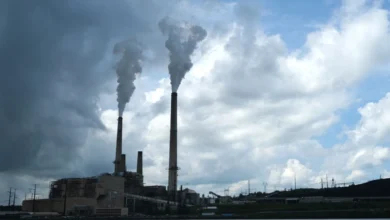
Fossil Fuel Infrastructure: The energy sector accounts for roughly 35 percent of human-caused emissions. These occur during the extraction, processing, and transport of oil and gas. Venting, which is the intentional release of gas for safety or maintenance, and leaking from aging infrastructure are the primary culprits. Coal mining also releases "coal mine methane" trapped within seams, which is often released through ventilation systems.

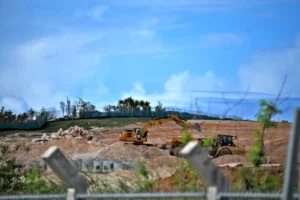
Waste Management: Landfills and wastewater treatment facilities represent approximately 20 percent of human-caused emissions. As organic waste decomposes in oxygen-poor environments, it releases methane. With urban populations growing, waste-related methane is projected to be the fastest-growing source of emissions by 2030 if waste management practices are not modernized.
The Limitations of Measurement: Bottom-Up vs. Top-Down
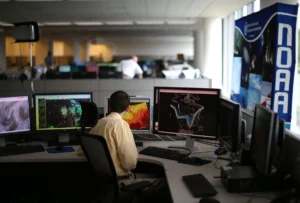
For decades, governments relied on "bottom-up" accounting—estimating emissions by multiplying the number of cows or the amount of equipment by a standard emission factor. This method has proven to be woefully inaccurate. Research has demonstrated that direct, "top-down" measurements, conducted via aircraft and satellite sensors, frequently find that actual methane emissions are 60 percent higher than those reported by national environmental agencies.
The disparity is largely due to "super-emitters"—the five percent of leaks that account for over half of all emissions. These are often catastrophic equipment failures or intentional venting events that traditional reporting never captures.

The "Bridge Fuel" Fallacy and Economic Implications
The argument that natural gas serves as a "bridge fuel" between coal and renewables has come under intense scrutiny. While burning natural gas produces less CO2 than coal, the high rate of upstream methane leakage undermines this advantage. Recent studies suggest that if methane leakage rates exceed 0.2 percent, the climate-warming impact of liquefied natural gas (LNG) can equal or exceed that of coal.
The economic shift toward LNG exports—particularly in the U.S., which became the world’s leading exporter in 2022—has led to a massive expansion of infrastructure. Critics, including climate scientists and environmental advocates, argue that this "methane bomb" infrastructure risks locking the world into decades of high-emission energy production, effectively negating the progress made through renewable energy deployment.
Official Responses and the Global Methane Pledge
In response to these findings, the international community launched the Global Methane Pledge at COP26 in 2021. As of early 2025, 159 nations have committed to reducing global methane emissions by 30 percent from 2020 levels by 2030.

Despite these high-level commitments, the implementation gap remains cavernous. Data shows that methane emissions continued to rise through 2024, surpassing 120 million metric tons per year in the oil and gas sector alone. International Energy Agency (IEA) reports indicate that while the technical solutions to cut emissions by 70 percent exist—and are often cost-effective—the political and regulatory enforcement mechanisms to mandate these changes are currently missing for 87 percent of global methane emissions.
Broader Impacts: Public Health and Ozone
Beyond global heating, methane is a precursor to ground-level ozone, a potent respiratory irritant. Ozone is formed when methane reacts with nitrogen oxides in the presence of sunlight. This secondary pollutant is linked to approximately 500,000 premature deaths annually due to cardiovascular and respiratory diseases. Furthermore, ozone stunts plant growth, causing significant losses in global wheat, soybean, and rice yields. Reducing methane is, therefore, not just a climate strategy but a vital public health intervention.
Pathways to Mitigation: A Multi-Pronged Approach
Addressing the methane crisis requires a tiered strategy:

- Industrial Accountability: The most immediate impact can be achieved by mandating leak detection and repair (LDAR) in the oil and gas sector, phasing out routine venting, and capping abandoned wells.
- Agricultural Innovation: Implementing enteric methane inhibitors, such as seaweed supplements for cattle, and transitioning to "Alternative Wetting and Drying" methods for rice paddies can significantly reduce agricultural output.
- Circular Waste Systems: Moving toward zero-waste economies, capturing biogas from landfills, and implementing secondary and tertiary wastewater treatment are essential for curbing waste-sector emissions.
- Dietary Shifts: While controversial in policy circles, reducing global meat and dairy consumption in favor of plant-based proteins remains one of the most effective ways to lower the biological footprint of the food system.
Conclusion: The Window of Opportunity
The challenge of methane is that it is a systemic byproduct of modern existence. However, its short atmospheric lifespan is precisely what makes it our greatest opportunity. Unlike CO2, which requires deep, multi-generational shifts to stabilize, methane can be addressed with existing, scalable technology today.
The scientific consensus is clear: the path to limiting warming to 1.5 degrees Celsius relies on a 34 percent reduction in methane by 2030. Achieving this will require moving past voluntary pledges toward binding, transparent, and satellite-verified regulations. The infrastructure of the past—from coal mines to gas terminals—is currently competing with the survival of the future. As data continues to expose the scale of the leak, the pressure on political and corporate leadership to bridge the gap between promises and atmospheric reality will only continue to intensify.