US Defense Secretary Affirms Executive Authority in Iran War Amid Spiraling Costs and Congressional Scrutiny, While Domestic and Trade Tensions Mount

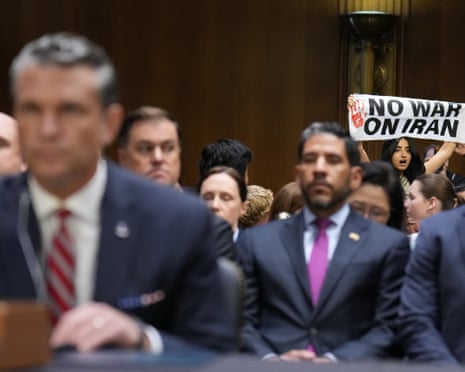
Washington D.C. – Defense Secretary Pete Hegseth asserted on Tuesday that the Trump administration possesses "all the authorities necessary" under standalone Article II powers to continue military operations in Iran, a declaration that intensified a constitutional standoff with Congress. This came during a Senate Appropriations Committee hearing, where Hegseth faced sharp questioning regarding the escalating costs and strategic direction of the ongoing US-Israeli war in Iran. The Pentagon’s current estimate for the conflict, which began on February 28, has reached $37.5 billion, with the department now requesting an additional $67 billion in supplemental funding. This request arrives despite both chambers of Congress having passed a War Powers Resolution urging the President to seek explicit congressional authorization for continued military engagement.
Escalating War Costs and Constitutional Clash
The Senate Appropriations Committee hearing, held on July 21, 2026, quickly became a focal point for the deep divisions surrounding the nearly five-month-old Iran conflict. Defense Secretary Pete Hegseth, accompanied by Joint Chiefs of Staff Chairman Dan Caine, appeared before lawmakers to justify an $88 billion supplemental funding request to support the war effort. Hegseth warned that without these funds, the Pentagon would face "critical shortfalls" impacting troop pay, equipment replenishment, and vital operations. He clarified that this supplemental request was distinct from the broader $1.5 trillion Pentagon budget sought for the next fiscal year.
Republican Senator Lisa Murkowski of Alaska directly challenged Hegseth on the legal basis for the war, prompting his reliance on Article II authorities. Murkowski’s line of questioning highlighted the ongoing tension between the executive branch’s interpretation of its commander-in-chief powers and Congress’s constitutional prerogative to declare war. Hegseth conspicuously sidestepped a crucial follow-up question: whether he viewed the approval of supplemental funding as a "substitute for explicit congressional authorization." This evasion underscored the administration’s apparent reluctance to seek a formal declaration of war or a new Authorization for Use of Military Force (AUMF) from a wary Congress.
Adding to the financial scrutiny, Senator Dick Durbin, an Illinois Democrat, pressed Hegseth on why the Pentagon required an additional $67 billion for the war when it still held $75 billion in "unobligated funding" from last year’s reconciliation package. Hegseth dismissed Durbin’s concern, stating that the $75 billion was earmarked for a "rebuild of our military which had to be undertaken." This exchange highlighted concerns about fiscal transparency and the allocation of defense funds amidst a costly conflict. Hegseth further inflamed partisan tensions by launching an attack on his predecessor, former Defense Secretary Lloyd Austin, accusing him of pursuing "woke priorities" at the expense of military readiness. "I don’t know what Lloyd Austin did for four years, I really don’t," Hegseth remarked, citing "staggering neglect" and "stale thinking" upon taking office.
Durbin interrupted Hegseth’s partisan digression to refocus on the war’s financial toll. He recalled a previous estimate of $29 billion for the war and demanded an updated figure. Hegseth confirmed the current estimated cost of the US-Israeli war in Iran to be $37.5 billion, projecting this figure through the end of the US government’s financial year on September 30.

The hearing was also marked by disruptions from anti-war protesters, who intermittently interrupted Hegseth’s testimony, leading to pauses in the proceedings and calls for Capitol police intervention by Committee Chair Senator Susan Collins. Senator Collins, a Maine Republican, emphasized the "must-pay bills and urgent requirements" facing the military, and warned that a lack of supplemental funding would force the curtailment of current and future training exercises. She also voiced "deeply troubling" concerns about reports of senior officers, many of them women and people of color, being removed from promotion lists, stressing the importance of meritocracy in the US military.
Military Strategy and the Iranian Nuclear Threat
Beyond the financial and constitutional debates, the hearing delved into the strategic challenges posed by Iran’s nuclear program and military capabilities. Senator John Kennedy, a Louisiana Republican, pressed Secretary Hegseth on whether the US military possessed the ability to destroy "Pickaxe Mountain" (Kolang Gaz La in Persian), a fortified underground site linked to Iran’s nuclear program that has not yet been targeted. Hegseth, while acknowledging the classified nature of some capabilities, offered a sweeping statement of confidence: "if anybody in the world can reach anything on God’s given, God’s green Earth, it’s the United States military." Kennedy’s exasperation reflected expert reports suggesting the site might be beyond the reach of even the most powerful US bunker-buster bombs.
President Trump, earlier on Tuesday, addressed the intelligence assessment from Israel that Iran had moved nuclear centrifuges into deep tunnels within Pickaxe Mountain, located approximately a mile from the heavily damaged Natanz uranium enrichment facility. Trump stated, "I think that they may have; we don’t have it on record," before dismissing it as potentially "fake news." He then added a chilling warning: "It doesn’t mean anything unless they have the material… We follow the material, that’s where the action is, and we’ll be hitting that area very, probably pretty soon and very heavily." This aggressive rhetoric signals a potential escalation of the conflict to target critical Iranian nuclear infrastructure, even those deemed highly protected.
The Institute for Science and International Security, a nonpartisan think tank, noted that Pickaxe Mountain was "not visibly attacked" in 2025 when US bombers targeted the Natanz facility with GBU-57 bunker-buster bombs. Iran had announced in 2020 that the Pickaxe tunnel complex was intended to house an advanced centrifuge assembly facility capable of producing thousands of centrifuges annually, with the institute previously assessing its potential to also contain a centrifuge enrichment facility.
Joint Chiefs Chairman Dan Caine was questioned by Senator Jack Reed, a Rhode Island Democrat and military veteran, about the efficacy of "air strikes alone" to deter and defeat Iran. Caine conceded that "academically, as you look across the totality of history, air power’s got limits," emphasizing the need for a comprehensive approach combining military power with "the totality of the diplomatic, informational and economic" measures. When pressed on the anticipation of ground troops as a next step, Caine demurred, stating it would be "unhelpful for me to opine on hypotheticals." He reaffirmed the Pentagon’s role in developing military options and ensuring leaders understand the associated risks. In his opening remarks, Caine acknowledged the sacrifices of US service members, asking the public to "never forget our fallen and their families." However, Secretary Hegseth notably did not make similar reference to the three US service members who died in the Iran conflict last week.
Democratic Senator Patty Murray, the ranking member on the Appropriations Committee, vehemently criticized the administration’s war strategy and funding request. She declared, "Our country is no safer or better off than before the war. In fact, we are considerably less safe." Murray highlighted the depletion of US stockpiles and the protracted timeline for replenishment, arguing that the nation was "much further away from a long-term solution to halt Iran’s nuclear program than we were before Trump ripped up the deal that President Obama negotiated." She also pointed out that the Strait of Hormuz, which was open before the conflict, remained closed five months into the war, a critical disruption to global oil shipping. Murray accused President Trump of threatening "escalation and war crimes" and suggesting the conflict could become another "forever war," despite repeatedly claiming a deal was "near" and the war would "be over soon."

Domestic Policy: Medicaid Funding and Voter Registration Concerns
The Trump administration also moved to halt over $1 billion in Medicaid funding to California and Minnesota, citing "suspected fraud and noncompliance." This action, announced by Robert F. Kennedy Jr., Secretary of the Department of Health and Human Services (HHS), follows a previous $243 million pause in Minnesota’s Medicaid payments earlier this year. Kennedy stated that states must provide documentation to prove the legitimacy of these payments, revealing that officials utilized "AI, advanced analytics, and other cutting-edge tools to identify suspicious activity." The pause specifically impacts over $867 million for California and approximately $200 million for Minnesota. In California, a significant portion of the suspected fraud was linked to in-home services, a sector Kennedy has repeatedly targeted, causing alarm among families relying on these critical services and drawing criticism from lawmakers. Vice President JD Vance had previously threatened states in March with funding cuts if they failed to cooperate with a new White House-established anti-fraud task force, which he heads.
Meanwhile, a computer software error in New Jersey’s automatic voter registration system for licensed drivers mistakenly registered approximately 6,600 individuals who identified as non-US citizens in 2023 and 2024. New Jersey Governor Mikie Sherrill, who was not in office at the time of the error, revealed that fewer than 400 of these individuals actually voted, with registrations scattered across political affiliations. In response, the White House called for the passage of the Republican "SAVE America Act," which mandates proof of citizenship for voter registration and photo ID for casting a ballot. However, David Becker, a voting rights expert from the Center for Election Innovation & Research, downplayed the significance of the glitch. Becker characterized such administrative errors as "infrequently occur[ring], they are very rare and affect a very small fraction of voters." He affirmed that noncitizen registration and voting remain "extremely rare" and "infinitesimally rare," respectively. He noted the 6,600 wrongful registrations represented a "minuscule fraction, roughly 0.1%," of New Jersey’s total active voter registration records in 2024. Furthermore, the potential ballots cast from these incorrect registrations would constitute "roughly 0.009%" of all ballots cast in New Jersey’s 2024 general election, where Kamala Harris defeated President Trump by over 250,000 votes, and Joe Biden had previously defeated Trump by an even larger margin.
International Trade and Diplomatic Engagements
In a significant move impacting international trade, President Trump defended his administration’s imposition of new 50% tariffs on most Canadian goods. Trump asserted that "Canada has been very, very tough on us over the years," adding with characteristic bluntness, "In all fairness to them, they need us to survive. Without us, there’s no way they can survive." These tariffs, which are set to take effect in 30 days, target a wide range of products including wine, hockey sticks, and cement, and notably include goods previously protected under the United States-Mexico-Canada (USMCA) agreement. The White House justified these levies by alleging Canadian discrimination against American cars, alcohol, and dairy products.
Canadian Prime Minister Mark Carney confirmed a Tuesday discussion with Trump, stating, "We agreed to intensify negotiations in the coming weeks." Carney had previously condemned the tariffs as a "direct violation" of the USMCA and expressed Canada’s readiness to deepen trade talks. The tariffs exclude energy products, fish, critical minerals, and potash, as well as items already subject to national security tariffs like steel and aluminum. Trump clarified that these new tariffs were not a response to the recent Canadian wildfire smoke that blanketed parts of North America, despite his prior social media outrage where he raged against Canada’s "Willful Negligence" and demanded that the "cost of this pollution must of necessity be added to the TARIFFS Canada is currently paying." The broader implications of these tariffs, building on Section 338 of the 1930 Smoot-Hawley tariff legislation (which exacerbated the Great Depression), raised concerns among legal experts like Ilya Somin of George Mason University.
In other diplomatic news, Lebanese President Joseph Aoun met with President Trump in Washington on Tuesday. This meeting occurred as the Lebanese military began deploying into southern "pilot zones" under a deal with Israel aimed at disarming Hezbollah, the Iran-backed militant group. Lebanon faces immense pressure to demonstrate its commitment to disarming Hezbollah, a precondition set by Israel for ending its occupation of southern Lebanon following the Middle East war in March. Trump, while meeting with Aoun, offered mixed messages on the Iran conflict, claiming the US had inflicted damage that would take Tehran "25 years to recover from," but also stating, "We’re not leaving tomorrow," indicating a prolonged engagement.
Key Nominations and Legislative Hurdles
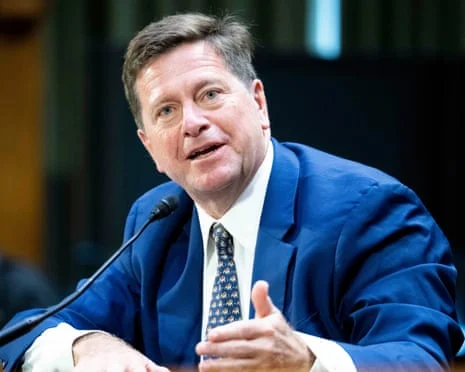
The Senate Intelligence Committee advanced the controversial nomination of Jay Clayton to serve as Director of National Intelligence (DNI). Clayton, currently the top federal prosecutor in the Southern District of New York and former SEC chair, was nominated by President Trump last month to replace acting director Bill Pulte. Despite favorable reporting by Republican Chair Tom Cotton via a 9-8 vote along party lines, Clayton’s nomination faces significant Democratic opposition. Democratic Vice-Chair Mark Warner confirmed his vote against Clayton, citing disappointment with his performance during last week’s hearing. Democrats criticized Clayton for his refusal to affirm Joe Biden’s 2020 election victory and for evading questions about past election fraud claims, raising concerns about the potential politicization of the DNI’s office.
On the legislative front, House Speaker Mike Johnson faces a scramble to pass several key bills before the lower chamber’s August recess. His ambitious agenda includes a measure to extend government funding until December 4, legislation curbing lawmakers’ stock trading, a $1.5 trillion Pentagon funding bill, and a third reconciliation package to secure more defense funding and money for the SAVE America Act. Johnson is encountering significant pushback from within his own Republican conference, making procedural votes an uphill battle.
Finally, arrangements for the funeral of the late Senator Lindsey Graham have been announced. A short ceremony will be held at the US Capitol Rotunda on July 28, followed by a full service at Washington National Cathedral for invited guests, where President Donald Trump is scheduled to speak. Graham’s remains will then be transported to South Carolina for a service at the state house on July 29, culminating in a public ceremony and a private family burial in his native Pickens County.
Related posts: