New York Retreats from Landmark Climate Goals Amid Rising Costs and Infrastructure Challenges

In a historic reversal of environmental policy, New York has become the first state in the nation to formally weaken a mandatory climate law previously championed by its own legislature. The shift, finalized after months of intense negotiations within the state capitol, represents a significant retreat from the ambitious targets set by the 2019 Climate Leadership and Community Protection Act (CLCPA). Under the direction of Governor Kathy Hochul, the state has fundamentally altered its timeline for decarbonization, citing the need to balance environmental mandates with the economic realities of energy costs for consumers.
The legislative deal, reached behind closed doors as part of the state’s broader budget process, grants New York an additional decade to meet its legally mandated emissions targets. While the original 2019 law required a 40 percent reduction in greenhouse gas emissions by 2030, the revised framework pushes the primary compliance window to 2040, with a modified target of a 60 percent reduction. This change, along with significant adjustments to how the state calculates its carbon footprint, has sparked a fierce debate between moderate Democrats, progressive lawmakers, and environmental activists over the future of the Empire State’s energy transition.
The Evolution of the 2019 Climate Law
When the CLCPA was signed into law in 2019, it was hailed as one of the most aggressive climate mandates in the United States. It established a rigorous framework using 1990 emissions levels as a baseline, in accordance with United Nations standards. Crucially, the law implemented unique accounting rules that forced the state to take responsibility for methane leaks occurring during the extraction of fossil fuels in other states, such as Pennsylvania, if those fuels were ultimately consumed in New York.
The law’s stringency was intended to force a rapid shift away from natural gas, which currently generates approximately 50 percent of New York’s electricity and provides heating for the vast majority of residential and commercial buildings. However, as the 2020s progressed, the state found itself significantly behind schedule. Progress on renewable energy projects, particularly offshore wind and large-scale solar, was stymied by a combination of supply chain disruptions, inflationary pressures, and political opposition from the federal level.
By 2024, it became clear that the state stood no chance of meeting the 2030 deadline without implementing drastic measures, such as a high-carbon tax or an immediate ban on new fossil fuel connections. Governor Hochul, a moderate Democrat who has frequently voiced concerns over the financial burden of climate action on working-class families, signaled a willingness to negotiate a "more realistic" path forward.
Key Changes to Emissions Accounting and Targets
The new agreement introduces several technical but consequential changes to the state’s environmental regulations. Beyond the ten-year delay of the 2030 target, the deal modifies the state’s accounting methodology in two primary ways:
- The Methane Warming Framework: Under the original law, New York evaluated the impact of methane—a potent greenhouse gas—over a 20-year horizon. Methane warms the atmosphere roughly 80 times faster than carbon dioxide but dissipates much more quickly. By focusing on a 20-year window, the state made methane-intensive sectors, like natural gas and livestock, appear significantly more damaging. The new deal shifts this to a 100-year framework. While this aligns New York with the standards used by the United Nations and the Paris Agreement, it effectively reduces the "apparent" impact of current emissions, making targets easier to reach on paper.
- Imported Fuel Extraction: New York will no longer be required to account for the pollution generated during the extraction of fossil fuels imported from other states. Because New York imports nearly all of its natural gas, this change is expected to reduce the state’s reported emissions by approximately 15 percent almost instantly, without any actual reduction in the amount of gas being burned.
Furthermore, the deal delays the implementation of the state’s "cap-and-invest" program. Originally scheduled to launch in 2023 and then 2025, the program—which would require polluters to purchase allowances for their emissions—has now been pushed to 2028. Governor Hochul’s administration expressed fears that the program would lead to a spike in gasoline prices and utility bills, potentially costing the average household thousands of dollars annually.
Economic Justification and Political Reactions
Governor Hochul has defended the rollbacks as a necessary measure to protect New Yorkers from "inflationary shocks." In recent public statements, she has emphasized that climate action and affordability must go hand-in-hand. Her administration pointed to a memorandum from the New York State Energy Research and Development Authority (NYSERDA) suggesting that strictly adhering to the original 2030 targets would have required "unprecedented" intervention in the energy market, likely resulting in a political backlash.
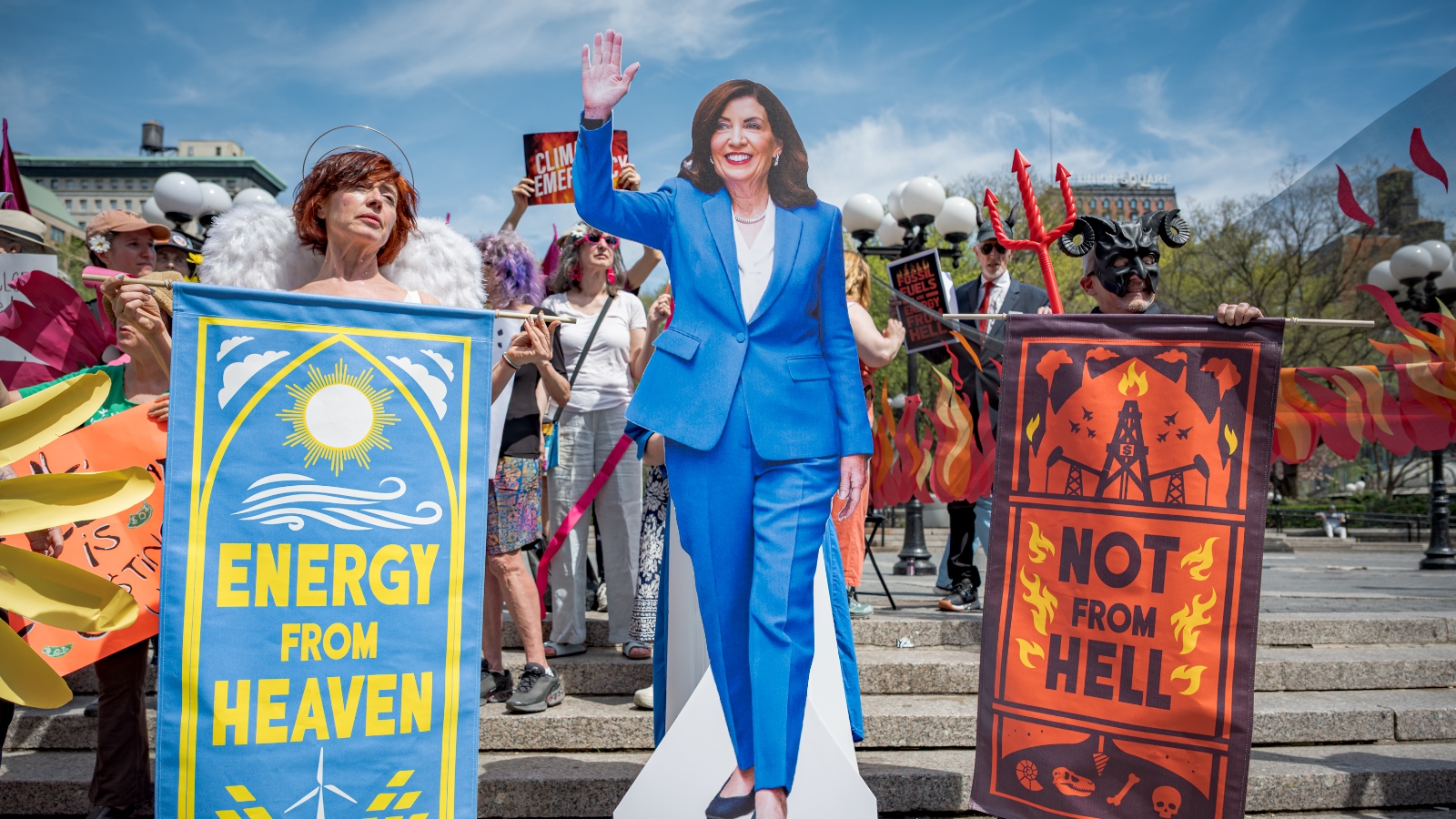
"Governor Hochul has made clear her top priority is keeping the lights on and costs down for all New Yorkers," said Ken Lovett, a spokesperson for the governor. He described the changes as "commonsense reforms" that ensure the state remains committed to a green future without bankrupting its residents in the short term.
However, the move has been met with sharp criticism from the progressive wing of the Democratic Party. Assembly Member Marcella Mitaynes, who represents working-class neighborhoods in Brooklyn, expressed frustration over the lack of transparency in the negotiation process. "This really came out of nowhere; it was sprung on us," Mitaynes said. She argued that the delay in the cap-and-invest system would deprive disadvantaged communities of critical funding, as 35 percent of the program’s revenue was earmarked for environmental justice projects.
Economists, meanwhile, offered a more nuanced view. Al McGartland, a former chief economist at the Environmental Protection Agency (EPA), suggested that the original targets may have been technically unfeasible. "It was going to be really difficult to meet because the economy wasn’t cooperating," McGartland noted. He argued that the delay "buys time to think this thing through carefully and do it right," rather than rushing into a transition that could cause systemic economic instability.
The Infrastructure Gap: Buildings and the Power Grid
The core of New York’s struggle lies in its physical infrastructure. In New York City and its surrounding suburbs, natural gas is the lifeblood of the heating system for large apartment complexes. Converting these century-old buildings to electric heat pumps is an enormous financial and logistical undertaking.
Under New York City’s Local Law 97, building owners are already facing steep fines if they do not meet carbon reduction targets by 2030. John Foley, an executive vice president at First Service Project Management, noted that while technology has improved, the cost of retrofitting a single large building can exceed $10 million. "The goals may be difficult to reach, but they’re important to have," Foley said, adding that the success of building electrification is entirely dependent on whether the state can provide a clean, reliable electric grid to support the increased load.
On the supply side, New York has struggled to replace the base-load power lost when the Indian Point nuclear power plant was shuttered in 2021. While new transmission lines are being built to bring Canadian hydropower to the city, and offshore wind projects like Empire Wind and Sunrise Wind are moving forward, they are not yet enough to replace the state’s reliance on gas-fired "peaker" plants. These plants, often located in low-income neighborhoods, are frequently activated during the summer months to prevent blackouts. The New York Independent System Operator (NYISO) has warned that these dirty plants may be required through at least 2031 to ensure grid reliability.
Chronology of the New York Climate Rollback
- June 2019: The Climate Leadership and Community Protection Act (CLCPA) is signed into law, setting a 40% emissions reduction target for 2030.
- April 2021: The Indian Point nuclear power plant is permanently closed, leading to a temporary increase in natural gas consumption to fill the energy gap.
- 2022-2023: Inflation and supply chain issues cause several offshore wind developers to seek contract renegotiations, slowing the rollout of renewable energy.
- Late 2023: A state court orders the Hochul administration to provide a concrete plan for meeting CLCPA targets following a lawsuit from environmental groups.
- February 2024: A leaked NYSERDA memo warns of significant household cost increases associated with the 2030 mandates.
- May 2024: Governor Hochul and legislative leaders reach a budget deal that officially delays the 2030 targets to 2040 and alters methane accounting rules.
- April 2025: Ground is broken on a new natural gas pipeline in Brooklyn/Queens, signaling a continued reliance on fossil fuel infrastructure.
Broader Implications and Future Outlook
New York’s decision to blink in the face of its own climate mandates may serve as a bellwether for other states with similar ambitions. As the "easy" wins in decarbonization—such as closing coal plants—are exhausted, the remaining challenges in transportation, heavy industry, and residential heating are proving to be far more expensive and politically sensitive.
Despite the rollbacks, the state continues to make targeted investments. The current budget includes $100 million for new renewable energy procurement and increased tax credits for landlords who electrify their properties. Additionally, the state is investing in large-scale battery storage to mitigate the intermittency of wind and solar power.
However, the political optics of the retreat remain stark. The recent groundbreaking of a new natural gas pipeline in Brooklyn, attended by high-ranking officials from the federal government but notably skipped by Governor Hochul, underscores the tension. While the state remains rhetorically committed to a zero-emissions future, the practical reality of the mid-2020s has forced a significant recalibration of what is possible, and at what price. For now, New York has chosen a longer, less certain path toward its green goals, prioritizing economic stability over the rapid transformation once envisioned by its lawmakers.