The Unlikely Resilience of American Solar Power: Navigating Political Headwinds Regulatory Red Tape and the Data Center Boom

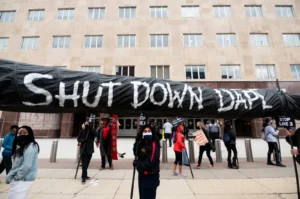
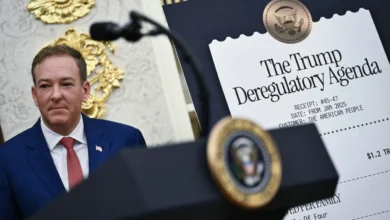
The landscape of the American energy sector appeared fundamentally altered last spring as the renewable energy industry faced what many analysts described as an existential crisis. Following a period of rapid expansion, the industry met significant political resistance when Republicans in Congress moved to dismantle key provisions of the Inflation Reduction Act (IRA), targeting the generous tax credits that had served as the bedrock for wind and solar investment. This legislative pressure was compounded by a series of administrative actions from the Department of the Interior, which introduced complex, often restrictive regulations governing clean energy development on federal lands. For a time, the momentum of the green transition seemed to be stalling under the weight of "byzantine" red tape and shifting federal priorities.
However, a year into this era of heightened regulation and political skepticism, the solar industry has not only survived but is experiencing a historic surge. Far from retreating, solar power has found an unlikely foothold within the conservative "energy dominance" framework, driven by a convergence of industrial necessity, geopolitical volatility, and a shifting narrative among influential political figures. While the wind industry continues to grapple with permitting delays and judicial setbacks, solar has emerged as the primary beneficiary of a new era of American energy demand, particularly as the rise of artificial intelligence and massive data centers creates a desperate need for fast, affordable power.
The Industrial Catalyst: Data Centers and the Search for Immediate Power
The primary engine behind the current solar boom is an unprecedented spike in demand from the technology sector. As the United States enters a new phase of the digital revolution, the proliferation of data centers—the physical infrastructure powering AI, cloud computing, and massive data processing—has fundamentally changed the utility load forecast. For years, energy experts focused on the gradual increase in demand from electric vehicles (EVs) and the electrification of buildings. Today, those factors have been overshadowed by the sheer scale of the energy required by data center developers.
Jim DesJardins, executive director of the Renewable Energy Industries Association of New Mexico, noted that the current demand "feels crazy," highlighting a paradigm shift where traditional fossil fuel entities are beginning to view solar as a necessary partner rather than a competitor. This shift was underscored when the New Mexico Oil and Gas Association reached out to sponsor a renewable energy conference for the first time in history. The logic is simple: the U.S. is currently facing a critical shortage of natural gas turbines, with order backlogs stretching between five and nine years. For a data center developer needing power within 24 months, waiting nearly a decade for a gas plant is not a viable business strategy.
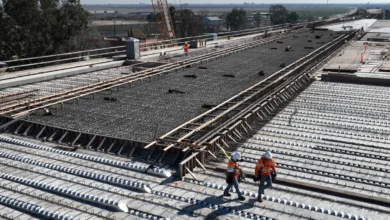
Solar power, by contrast, offers the fastest route to bringing significant capacity online. When paired with battery storage systems—which bank excess energy produced during daylight hours for use at night—solar becomes a comprehensive solution for the 24/7 power requirements of modern technology hubs. According to data from the Solar Energy Industries Association (SEIA), solar and battery storage accounted for a staggering 79 percent of all new power generation brought online in 2025.
A Shifting Political Narrative: Solar and the Conservative Agenda
Perhaps the most surprising development in the resilience of the solar industry is its increasing acceptance among high-profile conservative influencers and administration officials. While renewable energy was once a primary front in the American culture wars, a new pragmatic approach is emerging within the Republican party. This shift is centered on two pillars: affordability and national security.
Prominent figures such as Katie Miller, a former administration official and wife of White House policy advisor Stephen Miller, have begun heralding solar as the "energy of the future." Miller recently emphasized the need to expand solar capacity as a means of competing with China, framing the issue as one of global economic dominance rather than environmental protection. Similarly, Energy Secretary Chris Wright, once a vocal critic of the intermittent nature of renewables, has publicly acknowledged the commercial role of solar in providing affordable and reliable energy to the grid.
This rhetorical shift is backed by public opinion within the party. A recent poll conducted by GoodPower and NORC at the University of Chicago revealed that 69 percent of Republicans support solar energy, provided it leads to lower electricity costs for consumers. The SEIA has capitalized on this sentiment, aligning its lobbying efforts with President Donald Trump’s "energy dominance" agenda. By focusing on the industry’s ability to lower costs for families and businesses, the solar lobby has successfully repositioned the technology as a practical solution for economic growth.
Chronology of the Transition: 2025 to 2027
The trajectory of the solar industry over the last 24 months reveals a timeline of initial suppression followed by pragmatic adaptation:
- Spring 2025: Congressional efforts to gut the Inflation Reduction Act begin in earnest. The Department of the Interior rolls out restrictive regulations on federal land use, leading to fears of a total industry shutdown.
- September 2025: The Trump administration halts several offshore wind projects, such as Revolution Wind, citing environmental and regulatory concerns. However, internal data begins to show that solar development on private land remains largely unaffected by federal restrictions.
- December 2025: The House of Representatives passes the Standardizing Permitting and Expediting Economic Development (SPEED) Act. This bipartisan bill aims to overhaul the National Environmental Policy Act (NEPA) of 1970, streamlining the approval process for all energy infrastructure.
- February 2026: In a surprising move, the administration announces the approval of several large-scale solar projects that had previously been blocked by the Interior Department’s own regulations. Secretary Chris Wright acknowledges solar’s role in grid reliability.
- Mid-2026: The escalation of conflict in Iran sends global oil prices soaring. The domestic focus shifts toward energy independence and "energy poverty," as one in three American households struggles to pay utility bills.
- Late 2027: Projections indicate that the solar industry will have grown by 49 percent before the final expiration of the original IRA tax credits, cementing its place as a dominant force in the U.S. energy mix.
Regulatory Bottlenecks and the SPEED Act
Despite the industry’s growth, significant hurdles remain. While federal land restrictions have not stopped the boom on private land, local permitting and the "interconnection queue"—the process of connecting new energy projects to the existing utility grid—remain major bottlenecks. In many regions, solar projects are ready for construction but are forced to wait years for utilities to upgrade infrastructure to accommodate the new load.
The SPEED Act represents a rare moment of bipartisan consensus in a divided Washington. By modernizing NEPA, lawmakers hope to reduce the time required for environmental reviews, which can currently take up to half a decade for complex projects. Democratic senators such as Martin Heinrich and Sheldon Whitehouse have returned to the negotiating table, arguing that "leaving electrons on the table" due to political stalling is forcing Americans to pay higher electricity bills.
Mike Hall, CEO of Anza Renewables, points out that the challenges are no longer about the technology itself, but about the "plumbing" of the American energy system. "The bottlenecks are typically still local permitting and interconnection with utilities," Hall stated. "We haven’t seen a lot of improvement in those areas yet, but the sheer demand from the private sector is forcing the conversation."
Geopolitical Implications and Energy Independence
The resurgence of solar is also inextricably linked to the volatile geopolitical landscape. The ongoing conflict in Iran has served as a stark reminder of the vulnerability of fossil fuel supply chains. As oil prices fluctuate, the fixed-cost nature of solar power—where the "fuel" is free and the primary costs are upfront capital expenditures—becomes increasingly attractive to both policymakers and industrial consumers.
Brad Townsend, vice president of policy and outreach at the Center for Climate and Energy Solutions, notes that "energy poverty" has become a central political issue. With a significant portion of the population struggling to afford basic heating and cooling, the administration has found it difficult to turn away any energy source that can demonstrably lower costs. Solar’s ability to be deployed rapidly and decentralized makes it a unique tool in the effort to stabilize the domestic energy market.
Furthermore, the "China factor" remains a potent motivator for both parties. As China continues to dominate the global supply chain for solar panels and battery components, there is a growing consensus in Washington that the U.S. must expand its own solar capacity and manufacturing base to ensure national security. This has transformed solar from a "green" initiative into a strategic industrial imperative.
Analysis of Long-term Impacts
The resilience of the solar industry suggests that the transition to renewable energy is being driven more by market forces than by political ideology. The Rhodium Group’s Clean Investment Monitor has found that despite the rhetoric of "red tape" and "delays," the data shows a consistent upward trend in investment.
The implications of this boom are twofold. First, it suggests that the "all-of-the-above" energy strategy is evolving into a "whatever-is-fastest" strategy. The inability of the natural gas industry to keep up with the speed of the AI revolution has created a vacuum that only solar and storage are currently equipped to fill. Second, the political durability of solar energy is being tested and proven. By surviving a concerted effort to dismantle its primary subsidies and facing down restrictive new regulations, the industry has demonstrated that it is no longer a "niche" sector dependent on government largesse, but a mature industry vital to the American economy.
As the U.S. moves toward 2027, the focus will likely shift from whether solar should be built to how quickly the grid can be modernized to handle it. While political battles over federal lands and environmental regulations will continue, the momentum of the solar industry appears to be reaching a point of no return, fueled by the insatiable energy needs of the 21st-century digital economy and a newfound pragmatic support from across the political spectrum. In the words of Jim DesJardins, while the world has seen many conflicts over oil and gas, "no one has fought a war over the sun." For a country seeking stability and independence, that may be the most persuasive argument of all.