Woody Harrelson Producing Documentary on Legendary Austin Music Venue Armadillo World Headquarters

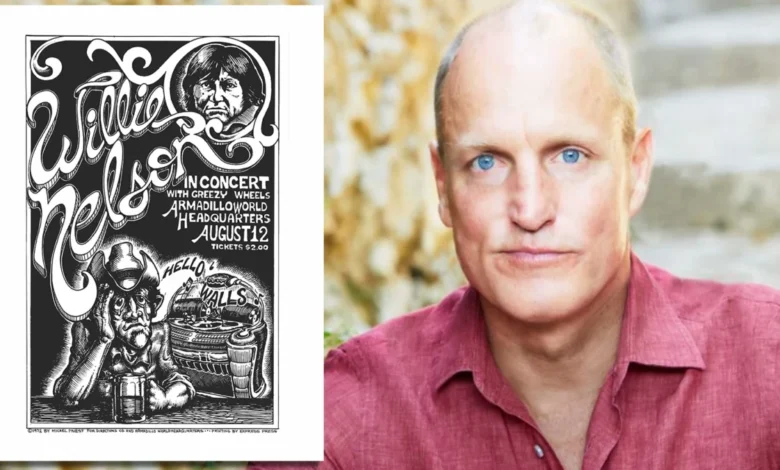
Woody Harrelson, the Academy Award-nominated actor and proud Texas native, is lending his creative vision and considerable influence to a new feature-length documentary chronicling the storied history and enduring cultural impact of Austin’s iconic Armadillo World Headquarters (AWHQ). The project, currently in development, promises to delve deep into the venue that not only shaped the musical identity of Austin but also served as a vibrant hub for a diverse array of legendary artists and a melting pot of counterculture during its operational years from 1970 to 1980.
The documentary aims to capture the essence of the Armadillo, a space where groundbreaking musical genres converged and careers were launched. Artists such as Willie Nelson, Jerry Garcia, Bruce Springsteen, Little Feat, Linda Ronstadt, and Talking Heads graced its stage, contributing to its legendary status. Harrelson, who is deeply connected to Austin’s creative landscape, expressed his profound admiration for the venue’s unique spirit. "The Armadillo wasn’t just a music venue," Harrelson stated in an exclusive comment. "It was where all kinds of worlds came together: artists, outlaws, hippies, students, dreamers, everyone under one roof. Careers got started there, genres mixed, and what really sticks with me is how it made people feel like they belonged. People came for the music, but what they found was each other. The Armadillo represented something we don’t see much anymore, and that’s a big part of why I wanted to be involved with this film."
This sentiment underscores the documentary’s central theme: the Armadillo as more than just a concert hall, but as a community builder and a catalyst for artistic and cultural fusion. Harrelson’s involvement as a producer, alongside his producing partners Jeremy Plager and Ilya Bronchtein who will executive produce, signifies a significant investment in preserving and celebrating this pivotal piece of Austin’s cultural heritage.

The Rise and Resonance of a Cultural Epicenter
Armadillo World Headquarters, affectionately known as "The Dillo," opened its doors in 1970, transforming a former National Guard armory into a sprawling entertainment complex. Located on Austin’s South Lamar Boulevard, its distinctive architecture, featuring a large geodesic dome, quickly became a landmark. More than just a physical space, the Armadillo fostered an atmosphere of inclusivity and artistic freedom that resonated deeply with the burgeoning counterculture of the era.
The venue became synonymous with the "cosmic cowboy" movement, a unique blend of outlaw country, rock, blues, and psychedelic influences that defined Austin’s soundscape. It provided a platform for artists who defied traditional genre boundaries, allowing them to experiment and connect with audiences in an unprecedented way. The raw energy and uninhibited spirit of the Armadillo are what drew countless musicians and fans alike, cementing its place in music history.
A Rich Tapestry of Performances and Legacy
The documentary is poised to leverage an extensive collection of over 100 audio and video recordings unearthed from the Armadillo’s heyday. This remarkable archive promises to offer audiences an intimate glimpse into the electrifying performances that defined the venue. Snippets of iconic shows, including Bruce Springsteen’s debut Texas tour performance and unforgettable sets by Fats Domino, Waylon Jennings, and Charlie Daniels, are expected to be featured. The presence of Ray Charles and Willie Nelson in archival imagery further highlights the broad spectrum of talent that graced the Armadillo’s stages.
Beyond the star power, the film will explore how the Armadillo acted as a crucial incubator for Austin’s music scene, directly contributing to the city’s eventual designation as the "Live Music Capital of the World." The venue’s influence extended to visual arts as well, notably through the psychedelic posters designed by artists like Jim Franklin, whose work captured the unique aesthetic of the Armadillo era. A recent short documentary, Armadillo Man: The Trips of Jim Franklin, currently airing on PBS, further illuminates this aspect of the venue’s legacy.

The Creative Forces Behind the Documentary
The feature-length documentary is under the direction and editing expertise of David Brodie. The production team is a formidable ensemble of seasoned professionals. Angus Wall, Eve Kornblum, Kent Kubena, and Terry Leonard of MakeMake, known for their work on projects like The Greatest Night in Pop and Being Eddie, are producing. They are joined by Marcus Peterzell and Amy Slotnick of Passion Point Collective, whose credits include The Cure: Show and AS I AM: The Life and Times of DJ AM. This collective experience in music documentaries and biographical storytelling suggests a nuanced and compelling portrayal of the Armadillo’s history. Further production partners are anticipated to be announced as the project progresses.
Reviving the ‘Dillo Spirit for a New Generation
The enduring appeal of the Armadillo World Headquarters has prompted a revival of its brand for contemporary audiences. A new Austin-based entity has acquired the intellectual property rights, forging a partnership with the original owner, Eddie Wilson. This rebranding initiative aims to celebrate Austin’s roots while actively supporting the growth of music and arts culture.
The Armadillo brand recently collaborated with Austin FC, introducing a pop-up experience designed to reacquaint younger generations with the venue’s rich legacy. This effort signifies a strategic move to bridge the gap between the Armadillo’s historical significance and its relevance in today’s cultural landscape. The revived AWHQ brand is committed to uplifting local artists and venues, fostering community through shared artistic experiences. By embracing live music, visual art, film, and grassroots events, AWHQ aims to embody the original "‘Dillo spirit," preserving the unique character that makes Austin so distinctive and celebrated.
The closure of Armadillo World Headquarters in 1980 marked the end of an era, but its impact on music and culture continued to reverberate. The venue’s legacy is not merely confined to historical anecdotes; it is woven into the fabric of Austin’s identity. The documentary’s production and the brand’s revitalization signal a renewed appreciation for the transformative power of spaces that foster creativity, community, and a shared sense of belonging. As Harrelson aptly noted, the Armadillo offered something increasingly rare in modern society: a place where diverse individuals could connect and feel a sense of unity, a powerful testament to its lasting significance. The film is expected to not only entertain but also to inspire reflection on the enduring importance of such cultural landmarks in shaping our collective identity.