Vladimir Putin and Elon Musk in Close Contact Over Russia’s Rassvet Satellite Project Amid Rising Geopolitical Tensions

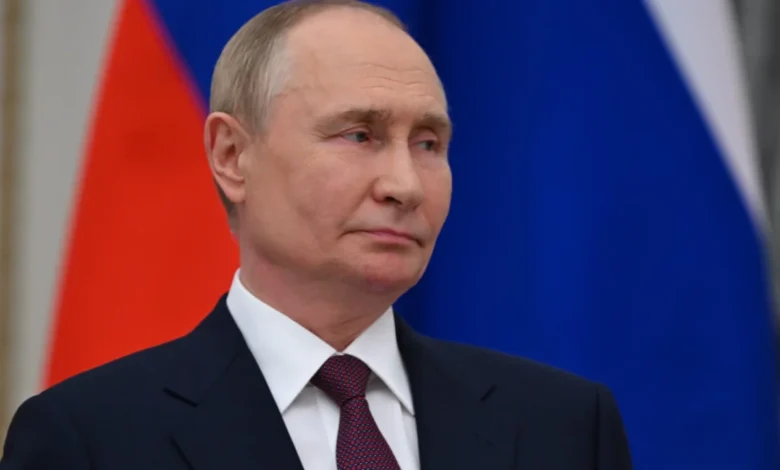
Russian President Vladimir Putin revealed that he and SpaceX Chief Executive Officer Elon Musk are in close and ongoing communication regarding Russia’s nascent satellite internet initiative, known as Rassvet. The disclosure, made during an address at the Russia-Africa Summit, highlights an unexpected and complex intersection between commercial space exploration, geopolitical ambitions, and the ongoing conflict in Ukraine.
During his remarks, the Russian leader offered high praise for the American billionaire, describing him as a visionary talent within the global technology sector. Putin contrasted SpaceX’s massive orbital achievements—noting that the company has successfully deployed more than 5,000 operational satellites into low Earth orbit—with Russia’s domestic space infrastructure, which is currently in the initial stages of developing a comparable constellation. While Rassvet is envisioned as Russia’s domestic answer to SpaceX’s Starlink network, the burgeoning dialogue between the Kremlin and Musk introduces profound implications for international security, defense strategy, and the telecommunications industry.
The revelation of this communication channel arrives at a uniquely volatile juncture. Over recent months, geopolitical dynamics involving private satellite networks and wartime communications have reached a boiling point. Ukraine’s defensive operations heavily rely on Starlink and its military-grade counterpart, Starshield, to maintain tactical coordination, intelligence gathering, and drone navigation. However, evolving diplomatic shifts and policy adjustments by Western governments have injected severe uncertainty into Kyiv’s military supply chain, leaving international observers and Ukrainian leadership deeply anxious about the reliability of critical communication infrastructure.
Background Context: The Strategic Value of Satellite Constellations
Low Earth Orbit (LEO) satellite constellations have fundamentally transformed both modern civilian telecommunications and military combat. Traditional geostationary satellites operate at much higher altitudes, introducing noticeable latency and requiring large, stationary dish antennas. In contrast, LEO networks like Starlink consist of thousands of small satellites orbiting mere hundreds of miles above the Earth’s surface, delivering high-speed, low-latency internet connectivity to remote areas, disaster zones, and active battlefields.
For Ukraine, the integration of Starlink into its defense apparatus has been nothing short of existential. Following the full-scale Russian invasion in February 2022, targeted cyberattacks and infrastructure bombings crippled traditional Ukrainian communication lines. SpaceX swiftly stepped in, dispatching thousands of Starlink terminals to the country. These terminals enabled military commanders to coordinate troop movements, direct artillery fire, and operate uncrewed aerial vehicles (UAVs) with remarkable precision.
Recognizing the indispensable military utility of this technology, SpaceX developed Starshield, a dedicated variant tailored for government and defense applications. Yet, this heavy reliance on a private enterprise controlled by a single individual has consistently raised alarms among policymakers in Washington, Brussels, and Kyiv. Musk’s personal perspectives on the conflict, combined with his unilateral authority over the network’s availability, have frequently placed corporate governance at odds with geopolitical strategy.
Chronology of Recent Events and Connectivity Disruptions
The fragility of Ukraine’s digital lifeline was violently underscored earlier this month, following a series of diplomatic and regulatory adjustments in the United States.
Early October 2026: The United States government officially eases a package of economic and technological sanctions against Russia, sparking immediate apprehension among Ukrainian authorities who fear a broader thaw in Western pressure against Moscow might influence private commercial policies.
Mid-October 2026: Ukrainian frontline units experience sudden, severe disruptions in communication stability. Frontline drone operators report frequent losses of connectivity, severely degrading tactical reconnaissance and defensive strikes against advancing Russian forces.
October 15, 2026: Investigative reporting by major international news outlets, including the Wall Street Journal and Reuters, reveals conflicting accounts regarding the origin of the service degradation. While initial leaks suggest that Elon Musk personally ordered SpaceX to restrict bandwidth and limit access to Starshield over the Ukrainian theater, subsequent intelligence briefings and internal sources indicate that the directive may have originated from within the White House amid broader de-escalation negotiations.
October 24, 2026: Following intense international scrutiny and expressions of concern from defense analysts, Starlink service levels in Ukraine normalize, returning to standard operational capacity.

October 24–29, 2026: Elon Musk takes to social media platform X to address the controversy. He reiterates that Ukraine violated the explicit terms of service established by SpaceX by utilizing the network for offensive drone strikes designed to inflict lethal casualties. In a subsequent post, Musk issues a stark assessment of the regional balance of power: “Were Starlink to be turned off, the Ukrainian front line would collapse immediately. This is NOT a threat, it is simply a statement of fact.”
October 29, 2026: Speaking at the Russia-Africa Summit, President Vladimir Putin publicly confirms his direct line of communication with Musk, praising the entrepreneur’s technological dominance and explicitly linking the dialogue to Russia’s development of the Rassvet satellite network.
Supporting Data and Technological Disparities
The technological gap between private American enterprise and state-run Russian space programs remains a central theme in global aerospace evaluations. SpaceX’s Starlink currently commands a constellation exceeding 5,000 active spacecraft, allowing the company to offer near-global coverage with immense bandwidth capacity.
Conversely, Russia’s Rassvet project—designed to provide comprehensive broadband coverage across vast domestic territories and international partner nations—has faced persistent delays compounded by international sanctions, supply chain restrictions on advanced microelectronics, and budgetary constraints within the Russian federal space agency, Roscosmos. By expressing admiration for Musk’s accomplishments and pursuing direct dialogue, the Kremlin signals a strategic acknowledgment that bridging this technological deficit may require leveraging international commercial cooperation or studying private-sector manufacturing efficiencies.
Official Reactions and Diplomatic Implications
The public acknowledgment of a direct rapport between Putin and Musk has sent ripples through diplomatic corridors across North America and Europe.
Ukrainian officials have repeatedly voiced apprehension that commercial negotiations involving private tech executives could inadvertently compromise national security. Kyiv maintains that uninterrupted satellite access is a non-negotiable prerequisite for maintaining defensive lines along the roughly 1,000-kilometer front. The prospect of an American industrialist engaging in direct policy coordination with the head of the Russian state—while simultaneously controlling the critical communications grid of a nation at war—presents an unprecedented regulatory and ethical dilemma for Western democracies.
In Washington, lawmakers from both major political parties have expressed renewed urgency regarding the need for statutory oversight over commercial infrastructure utilized in active combat zones. While the Department of Defense maintains multiple defense contracts for secure communications, the sheer scale and ubiquity of LEO commercial constellations have outpaced existing legal frameworks governing export controls, national security exemptions, and corporate neutrality.
Broader Impact on Global Space Governance
Beyond the immediate theater of war in Eastern Europe, the Putin-Musk dialogue on the Rassvet project heralds a fundamental shift in how outer space is utilized as an instrument of national power. For decades, satellite deployment and orbital infrastructure were predominantly the domain of sovereign nation-states and heavily regulated military-industrial complexes.
The rise of commercial space titans like SpaceX has democratized access to orbit while concentrating unprecedented power in the hands of private corporate leaders. When heads of state negotiate or consult directly with private chief executives regarding national telecommunications constellations, traditional boundaries of diplomacy are rewritten.
As Russia continues to refine its Rassvet architecture and seek international partnerships—particularly across the Global South, as emphasized during the Russia-Africa Summit—the intersection of commercial technology and geopolitical leverage will likely remain a dominant fixture of international relations. For the global community, the evolving relationship between the Kremlin and Silicon Valley serves as a potent reminder that the future of sovereignty, conflict, and communication is increasingly dictated by those who control the skies above.