Fernando Alonso intensifies critique of driving standards in Formula 1 following United States Grand Prix collision

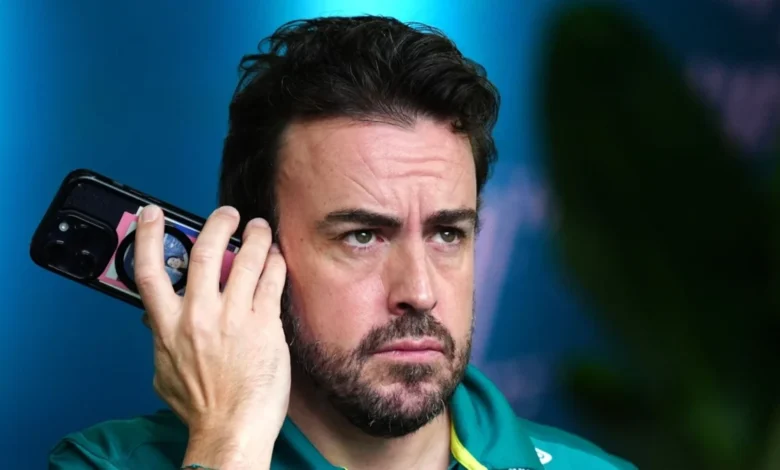
The Formula 1 paddock has descended upon the Autódromo Hermanos Rodríguez for the Mexico City Grand Prix, yet the primary narrative remains fixed on the fallout from the United States Grand Prix in Austin. Aston Martin’s Fernando Alonso, a veteran of over 400 Grand Prix starts, has refused to retract his pointed assessment of the current driving standards within the lower reaches of the grid, specifically highlighting what he describes as a systemic "lack of talent" and "low level" of racecraft among his competitors at the back of the field.
The controversy originated during the opening lap of the Austin race, when Williams driver Alex Albon attempted an ambitious overtaking maneuver at the Turn 11 hairpin. The resulting contact caused significant damage to both the Aston Martin and the Williams cars. While race stewards ultimately deemed the incident a racing incident—issuing no penalties to either party—the structural damage forced both drivers to limp through the remainder of the race, with Alonso finishing 16th and Albon 17th.
A Persistent Critique of Grid Standards
Speaking during the Thursday media sessions in Mexico City, Alonso doubled down on his post-race remarks, framing the issue not as a personal grievance against Albon, but as a broader indictment of contemporary Formula 1.
"I think it is simply a very low level of driving and a lack of talent," Alonso stated. "When you make repeated mistakes throughout the season and have crashes, and fifty percent of your race is effectively over on the first lap, I question the approach. If I were a team principal, I would not be happy with that performance, but if the teams are content, then I am okay with that."
Alonso’s argument hinges on the distinction between aggression and maturity. He cited the recovery drives of world champions like Max Verstappen and Lewis Hamilton, noting that when these drivers are forced to start from the rear of the grid due to mechanical penalties or engine changes, they possess the patience and technical prowess to slice through the field without causing early-race incidents.
"Lap one is not the end of the world," Alonso argued. "When you have the confidence and the talent, you wait for one or two more laps to find your opening. The desperation we see at the back of the grid is not necessary."
The Economic and Technical Context
The veteran Spaniard, who has been a fixture in the sport since his debut in 2001, offered a nuanced analysis of why this trend might be manifesting. He suggests that the difficulty of driving modern, heavy, and aerodynamically sensitive F1 cars at the back of the pack creates a "death spiral" for less experienced drivers.
"When you are at the back of the grid, the cars are significantly more difficult to drive," Alonso explained. "They have less grip, they are prone to understeer, and they don’t provide a welcoming platform for the driver. Because the car is not performing well, drivers are forced to push beyond the limit, which leads to mistakes. It becomes a cycle of poor performance and increased risk."
Crucially, Alonso also highlighted the role of the FIA’s cost cap regulations in this dynamic. In an era where teams have strictly limited budgets, the financial implications of "flyaway" front wings and chassis repairs are immense. "There are teams that seem happy to break parts every single race," he noted. "They can pay for the damage, but it changes the sporting reality when you are effectively racing for nothing at the back while compromising the field."
Alex Albon and the Defensive Stance
Alex Albon, representing the perspective of the midfield contingent, was quick to push back against the veteran’s characterization of the field. During the official FIA press conference, Albon expressed his deep respect for Alonso’s career but categorically rejected the notion that the current grid lacks talent.
"I have a huge respect for Fernando; I grew up watching him and looked up to him," Albon said. "However, I don’t agree with his assessment. The level is as strong as it has been for a long time. If you look at the grid 10 or 15 years ago, there were significant performance gaps and, frankly, a higher prevalence of what we consider ‘pay drivers.’ Today, the barrier to entry is higher, and the level of professional preparation is better than ever."
Albon’s comments reflect a wider sentiment among the current generation of drivers, who argue that the intensity of the competition is tighter than ever before. With the field often separated by mere hundredths of a second in qualifying, the margin for error is razor-thin, which naturally increases the likelihood of incidents during the chaotic opening corners of a Grand Prix.
The Evolution of the "Pay Driver" Paradigm
The debate has reignited conversations regarding the definition of a "pay driver"—an athlete who secures a seat primarily through personal sponsorship or external financial backing rather than purely on merit. Historically, these drivers were often viewed as "mobile chicanes" who posed a danger to the front-runners.
Modern Formula 1, however, has seen the professionalization of junior categories (F2 and F3), which serve as a more rigorous proving ground. Current industry analysts suggest that while financial backing remains a factor for smaller teams, the FIA’s Super License points system has successfully filtered out drivers who lack the requisite speed or racecraft to handle the demands of a modern F1 car. Consequently, the tension observed in Austin may be less about a lack of talent and more about the extreme competitiveness of a grid where every position is aggressively defended.
Broader Implications for the Sport
The exchange between Alonso and Albon highlights the inherent friction between the "old guard" and the modern era of Formula 1. Alonso, a two-time world champion, represents a generation that valued tire management, tactical preservation, and calculated risk-taking. The younger cohort operates in an era of sprint races, high-intensity qualifying, and a compressed midfield where a single point can decide millions of dollars in prize money.
From a regulatory standpoint, the FIA faces a delicate balance. If officials adopt a more punitive approach to first-lap incidents, they risk sanitizing the racing and discouraging the overtakes that fans crave. Conversely, if they continue to allow loose driving standards to persist, the financial burden on smaller teams—already struggling under the cost cap—could become unsustainable.
Looking Ahead: The Mexico City Grand Prix
As the paddock prepares for the race at the Autódromo Hermanos Rodríguez, the focus shifts to the track’s unique demands. The high altitude of Mexico City, which reduces air density, creates a distinct set of aerodynamic challenges. Teams will be running maximum downforce configurations, and cooling will be a significant concern for all cars.
The weekend schedule begins on Friday, October 30, with Practice One at 6:30 PM (BST), followed by the F1 Show and the Team Bosses’ Press Conference. Practice Two is scheduled for 10:00 PM. Saturday will feature the final practice session at 6:30 PM, leading into the critical qualifying session at 9:00 PM. The main event, the Mexico City Grand Prix, is set for Sunday, November 1, at 8:00 PM.
Whether the tension between the veteran drivers and the midfield will translate into on-track aggression remains to be seen. However, it is clear that Alonso’s challenge to the field has set the stage for a highly scrutinized weekend in Mexico. If the incidents in the rear of the pack continue, the conversation regarding the "level of talent" in the sport will likely dominate the post-race discourse once more. For now, the teams remain focused on the technical challenges of the high-altitude circuit, hoping to keep their cars intact and clear of the "low level" drama that marred the proceedings in Austin.
Related posts: