Drones Emerge as Rapid-Response Tool in Escalating Wildfire Crisis, Undergoing Key Trials in California and Alaska

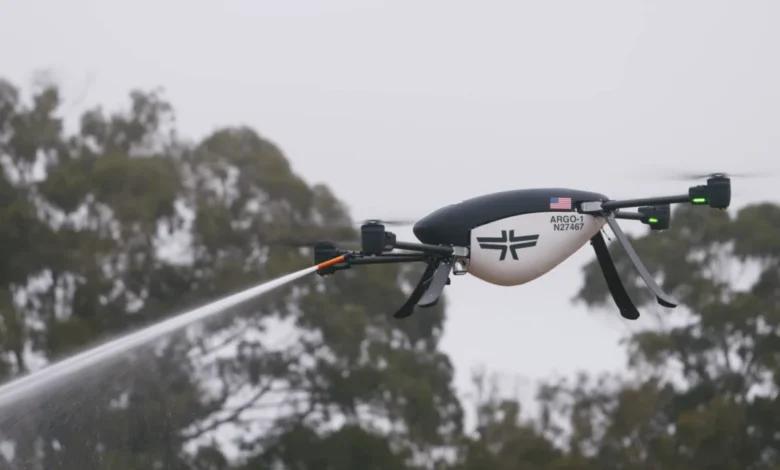
Drones capable of spraying water and fire retardants have been undergoing critical practice sessions aimed at snuffing out wildfires in their nascent stages across California and Alaska this summer. These demonstrations underscore the potential of autonomous aerial systems as a rapid-response tool for firefighting, particularly as climate change increasingly transforms wildfire season into a nearly year-round risk for vast swathes of the United States. While most drones, being significantly smaller than crewed aircraft, possess shorter flight ranges and cannot directly replace large airtankers in delivering massive payloads to remote, established wildfires, a burgeoning consensus among companies, fire agencies, and innovation challenge organizers suggests a transformative role for these unmanned aerial vehicles (UAVs). The focus is on leveraging drones to help firefighting crews respond with unprecedented speed to small fires, thereby containing them before they can escalate into devastating infernos.
The Proliferation of Wildfires: A Growing Global Challenge
The escalating frequency, intensity, and duration of wildfires represent one of the most pressing environmental and humanitarian crises of the 21st century. Driven largely by anthropogenic climate change, which manifests as prolonged droughts, increased temperatures, and shifts in precipitation patterns, these fires are consuming larger areas and causing unprecedented damage. In the United States alone, the average number of acres burned annually has dramatically increased over the past few decades. According to the National Interagency Fire Center (NIFC), over 7.1 million acres were burned in 2022 across the U.S., a figure that, while fluctuating year-to-year, remains consistently higher than historical averages from the mid-20th century. The financial toll is staggering, with federal firefighting costs routinely exceeding $3 billion annually, not including the billions lost in property damage, infrastructure destruction, and long-term economic impacts on affected communities. Beyond the economic and ecological devastation, wildfires pose direct threats to human lives, displace communities, and contribute to severe air quality issues, impacting public health far beyond the immediate burn zones. This grim reality underscores the urgent need for innovative solutions that can augment existing firefighting capabilities and offer more proactive intervention strategies.
Limitations of Conventional Firefighting Paradigms
Traditional wildfire suppression efforts, while heroic and often effective, face inherent limitations that next-generation technologies like drones aim to address. Current methods rely heavily on a combination of ground crews, hand tools, bulldozers, and manned aircraft such as helicopters and large airtankers. Manned aircraft, while capable of delivering substantial payloads, are expensive to operate, require significant logistical support, and are often limited by visibility, wind conditions, and daylight hours. The deployment of these assets can also be time-consuming, especially for fires in remote or difficult-to-access terrain. The time lag between ignition and initial attack, often referred to as the "golden hour," is critical; a small fire can quickly become unmanageable if not addressed promptly. Furthermore, firefighting remains one of the most dangerous professions, with pilots and ground crews routinely exposed to extreme risks. The inherent dangers, high operational costs, and logistical complexities associated with conventional aerial suppression methods highlight the strategic gap that rapid-response, autonomous drones could potentially fill.
Pioneering the Future: Drone Trials and Technological Advancements
The integration of advanced drone technology into wildfire management is not merely theoretical; it is actively being tested and refined through various initiatives. One significant development occurred on July 15, when the California Department of Forestry and Fire Protection (CAL FIRE) conducted a pivotal field test. This demonstration involved a coordinated swarm of five autonomous drones, which collectively deployed between 500 and 1,000 gallons of fire-suppressing foam. The exercise, reported by TV station KPMH, was organized in collaboration with the nonprofit FireWERX and Seneca, a California-based company that plans to make its firefighting drones commercially available starting in 2026.
Seneca’s Argo-1 System: A Closer Look
At the heart of these trials is Seneca’s Argo-1 drone system, designed for precision and collaborative action. Each Argo-1 drone is engineered to carry approximately 100 pounds of water or fire retardant. The system’s efficacy lies in its ability to operate in swarms, typically comprising four to six drones, enabling a concentrated and coordinated attack on fire fronts. According to HeliOps Magazine, the operational sequence begins with a human operator uploading a GPS waypoint to designate the target area. Once airborne, these autonomous drones navigate towards their objective, utilizing onboard sensors to detect the heat signature of a fire. This sensor-driven intelligence allows them to pinpoint active hot spots with remarkable accuracy. Upon identifying the target, the drones autonomously determine the optimal hovering altitude before lining up to spray the fire sequentially, ensuring maximum coverage and impact.
While impressive, the Argo-1 drones, when fully loaded, are currently limited to a round trip of about 10 miles, flying at an average speed of 30 miles per hour. This operational envelope suggests that for widespread deployment, the drones would ideally need to be strategically prepositioned in fire-prone regions or rapidly transported to incident sites via ground vehicles. However, their design offers practical advantages in terms of logistics: each drone is compact enough to fit in the back of a pickup truck with the tailgate down, and an empty unit can be manually carried by two individuals, facilitating rapid deployment and repositioning in diverse terrains.
The XPRIZE Wildfire Challenge: Catalyzing Innovation
The broader context for these technological advancements is often shaped by initiatives like the $11 million XPRIZE Wildfire competition. This global challenge aims to incentivize and accelerate the development of groundbreaking solutions for rapid and effective wildfire detection and suppression. By offering substantial prize money, XPRIZE motivates innovators worldwide to push the boundaries of technology, fostering the creation of systems that can significantly improve response times and mitigate the destructive power of wildfires. The ongoing drone tests, particularly those demonstrating autonomous swarming capabilities, align perfectly with the XPRIZE’s objectives, showcasing the tangible progress being made in the race to develop next-generation firefighting tools. Such competitions are vital in bringing together disparate stakeholders—from tech companies to fire agencies—to collaborate on solutions for complex global challenges.
Strategic Deployment and Operational Advantages
The strategic advantages offered by firefighting drones extend beyond mere technological novelty. They represent a paradigm shift in how initial attack operations can be conducted.
Rapid Response and Early Intervention: The primary benefit of these drones is their capacity for rapid deployment. Unlike manned aircraft that require pilots, extensive ground crews, and often substantial lead times for takeoff, drones can be launched quickly from nearby staging areas. This speed is crucial for hitting nascent fires within the "golden hour," preventing them from growing into large, uncontrollable blazes.
Enhanced Safety: By deploying autonomous drones, the risk to human pilots and ground crews operating in dangerous fire environments is significantly reduced. Drones can access areas too hazardous for manned flight or too treacherous for ground crews, providing a safer means of initial attack and intelligence gathering.
Cost-Effectiveness and Logistics: While the initial investment in drone fleets can be substantial, the operational costs per hour are generally lower than those of manned aircraft. Their smaller size and ease of transport mean they can be prepositioned in numerous high-risk areas, reducing transit times and fuel consumption. This distributed approach could lead to more efficient resource allocation.
Precision Application: Equipped with advanced sensors, drones can identify and target specific hot spots with high precision. This allows for more efficient use of water and retardants, minimizing waste and maximizing effectiveness, particularly in challenging terrains or when dealing with smoldering embers.
Challenges and Regulatory Landscape
Despite their promising potential, the widespread adoption of firefighting drones faces several significant hurdles, primarily in the areas of regulatory oversight, technological limitations, and integration with existing systems.
Payload and Range Limitations: As noted, current drones like the Argo-1 carry relatively small payloads (100 lbs) and have limited ranges (10-mile round trip). This means they are not a direct replacement for massive airtankers, which can drop thousands of gallons of retardant over long distances. While effective for initial attack, larger, established fires will still require conventional aerial assets. Future development will likely focus on increasing payload capacity and endurance.
Regulatory Hurdles: The integration of autonomous drones into national airspace, especially in emergency situations, presents complex regulatory challenges. The Federal Aviation Administration (FAA) has stringent rules regarding Beyond Visual Line of Sight (BVLOS) operations, which are essential for effective long-range firefighting missions. Obtaining waivers and developing standardized protocols for drone operations in shared airspace with manned aircraft, often in emergency conditions, is a critical ongoing process. Safety and collision avoidance systems must be robust and certified.
Technological Maturation: While impressive, the technology is still evolving. Further advancements are needed in battery life, autonomous decision-making capabilities (especially in dynamic and unpredictable fire environments), sensor fusion for improved situational awareness, and robust communication systems to maintain swarm coordination.
Integration with Existing Systems: For drones to be truly effective, they must seamlessly integrate into the broader incident command system. This requires interoperability with existing communication networks, data sharing platforms, and coordination protocols with ground crews and manned aircraft. Training for firefighters and incident commanders on how to effectively deploy and manage drone assets will also be crucial.
Statements and Perspectives from Key Stakeholders
The enthusiastic yet measured responses from various stakeholders underscore both the promise and the practical considerations of drone integration.
CAL FIRE officials have consistently emphasized the need for an expanded toolkit to combat the increasingly severe wildfire seasons. A CAL FIRE spokesperson, speaking generally about technological innovations, might state that "Our mission is to protect lives and property, and to do that effectively in the face of escalating fire threats, we must explore and embrace every viable technological advancement. Drones offer a promising avenue to enhance our rapid response capabilities and, crucially, to improve the safety of our firefighters on the ground and in the air." They view drones not as a replacement but as a powerful force multiplier, especially for initial attack.
Seneca representatives, looking towards their commercial launch in 2026, express optimism about the scalability and impact of their Argo-1 system. A company executive might articulate that, "The Argo-1 represents a significant step forward in making autonomous aerial suppression a reality. Our focus is on providing fire agencies with a reliable, efficient, and cost-effective tool that can be deployed quickly to prevent small fires from becoming catastrophic events. We believe this technology will fundamentally change how initial attack is performed." They emphasize the system’s ease of deployment and the potential for distributed assets across high-risk zones.
XPRIZE organizers view these trials as validation of their mission to spur innovation. An XPRIZE spokesperson could highlight that, "The progress demonstrated by companies like Seneca and the proactive engagement of agencies like CAL FIRE are precisely what the XPRIZE Wildfire challenge aims to achieve. By incentivizing breakthrough solutions, we are seeing real-world applications that can directly address the global wildfire crisis and protect communities."
Industry analysts and experts further reinforce this perspective, often pointing out that the shift towards autonomous systems is inevitable across many sectors, and emergency services are no exception. They project that while initial deployments will be focused on specific niches, the technology will rapidly mature, expanding its capabilities and roles.
The Broader Implications: A Paradigm Shift in Wildfire Management
The successful deployment and ongoing refinement of firefighting drones herald a significant shift in wildfire management strategy.
Transforming Firefighting Strategy: The ability to conduct rapid, precise initial attacks means moving from a largely reactive suppression model to a more proactive and preventative approach. By containing fires when they are small, the overall scale of destruction can be dramatically reduced, saving resources that would otherwise be spent on battling megafires.
Environmental Benefits: Limiting the size and intensity of wildfires has profound environmental benefits. Smaller fires mean less carbon emissions released into the atmosphere, contributing less to climate change. They also reduce the destruction of sensitive ecosystems, allowing for faster natural regeneration and preserving biodiversity. The precise application of retardants also minimizes environmental impact compared to broad aerial drops.
Economic Impact: The economic advantages are substantial. Reducing the number of large, destructive fires will lead to significant savings in property damage, infrastructure repair, and long-term recovery costs for affected communities. It also frees up federal and state budgets from increasingly burdensome firefighting expenditures, allowing for investment in other critical areas like forest health management and community preparedness.
Future Outlook: The trajectory for firefighting drones points towards increasingly sophisticated, AI-driven autonomous systems. Future iterations may feature enhanced endurance, greater payload capacities, advanced sensor arrays for real-time fire behavior modeling, and even more complex swarm coordination for dynamic fire front management. The vision is a network of prepositioned, ready-to-deploy drone systems that can respond to fire ignitions almost instantaneously, forming a crucial layer of defense in a multi-faceted strategy to combat the evolving wildfire threat. This technological leap represents a vital component in building more resilient communities and ecosystems in the face of a changing climate.
In conclusion, the ongoing trials of autonomous firefighting drones in critical regions like California and Alaska are not merely technological demonstrations; they are a clear indication of a future where advanced robotics play an indispensable role in safeguarding our natural environments and human communities from the increasing menace of wildfires. While challenges remain, the promise of rapid, safe, and effective initial attack capabilities offered by these unmanned systems marks a pivotal moment in the evolution of wildfire management.