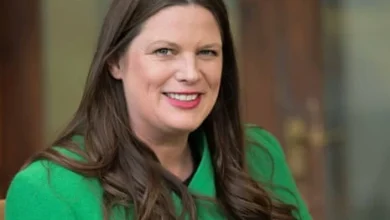
On the campaign stage in South Carolina, Trump again calls for prosecution of Mary Peltola

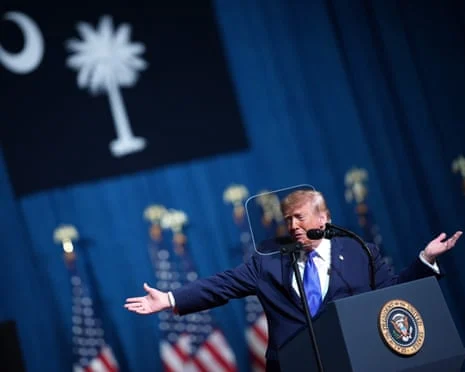
As the frantic final stretch of the 2026 U.S. midterm elections reaches a fever pitch, Donald Trump has intensified his rhetoric against prominent Democrats, utilizing campaign stops across the country to level accusations of electoral manipulation. Speaking before an enthusiastic crowd in Rock Hill, South Carolina, the president trained his sights squarely on Alaska, renewing aggressive calls for the criminal prosecution and ballot disqualification of Democratic Representative Mary Peltola.
The renewed outcry centers on explosive allegations that Peltola’s campaign engaged in a coordinated "ballot-stacking" scheme by recruiting a retired resident sharing the exact name of her Republican opponent, incumbent Senator Dan S. Sullivan, to enter the Senate race in an effort to siphon conservative votes.
"This is voter fraud at the highest level," Trump declared to the South Carolina audience, maintaining that the maneuvers orchestrated by Democratic operatives amounted to a severe criminal enterprise. "She should be removed from the ballot and prosecuted, and so should the fake Dan Sullivan. I think it’s a criminal act, what they did."

The allegations, which have upended the final days of campaigning in Alaska, have reverberated far beyond the Last Frontier, drawing swift reactions from top-tier administration officials, state governors, and congressional leaders. As political analysts weigh the implications of the controversy on an already volatile Senate map, the unfolding scandal has underscored deep-seated partisan anxieties over election integrity just days before millions of Americans head to the polls.
The Genesis of the Alaska Controversy and Ballot-Stacking Allegations
The roots of the controversy stretch back several months, during which local rumors and political whispers suggested that third-party candidates were being strategically introduced into competitive races to muddying voter choices. However, the dispute gained overwhelming traction following a comprehensive investigative report published by the New York Times.
According to the report, which cited internal communications, text messages, and interviews with former campaign insiders, representatives from Peltola’s campaign—alongside elements connected to the Democratic Senatorial Campaign Committee (DSCC)—actively identified and encouraged independent individuals named Dan Sullivan to enter the fray. The primary target of the maneuver was two-term Republican Senator Dan S. Sullivan, who faces a grueling reelection challenge in an increasingly purple electoral climate.
The strategy hinges on exploiting traditional voter confusion in ranked-choice or crowded electoral ballots, where voters skimming down a ballot might cast an inadvertent vote for a similarly named placeholder candidate. While the tactic of recruiting namesake candidates—often referred to pejoratively as "spoiler" or "stacked" candidates—sits in a legal gray area under federal statutes and has historically been practiced by various political actors across the partisan spectrum, it rarely faces the level of intense federal scrutiny seen in the current cycle.

Peltola’s campaign has repeatedly denied direct solicitation or coordination with the retiree, identified in filings as Dan J. Sullivan, though the mounting paper trail uncovered by investigative journalists has put defensive Democrats on their back foot.
A Cascade of Political and Legal Fallout
The revelations have prompted swift and unprecedented actions from Republican leadership. Alaska’s Republican Governor Mike Dunleavy officially ordered a formal state-level inquiry to investigate whether the Peltola campaign’s actions crossed the threshold into civil or criminal election violations.
"Deliberately tricking voters into casting their ballots for someone else strikes at the integrity of our elections," Governor Dunleavy posted on social media platform X. "Anyone or any organization found to have broken the law must be held accountable."
The federal government has similarly positioned itself aggressively against the campaign practices. Working in tandem with the White House, the U.S. Department of Justice has pre-emptively filed a civil lawsuit seeking to block the official certification of the Alaska Senate race should the incumbent Republican fall short, framing the alleged ballot-stacking as an infringement on constitutional voting rights.
Vice President JD Vance echoed these sentiments while speaking to reporters on the tarmac ahead of a campaign departure for Texas. "She is trying to steal a Senate seat from the voters of Alaska, and it’s disgraceful," Vance stated, explicitly endorsing a broad federal and state review into whether election fraud had occurred. "So whether it’s criminal or not, she certainly has committed, I think, a great moral failing."
Even moderate voices within the Republican caucus have weighed in with sharp criticism, though stopping short of Trump’s demands for immediate incarceration and disqualification. Senior Alaska Senator Lisa Murkowski released a public statement condemning the tactic. "While some may try to write this off as just how politics works now, ballot-stacking should have no place in our electoral process," Murkowski wrote. "Run and win on your merits: your views, your policy ideas, and your accomplishments."
Broader Midterm Landscape and Competing Crises
The fiery rhetoric in South Carolina occurred against a backdrop of wider national turbulence during the closing week of the midterms. Trump’s appearance in Rock Hill was designed to bolster Senator Darline Graham, the appointed incumbent fighting to hold a traditionally safe Republican seat in the Palmetto State against Democratic challenger Dr. Annie Andrews. Recent polling from the New York Times and Siena College indicates a surprising dead heat, with both candidates locked at 48%, highlighting vulnerability in deep-red strongholds.
Concurrently, the administration has found itself embroiled in multiple separate controversies. Reports surfaced indicating that the Department of Justice had issued federal grand jury subpoenas to local election officials in California, aiming to substantiate unsubstantiated claims regarding noncitizen voter registration. Meanwhile, international developments—including a diplomatic overture via letter from Vice President JD Vance to Iranian security officials aimed at averting a post-election military conflagration—have strained the executive branch’s focus as domestic political stakes reach their apex.

Fact-Based Analysis and Implications
The escalation of the dispute over the Alaska Senate race carries profound implications for the balance of power in Washington. With Republicans defending a narrow congressional majority, the potential loss of traditional seats—compounded by unexpectedly competitive races in states like Kansas, Texas, and South Carolina—has forced the party into an aggressive defensive posture.
By framing the Democratic campaign tactics in Alaska as systemic "voter fraud," the Trump administration and its allies are pursuing a dual-track strategy: attempting to legally invalidate unfavorable electoral outcomes before the first certified tallies are even finalized, while simultaneously mobilizing the conservative base through grievances over election administration.
Legal experts note that while intentionally deceptive political dirty tricks are widely condemned by ethics watchdogs, securing a criminal conviction under current federal election fraud statutes remains a steep hurdle for prosecutors, as the law typically requires clear proof of illegal financial coordination, ballot tampering, or explicit disenfranchisement. Nevertheless, regardless of the ultimate judicial outcome, the controversy has permanently altered the narrative of the 2026 midterms, ensuring that debates over campaign ethics, voter intent, and structural electoral integrity will dominate the national conversation long after the ballots are cast.