Alphabet Inc., the parent company of Google, has officially announced the international rollout of advertisements embedded within its artificial intelligence-powered search experiences. This strategic expansion represents a major shift in how the tech giant plans to monetize generative AI. The decision comes at a critical financial juncture: while Alphabet reported robust overall revenue figures for the third quarter, growth within its foundational search advertising sector has begun to decelerate noticeably.
The announcement was made during Alphabet’s third-quarter earnings call, which initially triggered a negative reaction from Wall Street. Despite posting a total company revenue of $127.6 billion—representing a stellar 25 percent increase year over year—Alphabet’s share price fell by 8 percent following the report. Investors remain acutely focused on the health of Google’s core moneymaker, traditional search advertising, which faces mounting pressure from changing consumer habits and the high operational costs associated with artificial intelligence integration.
Decelerating Core Growth Fuels Urgent Monetization Pivot
Google’s core Search revenue grew by 12 percent year over year during the third quarter. While double-digit growth might be envied by most corporations, the figure reveals a distinct downward trend for the tech titan. In the second quarter, Search revenue grew by 17 percent, and in the first quarter, it registered a 19 percent increase.
This deceleration has created immediate internal pressure to turn Google’s rapidly expanding AI features into a reliable, high-volume source of advertising revenue. For years, skeptics questioned how Google would fund the immense compute power required for generative AI without cannibalizing its traditional, highly lucrative text-based ad model. The international expansion of AI-driven ads provides the clearest answer yet to that question.
During the investor call, Philipp Schindler, Google’s chief business officer, detailed the aggressive scaling strategy. "We are now scaling high-quality ads within AI overviews in AI mode to more users and queries," Schindler told investors and analysts. "This includes taking our monetization footprint global for the first time. Today, we’re announcing the expansion of ads in AI mode into international markets alongside multi-turn ads and AI mode in the U.S."
Early Performance Metrics and Consumer Reception
Transitioning advertisements into conversational, generative AI environments carries inherent risks. If ads feel intrusive or irrelevant, users may abandon AI search tools for competitors. However, Google insists that early indicators suggest its new formats are striking the right balance between utility and commercial intent.
According to Schindler, click-through rates for sponsored product listings embedded within AI Mode are already performing on par with traditional organic listings. Furthermore, internal user research conducted by Google indicates that consumers find these AI-integrated ads to be relevant to their broader search queries rather than disruptive.
This global rollout directly builds upon Google’s sweeping announcements from May, when the company first previewed new Gemini-powered ad formats at its annual marketing event. These formats include conversational discovery ads—which dynamically adapt and respond to multi-part user questions—as well as sponsored recommendations seamlessly integrated into comprehensive, AI-generated synthesized answers.
Changing Consumer Behavior and the Multimodal Search Era
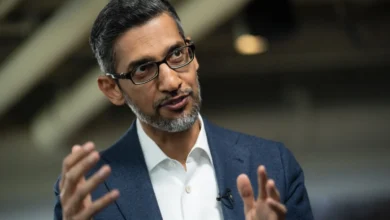
While traditional search advertising growth slows, the underlying volume of user engagement with Google Search is surging. Sundar Pichai, CEO of Alphabet and Google, highlighted a significant milestone during the earnings call: Search queries grew at their fastest year-over-year rate in five years, though he did not disclose the precise percentage.
Pichai credited this surge entirely to the introduction of generative AI features, which have fundamentally transformed how people interact with the search engine. Rather than typing short, keyword-based phrases like "best restaurants near me," users are now prompting the search engine with conversational, highly specific, and complex questions.
According to Google’s internal metrics, queries executed within AI Mode are, on average, three times longer than traditional searches. Furthermore, consumer behavior is shifting rapidly toward multimodal inputs. Globally, one in five AI Mode searches now involves voice commands, uploaded images, or documents. Highlighting the scale of this shift, Google revealed that it has officially surpassed 50 billion visual searches per month.
"[Search] is bringing the benefits of AI to more people than any other product in the world," Pichai told investors during the briefing. "People are using our AI features more, searching in entirely new ways. Their queries are longer, personalized, and multimodal."
Financial Breakdown: Cloud Growth Cushions the Blow
Despite the investor anxiety surrounding decelerating search ad growth, Alphabet’s diversified business model demonstrated immense underlying strength across other divisions.
The Google Services division—which encompasses traditional Search, YouTube ads, hardware, and subscriptions—generated $96.3 billion in revenue, marking an 11 percent increase year over year. Meanwhile, Google Cloud emerged as a standout financial engine, surging 103 percent year over year to reach $30.7 billion in quarterly revenue. The explosive growth of Google Cloud underscores the massive enterprise demand for AI infrastructure, data warehousing, and custom machine learning tools.
A Landmark Quarter for Hardware and Software
The third-quarter earnings report caps off a relentlessly busy and transformative period for Google. Over the preceding months, the company rolled out major updates across its entire ecosystem, attempting to cement its dominance in the consumer AI landscape.
In late September, Google released Gemini 4 Argon, heavily promoted by the company as its most powerful foundational artificial intelligence model to date. This followed milestones from August, when the standalone Gemini mobile application officially surged past one billion monthly active users. Additionally, Google sought to tighten the integration between its software ecosystem and physical hardware with the retail launch of its Pixel 11 smartphone lineup, which heavily features on-device Gemini capabilities.
Broader Industry Implications and Future Outlook
Google’s decision to take AI search ads global marks a watershed moment for the digital marketing and search engine optimization industries. For over two decades, search engine marketing relied on a predictable grid of blue links accompanied by clearly demarcated text ads. Generative AI fundamentally dissolves that paradigm, replacing static results pages with synthesized, fluid narratives.
By integrating sponsored recommendations directly into these synthesized answers, Google is attempting to preserve its profit margins in a post-keyword era. However, the move also invites increased regulatory scrutiny. Publishers, content creators, and antitrust regulators have closely monitored how AI overviews impact web traffic, as users frequently find their answers directly on the Google results page without needing to click through to third-party publisher websites.
As Google scales these ad formats internationally, the success of the initiative will depend heavily on advertiser adoption and consumer tolerance. If click-through rates remain strong and international markets embrace conversational shopping, Google may successfully navigate the difficult transition from traditional keyword advertising to the generative AI era. Conversely, any erosion of user trust or pushback from regulatory bodies could complicate Alphabet’s path forward as it navigates the most capital-intensive transformation in its corporate history.