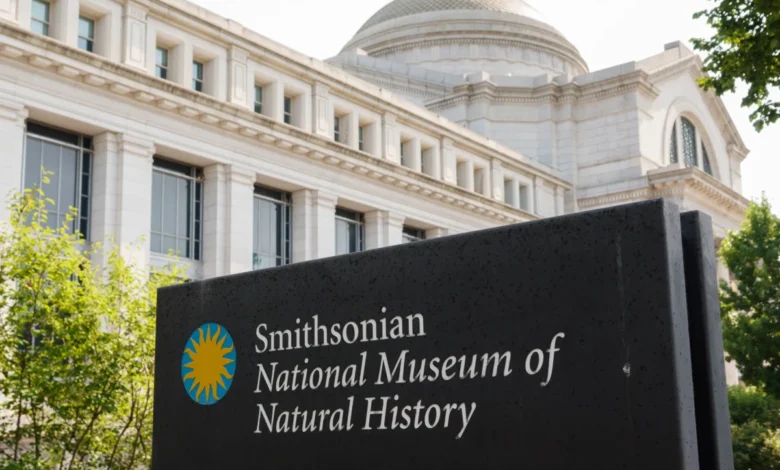
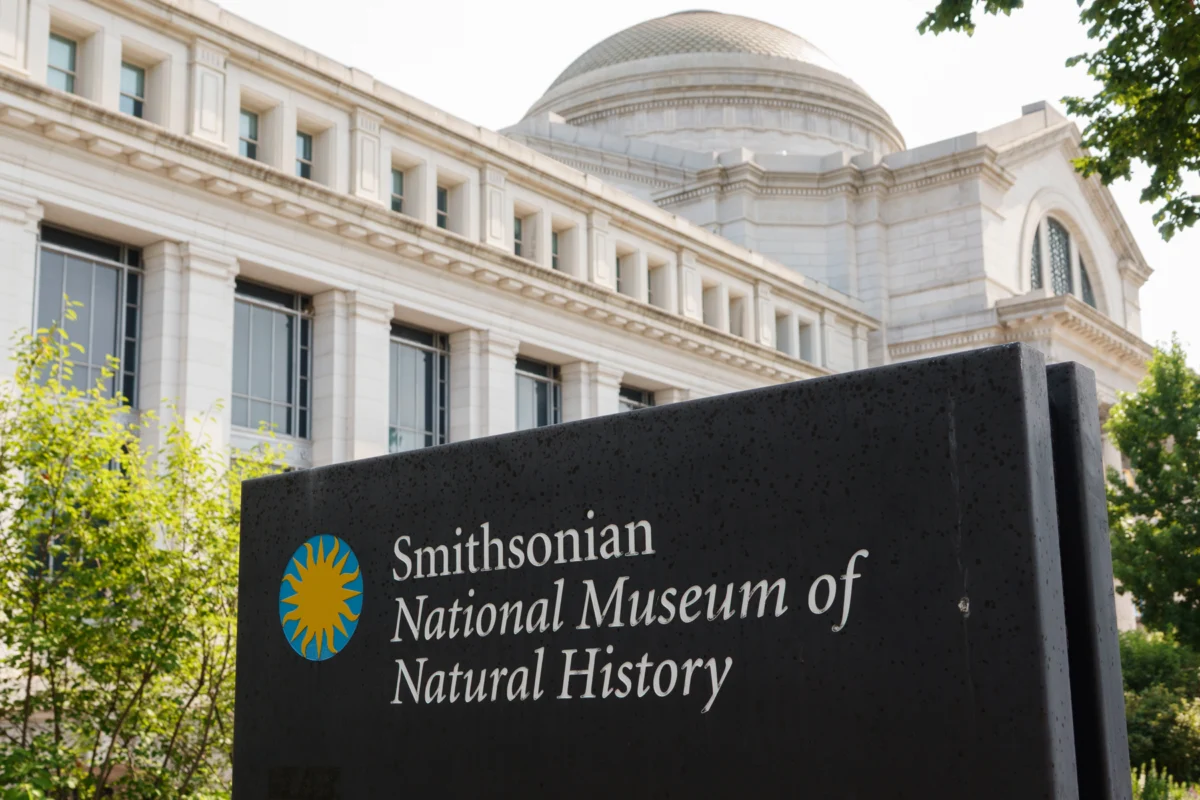
The federal government is set to authorize an expenditure of $84,000 for the installation of large-scale signage outside the Smithsonian National Museum of American History. This initiative, driven by the current administration, aims to alert visitors to what officials describe as a "biased version of the past" presented within the institution’s exhibits. The move marks a significant escalation in the ongoing tension between the executive branch and the Smithsonian Institution, one of the world’s largest and most respected complexes of museums and research centers.
According to correspondence obtained by media outlets, including The Atlantic, Interior Secretary Doug Burgum has framed these signs as a necessary measure to inform the public of the "personal viewpoints" that curators are allegedly advancing. This development is the culmination of a multi-year effort by the Trump administration to reframe the narrative of American history and exert greater influence over cultural and educational institutions within the nation’s capital.
A Chronology of Executive Intervention
The path to this installation began early in the administration’s second term. In March 2025, President Trump issued a comprehensive executive order titled "Restoring Truth and Sanity to American History." The directive outlined a mandate to purge what the administration characterized as "improper ideology" from federal properties and federally funded institutions. This order served as the formal foundation for the administration’s subsequent oversight of the Smithsonian.
Following the initial executive order, the administration intensified its scrutiny of museum content. By July 2026, a secondary executive order was signed, explicitly mandating the installation of temporary signage at Smithsonian locations. The text of this order argued that the institution had drifted from its mission as a neutral symbol of American excellence. The document stated: "Once widely respected as a symbol of American excellence and a global icon of cultural achievement, the Smithsonian Institution has, in recent years, come under the influence of a divisive, race-centered ideology. This shift has promoted narratives that portray American and Western values as inherently harmful and oppressive."
With the $84,000 allocation now moving forward, the project represents one of the most tangible physical manifestations of the administration’s "culture war" policy to date. The signs are expected to be positioned prominently, ensuring that all visitors—including the millions of tourists who frequent the National Mall annually—are confronted with the administration’s critique before entering the museum.
Scope of the Ideological Dispute
The conflict centers on how the Smithsonian, which oversees a vast portfolio including the National Museum of American History and the National Museum of African American History and Culture, addresses topics of systemic racism, slavery, and civil rights. The administration has repeatedly contended that the museum’s recent exhibits place an undue emphasis on the darker chapters of American history, thereby undermining a sense of national unity.
Beyond racial history, the dispute has expanded to include the museum’s representation of gender and sexuality. Reports from The New York Times suggest that the Interior Department’s internal communications emphasize a need to protect children from what they define as "ideological viewpoints inconsistent with biology." Specifically, the administration has raised objections to exhibits that acknowledge the experiences of transgender and gender non-conforming individuals, as well as educational materials that discuss the spectrum of biological sex.
The administration’s position is that such content is inappropriate for a public, taxpayer-funded institution and that parents visiting with their children should be explicitly warned of the nature of these exhibits. By framing the issue as one of "parental rights" and "biological reality," the administration has aligned itself with a broader conservative platform that has sought to restrict discussions of gender identity in schools and public venues across the United States.
Institutional Responses and Academic Context
The Smithsonian Institution, which operates under a unique public-private partnership structure, has historically maintained a degree of autonomy in its curatorial process. Curators and historians within the institution generally follow professional standards that prioritize peer-reviewed research, archival evidence, and multi-perspective storytelling.
While the Smithsonian has not issued a formal rebuttal to the specific $84,000 signage project, representatives from the museum community have previously defended the institution’s approach as being consistent with modern historical scholarship. Many historians argue that the "venerated" nature of the museum is derived from its ability to grapple with the complexities of the American experience, including both achievements and systemic failures.
Critics of the administration’s intervention argue that the placement of government-mandated signage at a museum entrance creates a "chilling effect" on academic freedom. By labeling certain scholarly interpretations as "ideological," the executive branch is perceived by some as attempting to codify a singular, government-approved version of history. This approach stands in contrast to the historical role of museums as forums for debate, where visitors are encouraged to synthesize various perspectives to reach their own conclusions.
Economic and Cultural Implications
The expenditure of $84,000 on signage may appear modest in the context of the federal budget, but its implications for the cultural sector are substantial. The National Mall attracts millions of visitors annually, and the Smithsonian is a centerpiece of the Washington, D.C. tourism economy. The decision to place political messaging on federal museum property sets a precedent that could alter how these institutions are perceived by the public and by future administrations.
From a policy analysis perspective, this intervention represents a shift in the relationship between the federal government and cultural institutions. Traditionally, the Smithsonian has been protected from direct political interference to ensure that exhibits remain grounded in historical research rather than the shifting priorities of the current administration. The current approach marks a departure from that model, transforming federal museums into high-profile battlegrounds for national political discourse.
Broader Impacts on Public Education
The administration’s rhetoric regarding "restoring truth" to history has found a receptive audience among those who believe that current curricula and museum exhibits have become too critical of Western heritage. However, the move has also drawn concern from educational organizations that fear the politicization of history could lead to a fragmented understanding of the American past.
If the precedent of using government signage to critique institutional content is sustained, it may lead to a cycle where the ideological leanings of each incoming administration are reflected in the exterior branding of national museums. Such a development would likely necessitate a broader national conversation about the purpose of public museums: should they serve as instruments for state-sanctioned narratives, or should they remain independent spaces for critical inquiry and historical preservation?
As the installation of the signs nears, the move remains a lightning rod for debate. Supporters of the administration applaud the transparency they believe the signs will provide to parents and citizens. Conversely, opponents view the expenditure and the messaging as an unprecedented encroachment of partisan politics into the nation’s primary historical repository.
Ultimately, the dispute over the Smithsonian signage is more than a disagreement over placards; it is a manifestation of a deeper conflict regarding the identity of the nation. As the administration moves to solidify its legacy in the aesthetics and narratives of the capital, the future of the Smithsonian—and the integrity of the history it seeks to preserve—remains a central point of contention in the ongoing American culture war.