Aaron Rowe Defends Ed Sheeran Amid Loop Tour Fallout While Targeting Robert Kraft Over Macklemore Controversy

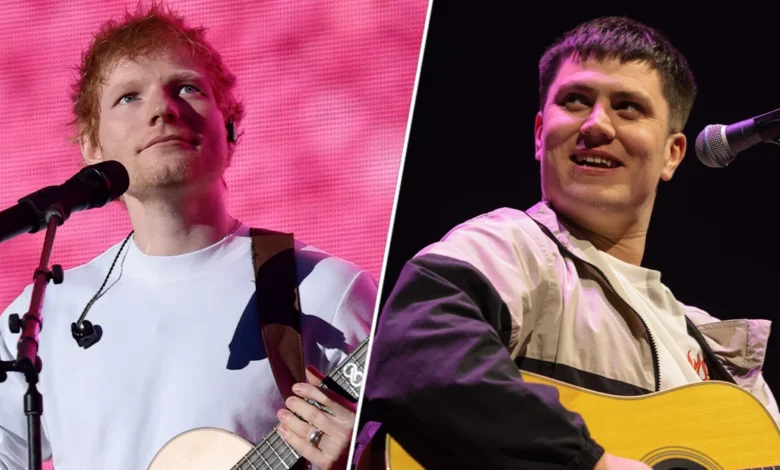
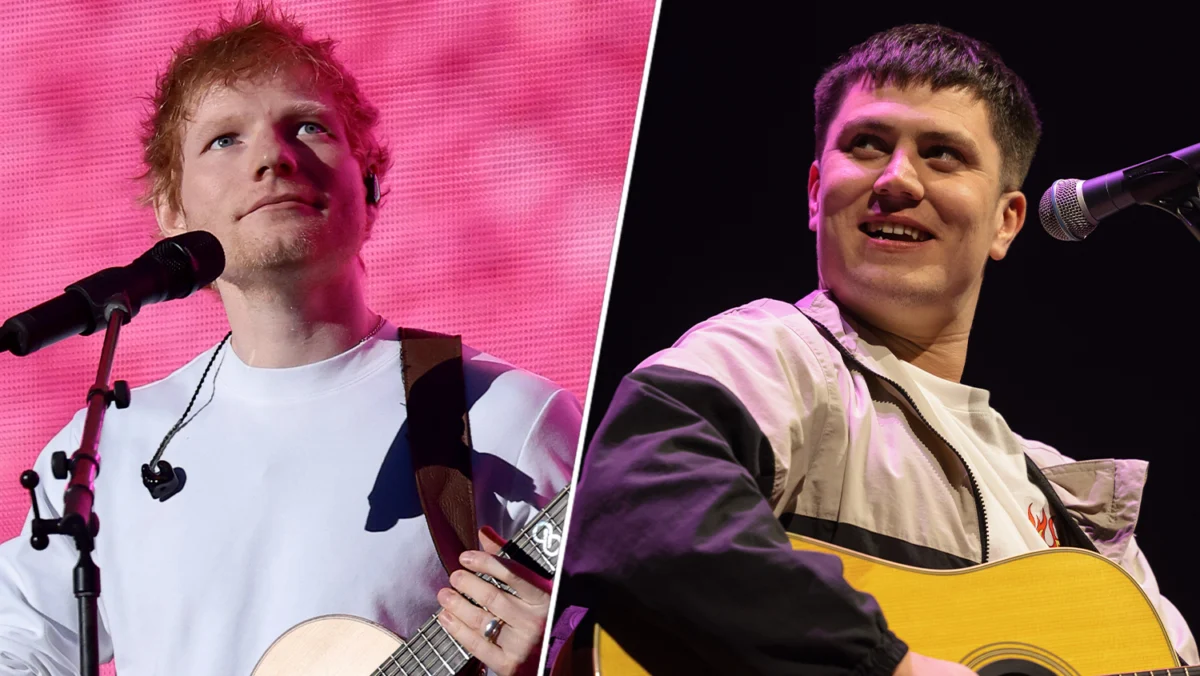
The contemporary intersection of live entertainment, geopolitical activism, and corporate influence has reached a boiling point following a series of high-profile departures from global superstar Ed Sheeran’s ongoing Loop Tour. Musician Aaron Rowe, one of the supporting acts who recently severed ties with the tour, has broken his silence to defend the British singer-songwriter. Rowe argues that public outrage is being misdirected away from the corporate decision-makers who orchestrated the removal of rapper Macklemore over his pro-Palestine remarks.
The controversy has snowballed into a major industry crisis, leaving Sheeran’s tour without opening acts, straining relationships between artists, promoters, and venue owners, and reigniting intense debates regarding free speech, political expression, and the boundaries of corporate control within the music industry.
The Genesis of the Controversy: Macklemore’s Removal
The friction began when rapper Macklemore—whose real name is Benjamin Haggerty—used his platform during a live performance to express support for Palestine, chanting slogans associated with the "Free Palestine" movement. The remarks quickly drew fierce backlash from various political and corporate factions, particularly within regions heavily invested in pro-Israel advocacy groups.
According to statements released by Sheeran and subsequent investigative reports, the pressure swiftly escalated beyond social media commentary and into the boardroom. Robert Kraft, the billionaire owner of Gillette Stadium—one of the premier venues scheduled to host the Loop Tour—allegedly coordinated with executives from several other major tour venues to issue a collective ultimatum. The message to the tour’s production team was clear: either Macklemore was removed from the lineup, or the venues would pull their hosting agreements, effectively jeopardizing massive legs of the tour.
Faced with this high-stakes pressure, the tour’s promotional apparatus and management team made the executive decision to drop Macklemore from the roster. Days later, Sheeran addressed the public via a statement, clarifying that the removal was ultimately driven by the promoters and venue stakeholders who applied intense pressure in the wake of the stadium owners’ ultimatum.
A Domino Effect: Openers and Band Members Abandon the Tour
The decision to oust Macklemore sent immediate shockwaves through the tour’s ecosystem. Artists and crew members who had signed on to support Sheeran found themselves grappling with the implications of censorship and corporate compliance in artistic spaces.
In a rapid succession of announcements, multiple high-profile supporting acts and essential personnel chose to abandon the Loop Tour in protest. Among the first to withdraw were singer-songwriter Aaron Rowe, Grammy Award-winning artist Finneas, and pop band Lukas Graham. Additionally, Beoga, the traditional Irish folk music band that has long served as Sheeran’s backing band, announced their departure, dealing a severe operational blow to the production.
With all supporting acts and core musical collaborators now removed or having voluntarily pulled out, the Loop Tour faces unprecedented logistical and artistic hurdles, effectively leaving Sheeran without an opening lineup for the remainder of his scheduled dates.
Aaron Rowe’s Defense of Ed Sheeran
Amid the storm of criticism directed at Sheeran for acquiescing to the venue owners’ demands, Aaron Rowe took to Instagram to offer a nuanced, albeit fiery, defense of the headlining artist. In a video message posted on Friday, Rowe asserted that public anger was being misdirected at a person who made a panicked, human error rather than at the institutional power brokers wielding financial leverage to suppress political speech.
"I’m gonna be honest, I think you are all focusing on the wrong person here," Rowe stated in the video. "All I keep hearing is Ed Sheeran this, Ed Sheeran that, but you really should be focusing on the likes of Robert Kraft. You really should be focusing on the zionist lobbies that are trying to silence the voices of people who are shouting about genocide, the genocide that is happening in Palestine right now, by Israel."
Rowe acknowledged that Sheeran’s initial handling of the situation could have been improved and reiterated his belief that Macklemore should never have been pulled from the bill. However, he attributed the outcome to panic rather than malice, suggesting that the production team buckled under crossfire pressure.
"Look, I know Ed’s statement could have been a lot better, and I do think that Macklemore shouldn’t have been pulled off the tour," Rowe continued. "I fully believe it was panicked stations over there, and they rushed to a decision because they didn’t know what to do, because they were getting it from all angles. That’s a mistake from a person. And I haven’t had a chance to fucking talk to Ed too much, but I fully believe he knows that was a mistake."
Rowe further highlighted the ideological alignment of the tour’s original lineup, pointing out that numerous artists brought on by Sheeran had openly expressed pro-Palestine views. "If Ed Sheeran was a fucking zionist, why would he have all these fucking people on the fucking tour?" Rowe asked. "It was human fucking error. You all know my stance on Palestine. I’ll tell you right now, first hand, I know Ed Sheeran has done so much for so many fucking people, including artists like me, who he’s literally changed their entire lives. All he has inside of him is kindness."
Directing Ire at Robert Kraft and Corporate Power
Having defended Sheeran’s character, Rowe pivoted his focus back to Robert Kraft and the broader systemic issue of corporate censorship within the entertainment industry. He urged activists, music fans, and fellow artists to redirect their collective energy toward challenging figures who use financial muscle to silence dissenting political opinions.
"In the music industry, within the media, there are people with so much money and fucking power, that they’re able to basically shut down any opinion they don’t agree with," Rowe argued. "You should be using this opportunity to plaster Robert Kraft’s face everywhere, someone who tried to shut down free speech, someone who tried to silence the voices of people who are shouting about genocide. That’s what you should be using your energy on, not fucking Ed Sheeran, for fuck’s sake."
Rowe’s comments reflect a growing sentiment among independent artists who argue that multinational corporations, prominent venue magnates, and influential lobbying groups exercise undue influence over cultural expression, forcing pop stars and touring acts into difficult compromises.
Broader Implications for the Music Industry
The Loop Tour controversy serves as a stark case study in the modern vulnerabilities of global concert tours. As geopolitical tensions continue to polarize public discourse, artists and promoters are increasingly finding themselves caught in the crosshairs of ideological conflicts.
Venues and stadium owners, who historically focused on logistics, security, and revenue generation, are now flexing their contractual muscles to mitigate perceived public relations risks or political liabilities. Conversely, artists who champion social causes are demanding greater autonomy over their stages, viewing corporate intervention as a direct assault on artistic freedom and freedom of speech.
Industry analysts note that incidents like this could permanently alter how tour contracts are drafted, particularly regarding clauses concerning political statements, venue ultimatums, and artist-promoter liabilities. With major acts like Finneas, Lukas Graham, and Aaron Rowe willing to walk away from lucrative tours on principle, promoters may find it increasingly difficult to balance the competing demands of corporate venue owners and socially conscious performers.
As the dust settles on the Loop Tour fallout, the debate over accountability continues to evolve. While Ed Sheeran works to navigate the operational crisis of an empty opening lineup, the broader dialogue sparked by Macklemore’s removal and Aaron Rowe’s defense has firmly placed the spotlight on the intersection of corporate power, political advocacy, and free expression in contemporary live music.
Related posts: