Republican Jim Jordan wins party election to become House minority leader of next Congress

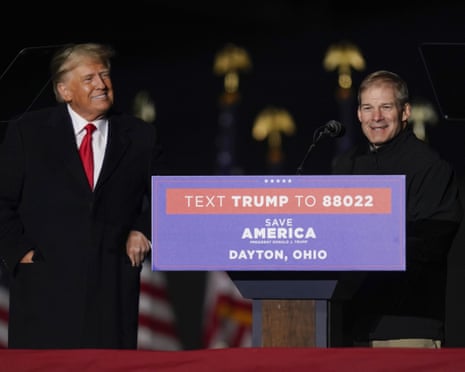
Washington — In a closed-door leadership election on Capitol Hill, Republican hardliner Jim Jordan of Ohio has secured the position of House minority leader for the upcoming congressional term, defeating current Majority Leader Steve Scalise by a 106-73 vote. Jordan’s victory marks a significant shift for the Republican caucus in the lower chamber as the party prepares to transition into the minority following a bruising cycle of midterm elections.
Jordan, 62, currently serves as the chair of the House Judiciary Committee and was the founding chair of the far-right Freedom Caucus. He will step into his new role in January, succeeding outgoing House Speaker Mike Johnson, who announced he would not seek leadership posts once the GOP cedes control of the chamber to Democrats.
The leadership transition comes at a turbulent juncture for American politics, characterized by intense intra-party reckoning following significant electoral losses, high-stakes defense department battles, and lingering controversies stretching from the federal oversight of historical criminal investigations to ongoing legislative fights in both the House and Senate.
Shifting Leadership Landscapes in the House and Senate
While the Republican caucus in the House chose Jordan to spearhead their legislative strategy and opposition efforts in the next Congress, upper-chamber Republicans took a different path. In the Senate, Republicans unanimously re-elected South Dakota Senator John Thune to serve as Senate minority leader. Thune ran uncontested in a closed-door session as the GOP grapples with at least a 10-seat Democratic majority anticipated in the new year.

Reflecting on the party’s strategic retreat and the path forward, Thune emphasized conservative unity. "I appreciated the opportunity to have an open, honest, and transparent conversation with my colleagues today, and I am honored to have their continued trust and support," Thune said in a formal statement following the closed-door meetings. "We remain united in our commitment to advancing conservative priorities, working with President Trump and our colleagues in the House, and holding the line against Democrats’ efforts to enact their far-left, liberal agenda."
Meanwhile, the Democratic caucus faces its own internal debates regarding leadership structure. Senate Democratic leader Chuck Schumer expressed confidence that he maintains the necessary votes to secure the position of Senate majority leader in the new year. However, his bid has encountered resistance from within his own ranks. Independent Senator Bernie Sanders, who caucuses with Democrats, publicly announced he would not support Schumer, telling reporters that the party requires a vigorous debate about its future direction. First-term Michigan Senator Elissa Slotkin similarly conditioned her vote on the presentation of a concrete, distinct strategic plan, highlighting deep-seated divisions over the party’s operational philosophy.
Jordan’s Rise and Contentious Record
Jim Jordan’s ascent to minority leader places one of Donald Trump’s most fervent and pugnacious congressional allies at the helm of House Republican strategy. Known for his aggressive interrogation style during committee hearings, Jordan has been a central figure in conservative politics for nearly two decades.
His career, however, is heavily marked by controversy. A staunch defender of Donald Trump, Jordan aggressively promoted unsubstantiated claims that the 2020 presidential election was stolen. In 2021, he was subpoenaed by the House select committee investigating the January 6 attack on the US Capitol, which identified him as a significant participant in the former president’s efforts to overturn the election results. Jordan refused to comply with the subpoena, prompting an internal House Ethics Committee review that found him in violation of conduct standards, though no official disciplinary action was taken.
Further complicating his political profile, Jordan has faced enduring scrutiny regarding his tenure as an assistant wrestling coach at Ohio State University between 1987 and 1995. During those years, Jordan worked alongside team doctor Richard Strauss, who was later accused of widespread sexual abuse. A 2019 independent report commissioned by the university concluded that Strauss had abused at least 177 male student-patients. While Jordan has repeatedly denied any knowledge of Strauss’s actions, several former wrestlers have publicly claimed that Jordan was directly informed of the misconduct. These allegations resurfaced prominently during Jordan’s previous, unsuccessful bids for House leadership, drawing sharp rebukes from survivor advocates and former athletes.
The Impeachment Battle Over Defense Secretary Pete Hegseth
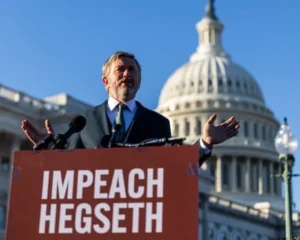
Outside of leadership elections, Capitol Hill was consumed on Tuesday by an escalating constitutional and political clash surrounding Defense Secretary Pete Hegseth. Facing an aggressive push for impeachment spearheaded by outgoing Republican Representative Thomas Massie of Kentucky, Hegseth held a rare and combative press conference at the Pentagon to denounce the proceedings.
Massie introduced eight articles of impeachment against Hegseth, focusing heavily on alleged violations of the War Powers Resolution regarding the ongoing military campaign in Iran, as well as a disputed bombing incident. Massie argued that the administration bypassed required congressional oversight and utilized military assets improperly.
Hegseth dismissed the resolution as a "political spectacle" and a "personal manifesto driven by ego and resentment," characterizing Massie as a disgruntled and defeated lawmaker acting out after losing a primary race. Top administration officials rallied to the defense secretary’s defense. Vice President JD Vance took to social media to castigate the impeachment effort, writing, "Has Pete Hegseth committed impeachable crimes? The question is absurd and the answer is: obviously not. Like so much of Congress, impeachment has become a ridiculous show that stands in for actual policymaking."
Outgoing House Speaker Mike Johnson similarly criticized the initiative, branding it a "political gambit for attention" that sends a damaging signal to international allies and adversaries alike during a period of global conflict. Senate Republicans, including Texas Senator Ted Cruz, suggested that the pressure could ultimately lead to Hegseth’s voluntary departure or removal by the executive branch.
Oversight Reports and Broader Legislative Developments
In addition to leadership and cabinet battles, the House Oversight Committee released a comprehensive 136-page report detailing its 15-month investigation into the federal government’s historical handling of the criminal cases against the late convicted sex offender Jeffrey Epstein and his associate Ghislaine Maxwell.

The Republican-led report concluded that the federal government "failed the survivors… for decades," asserting that crimes committed by Epstein after 2005 could have been prevented had investigators and federal prosecutors in South Florida and Washington not floundered. The report explicitly cleared Donald Trump of any direct implication in Epstein’s crimes, while accusing Democratic lawmakers of maintaining an obsessive focus on implicating the president. House Democrats swiftly condemned the document, characterizing the report as the product of an incomplete investigation lacking public hearings, and vowed to pursue independent inquiries into Epstein’s network in the upcoming Congress.
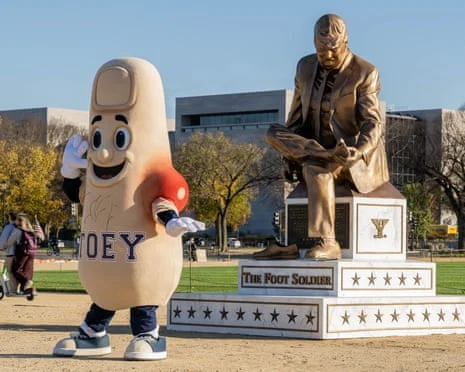
Meanwhile, public attention remained fixed on lingering election results, notably a razor-thin Senate race in Mississippi where Democratic challenger Scott Colom maintained a narrow lead over Republican incumbent Cindy Hyde-Smith as final postal ballots were processed. Concurrently, public discourse continued to swirl around symbolic political protests in the capital, highlighted by the unauthorized installation of a gilded satirical statue on the National Mall mocking Donald Trump’s historical military draft deferments.
As Washington prepares for the formal transition of congressional power in January, the alignment of hardline leadership under Jim Jordan in the House signals an era of intense partisan confrontation, setting the stage for aggressive oversight battles and heightened legislative friction with the incoming administration.