Bridging the Generational Divide: Understanding the Psychology of Consumption and Sustainability in a Changing Climate


The tension between Baby Boomers and Millennials regarding consumer habits and environmental values is often framed as a clash of ideologies, yet recent psychological and sociological analysis suggests these differences are deeply rooted in historical economic contexts. A common point of contention—the differing perception of “cheap” goods—serves as a primary example of how personal history shapes modern environmental action. While younger generations often equate low-cost, mass-produced items with disposable culture and ecological harm, many older consumers view the acquisition of inexpensive goods through the lens of economic resilience and prudent survivalism.
The Historical Roots of Economic Mindsets
To understand the current friction, one must examine the economic climate in which different generations reached adulthood. Baby Boomers, born roughly between 1946 and 1964, came of age during periods of significant instability. The 1970s and early 1980s were marked by the oil crisis, extreme inflation, and mortgage interest rates that peaked at approximately 18 percent. During this era, the ability to stretch a dollar was not merely a lifestyle preference; it was a necessary survival strategy.
Furthermore, this generation was heavily influenced by their parents, who lived through the Great Depression and World War II. The "Greatest Generation" instilled a ethos of scarcity—rationing, repairing, and hoarding—which became the foundation for Boomer consumer psychology. For a Boomer, finding a bargain is not an act of environmental negligence, but a victory against the volatility of the market. This deeply ingrained behavior remains a point of pride, contrasting sharply with the Millennial perspective, which has been shaped by the rise of the fast-fashion industry and the increasingly visible climate consequences of mass consumerism.
Chronology of Shifting Consumer Values
The evolution of these attitudes can be mapped through three distinct phases of American economic history:

- The Post-War Era (1945–1970): Consumption was equated with prosperity. The focus was on modernization and accessibility, with the rise of suburban retail and mass manufacturing.
- The Era of Turbulence (1970–1990): Economic shocks, such as the 1973 oil embargo and the subsequent "stagflation," forced a pivot toward extreme frugality. Bargain hunting became a household virtue.
- The Sustainability Era (2000–Present): With the acceleration of climate data and the rise of digital platforms like Amazon and Wayfair, the focus has shifted toward the environmental lifecycle of products. Millennials, witnessing the rise of disposable "fast fashion" and "fast furniture," have begun to rebrand cheap consumption as socially and environmentally irresponsible.
Data on Generational Climate Engagement
Despite the visible divide in daily consumer choices, statistical data suggests that the ideological gap regarding climate change is significantly smaller than public discourse implies. Research from King’s College London indicates that roughly 70 percent of individuals across all generations agree that environmental degradation is severe enough to necessitate fundamental changes in daily living.
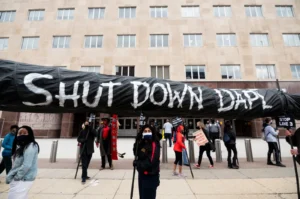
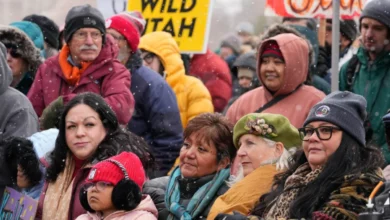
The disconnect appears to lie not in the intent to protect the planet, but in the methodology of action. Older generations are statistically more likely to engage in traditional civic participation, such as consistent voting and institutional lobbying. Conversely, younger generations are more prone to public protests, direct action, and shifting individual consumption habits as a form of protest. These distinct approaches often lead to mutual misunderstanding, where one group perceives the other as either "passive" or "radical."
The Role of Climate Therapy in Family Dynamics
Clinical experts, such as climate-aware therapist Leslie Davenport, emphasize that the resolution of these tensions requires a shift from confrontation to "intergenerational solidarity." Davenport suggests that the frustration stemming from these divides can be counterproductive to the broader climate movement, which requires a coalition of all age groups.
"When we look at these divides through a clinical lens, we see that empathy is the most effective tool for alignment," says Davenport. By validating the historical context of a parent’s frugality, younger generations can create a space for a more productive conversation about contemporary sustainability. Rather than labeling a parent’s shopping habits as "wrong," the conversation can pivot toward what that generation used to "fix" or "make from scratch." This approach often reveals that the older generation possesses a wealth of knowledge regarding repair and reuse—skills that are foundational to modern circular economy principles.
Implications for Future Climate Activism
The broader implications of these findings suggest that the environmental movement must move beyond a "one-size-fits-all" model of engagement. If the movement ignores the different economic stressors faced by different demographics, it risks alienating a significant portion of the population that is already inclined to support climate-positive policy.

Official responses from climate organizations indicate a growing recognition of this need. For example, groups are increasingly tailoring their messaging to appeal to the "frugality" mindset of older Americans, framing energy-efficient home upgrades or waste reduction not just as "green" initiatives, but as smart financial investments.
Furthermore, political strategists note that the consistency of older voters is a vital asset. When older, more conservative-leaning generations are brought into the climate conversation—not through shame, but through an appeal to their own values of stability and legacy—they become powerful advocates for systemic change.
Bridging the Divide: A Path Forward
The path toward unity involves a mutual recognition of shared goals. For the younger generation, this means understanding that a parent’s reliance on discount retailers is often a relic of an era defined by economic anxiety, rather than a lack of concern for the planet. For the older generation, it involves an openness to learning how modern consumer choices impact global ecosystems in ways that were not apparent forty years ago.
Building this bridge requires three actionable steps:
- Validation: Acknowledge that the other party’s behavior is rooted in a specific, lived reality.
- Knowledge Exchange: Share the technical information regarding the environmental cost of modern manufacturing while listening to the older generation’s expertise in maintenance and repair.
- Collaborative Action: Identify one small, shared project—such as home energy audits or sustainable gardening—that serves as a tangible expression of mutual care for the future.
In conclusion, the generational divide over consumption is not a permanent barrier to progress. It is a communication challenge that, when navigated with empathy and historical perspective, can be transformed into a foundation for intergenerational cooperation. The climate crisis is a global issue that requires the mobilization of every demographic, and the most effective activists will be those who can successfully synthesize the resilience of the past with the sustainable vision of the future. By aligning their efforts, generations can move beyond the friction of the dinner table and toward a more cohesive, unified stance on the survival of the planet.