High-Stakes Battle Over Virginia Redistricting Draws Tens of Millions in ‘Dark Money’ and Partisan Funding



Virginia’s political landscape has become the epicenter of an intense, high-stakes battle over congressional redistricting, drawing an unprecedented influx of tens of millions of dollars from powerful national political organizations and wealthy donors across the ideological spectrum. At the heart of this financial deluge is "Virginians for Fair Elections" (VFFE), a prominent group advocating for a ballot referendum that proponents claim aims to restore fairness to the state’s electoral maps, but which critics decry as a partisan maneuver disguised as reform. The outcome of the impending vote, characterized by its proponents as a temporary measure to address immediate electoral imbalances, carries significant implications for the balance of power in the U.S. House of Representatives and the future of democratic representation in the Commonwealth.
The Crucial Role of Redistricting in American Politics
Redistricting, the process of redrawing electoral district boundaries for congressional and state legislative seats, is a decennial exercise following the U.S. Census. While seemingly a technical administrative task, it is profoundly political, determining how voters are grouped and, consequently, who represents them in government. The manipulation of these boundaries for partisan advantage, known as gerrymandering, has been a contentious issue throughout American history. Gerrymandering can lead to districts where one party is virtually guaranteed victory, diminishing the competitiveness of elections, silencing minority voices, and entrenching incumbent power. It often results in oddly shaped districts that carve up communities and make voter choice less impactful, creating what are often referred to as "safe seats" for one party or another.
In Virginia, the redistricting process has long been a flashpoint. Historically, the state legislature was responsible for drawing the maps, a system that frequently led to accusations of partisan gerrymandering by whichever party held the majority. Following the 2010 census, for instance, maps drawn by the then-Republican-controlled legislature faced numerous legal challenges, with some districts eventually being ruled unconstitutional racial gerrymanders by federal courts. This contentious history led to a significant reform effort. In November 2020, Virginia voters overwhelmingly approved a constitutional amendment to create a bipartisan redistricting commission, comprising eight legislators and eight citizen members, to draw new congressional and state legislative maps. The intent was to remove partisan politics from the process and ensure fairer representation. However, the current debate suggests that even this reform has not entirely quelled the partisan struggle for control over district boundaries.
The referendum championed by Virginians for Fair Elections (VFFE) is presented by its supporters as a "temporary, one-time exception" designed to address perceived imbalances in the current moment, with the promise that the bipartisan process established in 2020 would "resume after the 2030 census." This framing suggests an attempt to intervene in or modify the outcomes of the existing redistricting framework, or to ensure specific map outcomes for the immediate electoral cycle. Opponents, primarily Republicans, view this as a blatant attempt to circumvent the bipartisan spirit of the 2020 amendment and rig the electoral system in favor of Democrats, particularly given the substantial funding flowing from overtly partisan sources.
A Deluge of Dollars: The Pro-Referendum Campaign’s Financial Power

The financial disparity in the Virginia redistricting battle is striking. Virginians for Fair Elections (VFFE), the primary group advocating for the ballot referendum, has amassed an extraordinary war chest. According to a Fox News Digital review of state campaign finance records and data from the Virginia Public Access Project (VPAP), which meticulously tracks public spending in the Commonwealth, VFFE’s fundraising totals skyrocketed in a short period. An initial report in March indicated the group had raised over $38 million. Just weeks later, leading up to "Tuesday’s vote," that figure had ballooned to more than $64 million, marking one of the most expensive ballot measure campaigns in Virginia’s history and underscoring the perceived national significance of the state’s congressional maps.
A significant portion of this massive funding originates from a sophisticated network of left-leaning organizations, often characterized by critics as "dark money" groups due to their ability to receive unlimited contributions from undisclosed donors. Leading this charge is House Majority Forward, the nonprofit counterpart to the House Majority PAC, the principal super PAC dedicated to electing Democrats to the U.S. House of Representatives. House Majority Forward alone contributed over $38 million to VFFE, demonstrating the national Democratic Party’s deep investment in shaping Virginia’s congressional districts.
The influence of billionaire Democratic megadonor George Soros and his extensive network of progressive organizations is also prominently featured in VFFE’s funding streams. Entities directly tied to Soros, or those that have received substantial funding traceable to him, rank as the second and third largest contributors to VFFE. The Fund for Policy Reform Inc., an organization founded by Soros himself, is a key donor. Additionally, The Fairness Project, another significant contributor, has been heavily financed by groups like the Sixteen Thirty Fund, Hopewell Fund, and the Tides Foundation—all known conduits for progressive "dark money" and recipients of substantial funding from Soros’s philanthropic network. These organizations often operate as 501(c)(4) social welfare groups, allowing them to engage in political advocacy without disclosing their donors, a practice that has drawn bipartisan criticism for its lack of transparency.
Beyond Soros’s network and national Democratic PACs, a broad coalition of left-wing juggernauts has poured resources into the Virginia effort. Top Democratic Party figures, including House Speaker Nancy Pelosi (D-Calif.), Rep. Pete Aguilar (D-Calif.), and Rep. Katherine Clark (D-Mass.), made personal or leadership PAC donations totaling tens of thousands of dollars. Virginia’s own Democratic Senator Tim Kaine’s leadership PAC contributed $100,000, while the Democratic Party of Virginia itself provided just shy of a million dollars.
Labor unions, powerful allies of the Democratic Party, also made substantial contributions. The Service Employees International Union (SEIU) committed half a million dollars, and the American Federation of Teachers (AFT) added $100,000. These unions often mobilize their membership and resources to support political initiatives aligned with their interests, including electoral reform efforts that could shift the balance of power. Further contributions came from environmental and progressive advocacy groups, such as the national green energy group the League of Conservation Voters, and the Soros-backed online activist organization MoveOn.org.
Even Eric Holder’s National Democratic Redistricting Committee (NDRC), a group founded by the former Obama Attorney General, provided an in-kind contribution exceeding $10,000. The NDRC’s involvement is particularly notable as Holder has previously championed the adoption of "independent redistricting commissions" as a means to combat gerrymandering. Critics argue that his group’s support for a referendum described as a "temporary, one-time exception" to Virginia’s existing bipartisan process appears to contradict the stated goal of truly non-partisan map-drawing. Another new and opaque entity, American Opportunity Action, described as a "pure pass-through entity" by dark money expert Parker Thayer, also emerged as a top donor, despite lacking publicly filed IRS 990 forms, further highlighting the "dark money" aspect of the campaign.
The Conservative Counter-Effort: Virginians For Fair Maps
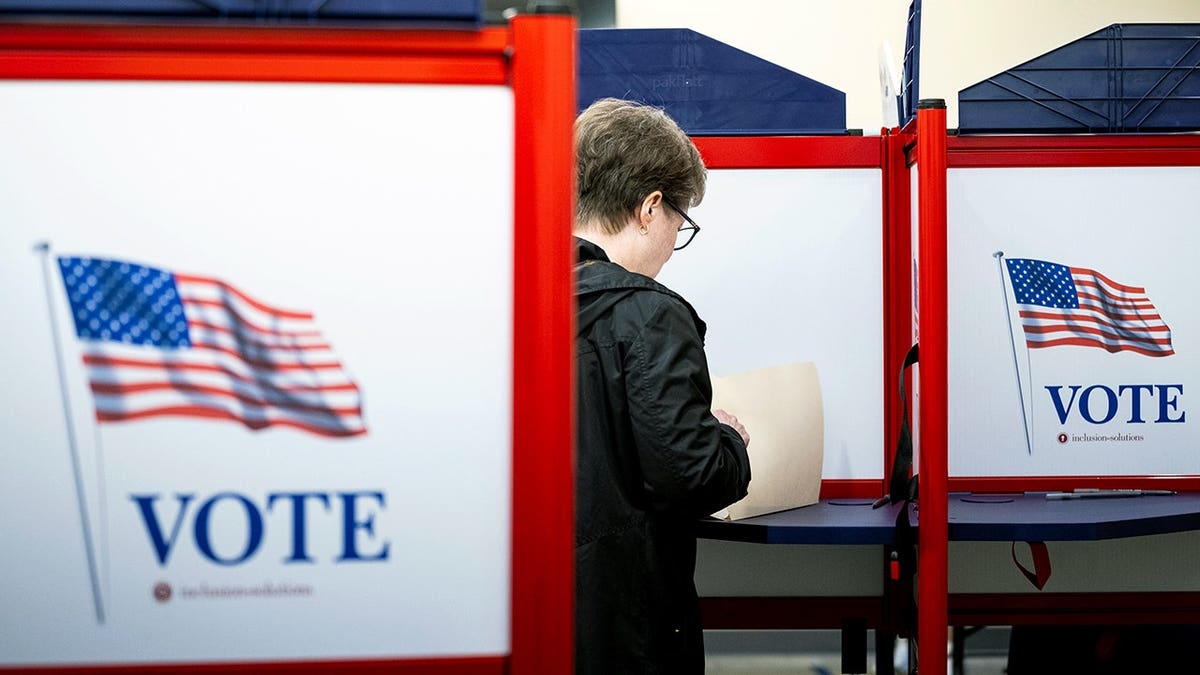
In response to this formidable financial onslaught, a conservative counter-effort emerged, led primarily by "Virginians For Fair Maps" (VFFM). While significantly outmatched in fundraising, VFFM also saw a substantial increase in its financial resources as the referendum vote approached. From an initial $3 million reported in late March, the group’s fundraising total surged to nearly $20 million just before the Tuesday vote.
The bulk of VFFM’s funding came from a group bearing the same name, which is also a significant donor to the Virginia Republican Party, signaling a direct partisan opposition to the referendum. Former Virginia Governor Glenn Youngkin, a prominent Republican figure, has been a leading voice against the redistricting measure, reportedly donating over $500,000 to the effort and actively campaigning against it even after leaving office. Youngkin’s involvement underscores the importance the Republican Party places on maintaining or improving its electoral standing in Virginia, a swing state that has trended Democratic in recent federal elections.
Other notable donors to the anti-redistricting group include the National Shooting Sports Foundation, which contributed $50,000, aligning with the conservative stance on Second Amendment rights. A wealthy D.C.-area real-estate investor, known for primarily donating to GOP campaigns, also provided a significant individual contribution of $100,000, making him the top individual donor to VFFM. Republican donor and wealthy tech entrepreneur Peter Thiel has also reportedly funneled funds into the anti-redistricting effort through the Justice for Democracy PAC, indicating a coordinated national conservative effort to oppose the measure.
Conflicting Narratives: Fairness vs. Rigging
The stark financial contrast and the deeply partisan nature of the funding have fueled a heated rhetorical battle. GOP strategist Matt Gorman articulated the conservative view, telling Fox News Digital, "Dark money is flooding into Virginia." He further accused Democrats of hypocrisy, stating, "Democrats talked all about the cost of living during the campaign, but all they did once in office was raise taxes and rig elections. It’ll be the same elsewhere across the country in 2026 too." This statement reflects a common Republican argument that Democratic efforts to reshape electoral maps are inherently self-serving and designed to cement political power rather than promote genuine fairness.
On the other side, proponents of the referendum vigorously defend their efforts. Alexis Magnan-Callaway, a spokesperson for The Fairness Project, one of VFFE’s major donors, emphasized the necessity of their intervention. "No one wanted to take this action, but in a democracy, we can’t let entire states rig their congressional maps just to bend to the will of one person," she told Fox News Digital. She framed the amendment as a temporary solution: "This amendment is a temporary, one-time exception that gives Virginia voters a voice and meets the needs of the current moment, while ensuring Virginia’s bipartisan redistricting process will resume after the 2030 census." Magnan-Callaway concluded by asserting, "This isn’t about favoring one party over another. This is about restoring fairness across the board by temporarily changing Virginia’s congressional districts." This narrative aims to position the referendum as a non-partisan corrective measure, albeit one that coincidentally benefits Democrats in the short term.
Broader Implications for Electoral Politics

The Virginia redistricting battle, characterized by its immense financial investment and deeply entrenched partisan interests, carries significant implications beyond the Commonwealth’s borders.
Electoral Impact: The primary motivation for the pro-referendum campaign, as explicitly stated in the original reporting, is the potential to allow Democrats to "potentially take four seats from Republicans going into the midterms." In a narrowly divided U.S. House of Representatives, a shift of four seats in a single state could be pivotal in determining which party controls Congress. This makes Virginia a critical front in the national struggle for legislative power.
The Role of Money in State-Level Elections: The scale of funding – over $64 million for one side and nearly $20 million for the other – highlights a growing trend of national money pouring into state and local electoral processes. Redistricting, once primarily a state legislative concern, has become a nationalized battleground, with well-funded advocacy groups and party committees from outside the state playing a dominant role. This raises questions about local autonomy and the influence of external forces on state-specific electoral outcomes.
Transparency and "Dark Money": The significant involvement of "dark money" groups, particularly on the pro-referendum side, fuels concerns about transparency in political spending. Organizations like the Sixteen Thirty Fund and Hopewell Fund, which do not disclose their donors, allow wealthy individuals and corporations to influence elections without public accountability. While legal, this practice is often criticized for undermining the integrity of democratic processes by obscuring who is truly funding political campaigns and why.
The Future of Redistricting Reform: Virginia’s 2020 bipartisan commission was hailed as a model for moving beyond partisan gerrymandering. If a subsequent referendum, heavily funded by partisan actors, is perceived as undermining or circumventing that reform, it could cast a shadow on the effectiveness and durability of such bipartisan efforts nationwide. It raises the question of whether even constitutionally mandated bipartisan processes can withstand intense partisan pressure and financial intervention.
Voter Representation: Ultimately, the debate over redistricting is about voter representation. Proponents argue their efforts ensure fairer representation, while opponents contend it’s an attempt to rig the system. The outcome of this referendum, regardless of its specific mechanism, will shape how millions of Virginians are represented in Congress for the next decade, influencing policy decisions on everything from healthcare to climate change.
In conclusion, the Virginia redistricting battle serves as a microcosm of the larger ideological and partisan clashes defining contemporary American politics. With tens of millions of dollars flowing into the state from national power brokers, and competing narratives of "fairness" versus "rigging," the outcome of the ballot referendum stands as a testament to the immense stakes involved in drawing the lines that define democracy. The reverberations of "Tuesday’s vote" will undoubtedly be felt far beyond the Commonwealth, influencing the balance of power in Washington and shaping the discourse around electoral integrity for years to come.