Stardate and Red Carpet Grandeur: Inside the London World Premiere of Georgia Oakley’s Modern Take on Jane Austen’s Sense and Sensibility

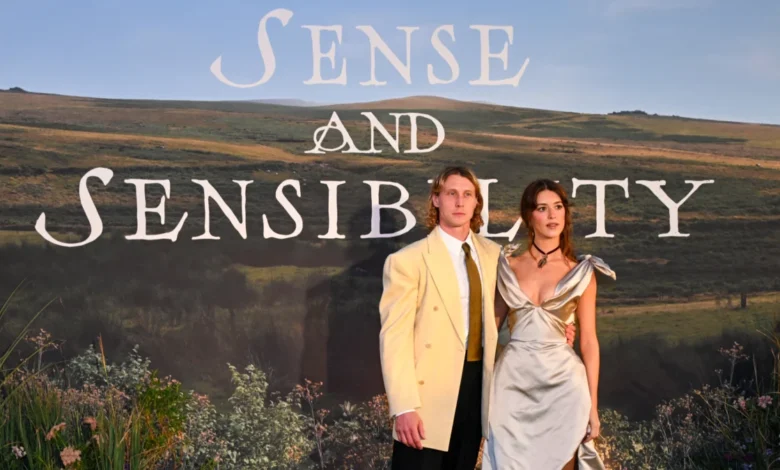

London’s historic Leicester Square transformed into an idyllic English meadow on Tuesday night for the star-studded world premiere of director Georgia Oakley’s highly anticipated cinematic adaptation of Jane Austen’s timeless classic, Sense and Sensibility. The premiere, drawing massive crowds of literature enthusiasts and cinephiles alike, was a dazzling affair complete with a grass-lined green carpet, pastel floral installations, and live classical cellists setting a romantic, pastoral atmosphere.
Brought to the screen by Focus Features, this fresh take on the beloved 1811 novel is slated for a theatrical release in the United Kingdom on September 25, followed by its American premiere on October 16. As the film’s ensemble cast walked the media line, donning exquisite modern and vintage-inspired ensembles, the air buzzed with excitement over how this new adaptation will measure up against the towering legacy of Austen’s literary universe and cinematic history.
A Fresh Lens on a Classic Sibling Dynamic
Helmed by critically acclaimed Blue Jean director Georgia Oakley and adapted for the screen by screenwriter Diana Reid, the new feature reimagines the familiar tragedy and romance that befalls the Dashwood women. Following the sudden death of family patriarch Henry Dashwood, his grieving widow (played by Caitríona Balfe) and three daughters find themselves abruptly stripped of their fortune, left with a meager inheritance of just £500 a year. Adding insult to injury, the majority of the estate is willed to Henry’s son from his first marriage, John (Tom Brooke), whose fiercely status-conscious wife, Fanny (Stacy Martin), wastes no time evicting the women to claim the grand family home for herself.
Amid this financial ruin and social displacement, the narrative pivots to the romantic trials and tribulations of the Dashwood sisters. Daisy Edgar-Jones stars as the sensible and self-sacrificing Elinor, who finds herself drawn to the quiet, noble Edward Ferrars, brought to life by George MacKay. Meanwhile, her more impulsive sister Marianne navigates a complex emotional landscape caught between two very different suitors: the dashing, roguish John Willoughby (played by Frank Dillane) and the older, deeply honorable Colonel Brandon (played by Herbert Nordrum). British screen icon Fiona Shaw rounds out the principal cast in the colorful supporting role of the exuberant Mrs. Jennings.
Unlike previous cinematic interpretations—most notably Ang Lee’s revered 1995 Oscar-winning film starring Emma Thompson and Kate Winslet—Oakley’s version intentionally distills the narrative through a contemporary feminist lens. Speaking to reporters on the green carpet, Oakley explained that a primary differentiator of her film lies in the physical and emotional proximity between the two leading sisters.
“They’re much closer together in age in reality, and so I guess I was looking to get under the skin of a certain type of sister dynamic,” Oakley shared. “For me, it was important that they were closer together in age. But also, the visual language is very different. The locations are very different.”
Navigating the Weight of Austen’s Legacy
Stepping into roles immortalized by cinema legends is no small feat, yet the principal actors deliberately forged their own paths to avoid being stifled by past adaptations. George MacKay, acclaimed for his breakout performance in Sam Mendes’ 1917, admitted that he intentionally bypassed Ang Lee’s 1995 masterpiece prior to filming.
“I hadn’t read the book before I became part of this project, and so I didn’t really have that pressure,” MacKay revealed to the press. “I knew the film in the ether to be something of a great import, but I elected not to try and see the film so I didn’t do exactly that—didn’t put pressure on myself. I let my interpretation be my own, led by the script that Diana Reid wrote for this, and so the pressure wasn’t too bad in the end.”
MacKay added that while he purposely abstained from watching the 1995 adaptation during production to keep his portrayal of Edward Ferrars authentic and uninfluenced, he intended to view it immediately following the world premiere. The actor also reflected on the unique challenges of portraying a character defined by extreme self-restraint in a modern cinematic landscape.
“What I love about this story is that it champions, particularly through Elinor and I guess through Edward as well, people who put others first,” MacKay said. “It’s very difficult to have stories centered [around] characters who hide their emotions, and it’s not a particularly shiny quality to put others in front of you all the time. It’s chivalrous, but it’s difficult to translate. And I love that Jane Austen, in her writing, does that so beautifully with a character like Elinor. And in this film, Edward gets to share in that a little bit.”
Daisy Edgar-Jones, whose rising star power has been cemented by standout performances in Normal People and Twisters, embraced the romantic philosophies central to her character, Elinor. Looking striking in a slate-grey gown accented by a minimalist black choker, Edgar-Jones pondered the timeless nature of Austen’s thematic explorations of the heart.
Referencing wisdom she recently encountered, Edgar-Jones shared, “I heard this recently—I think it was Ethan Hawke so I cannot claim it. It’s something along the lines of, ‘The person in love is always the person who wins.’ Because to feel love and be in love is when you feel most alive and that is magic. Like, lean into passion and I think that’s what Elinor learns throughout the film. So I thought that was beautiful.”
Meanwhile, veteran actress Fiona Shaw expressed sheer delight in stepping into the world of Austen once again, noting that she had eagerly re-read the source material just days prior to the event. Describing her character, Mrs. Jennings, Shaw offered a warm characterization for contemporary audiences.
“I’d say she’s one of the most benign creatures in literature, and it was a privilege to play,” Shaw said with a laugh. “She reminded me of all the best people I knew when I was a kid—when people were loud, ebullient, unselfconscious, and very funny.”
The Timeless Resonance of Austen’s Social Commentary
The decision by Focus Features and Working Title Films to revisit Sense and Sensibility reflects a broader industry trend of reinterpreting classic literature through modern socio-political frameworks. Director Georgia Oakley emphasized that Austen’s 19th-century observations regarding gender, societal expectations, and economic vulnerability remain startlingly relevant to contemporary young women.
“What interested me was that Austen is writing about themes that are inherently contemporary, and there is still, for young women today, such a negotiation to be had between what the world tells them they can expect from their lives and what it’s actually prepared to offer them,” Oakley explained. “That negotiation happens usually between the teenage years and your mid-20s to mid-30s, and I feel like that hasn’t changed at all. We’re still living in a world where the rules have been made by men for men, and so I think in that respect, it’s really a timeless story, and felt like a good time to adapt it again.”
This cinematic endeavor continues a successful creative partnership between Focus Features and Working Title Films, who have previously collaborated on celebrated Austen adaptations, including Joe Wright’s 2005 box-office hit Pride & Prejudice starring Keira Knightley, and Autumn de Wilde’s vibrant 2020 retelling of Emma. starring Anya Taylor-Joy. Production duties for the current iteration of Sense and Sensibility are shared by Tim Bevan and Eric Fellner of Working Title Films, alongside India Flint of November Pictures and producer Jo Wallett.
Chronology and Strategic Rollout
The global distribution strategy for the film follows a traditional platform release model designed to capitalize on the autumn awards season buzz. Following Tuesday’s grand premiere in London, the timeline for the film’s public debut is set as follows:
- September 25: Official theatrical release across cinemas in the United Kingdom and Ireland.
- October 16: Wide theatrical release across the United States, managed by Focus Features.
- Late Autumn / Winter: Anticipated international rollouts and festival circuit screenings, which industry analysts predict will position the film favorably for upcoming guild and academy award considerations, particularly in categories recognizing adapted screenwriting, costume design, and lead performances.
As the film prepares to meet wider audiences, the enthusiastic reception at Leicester Square suggests that Austen’s enduring exploration of reason versus emotion continues to capture the cultural imagination. By blending the literary fidelity demanded by purists with a fresh, youthful energy and a discerning feminist perspective, Oakley and her creative team have positioned this latest adaptation of Sense and Sensibility as one of the most talked-about cinematic releases of the autumn season.