AI Filmmaker Sparks Debate with "Odysseus: The Fall" Amidst Hollywood’s Existential Questions

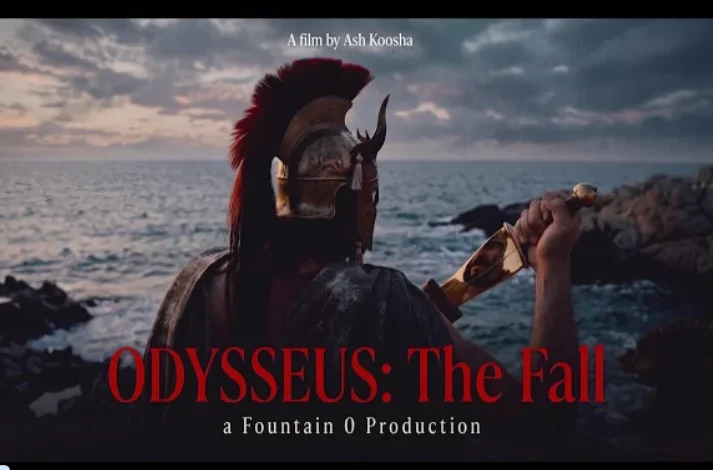
The announcement of an Artificial Intelligence-generated feature film, "Odysseus: The Fall," inspired by Homer’s epic poem "The Odyssey," has sent ripples of bewilderment and consternation through the film industry. The project, helmed by Iran-born, England-raised engineer Ash Koosha, is a 135-minute cinematic interpretation of a public domain work, notably arriving in the same summer that director Christopher Nolan is releasing his own ambitious, large-scale adaptation of the same ancient tale. Koosha’s endeavor, reportedly produced for a fraction of the cost of traditional blockbuster filmmaking and without any human actors, has ignited a fervent discussion about the future of cinema, the role of technology, and the very definition of artistic creation.
Koosha, who has delayed the public release of "Odysseus: The Fall" for several weeks, finds himself at the center of a burgeoning controversy. His provocateur stance, particularly in light of his previous AI-driven film, "Dreams of Violet," which debuted at Tribeca and addressed the recent Iranian democracy protests, has amplified the scrutiny. The juxtaposition of these two projects—one tackling a deeply human and politically charged subject with a humanitarian urgency, and the other reimagining a foundational piece of Western literature through artificial intelligence—has led many to question Koosha’s motivations and the artistic merit of his latest undertaking.
The timing of Koosha’s announcement is particularly striking. It coincides with a prominent debate within Hollywood between Christopher Nolan and actor Matt Damon regarding the viability of large-scale, analogue filmmaking in the digital age. Damon expressed a sense of finality, stating, "I knew that this was the last chance I was going to have to do something like this," referring to traditional production methods. Nolan, however, countered, labeling Damon’s sentiment as "defeatist." Koosha’s AI-powered "Odyssey," in this context, appears to many as a direct challenge to the established order, potentially accelerating the very "end-of-cinema" moment that Damon seemed to lament, and doing so using the very source material that has inspired storytellers for millennia.
In response to the intense public and industry reaction, The Hollywood Reporter convened a discussion with Ash Koosha, his brother and collaborator Pooya Koosha, and their producer Tom Rogers, the CNBC founder who, with the Koosha brothers, has established Fountain 0, a production banner dedicated to AI-centric filmmaking. Their vision for cinema, while undeniably forward-thinking, is also perceived by some as provocative and, at times, angering.
A New World of Cinema
Ash Koosha acknowledges the whirlwind of reactions since his announcement. "There’s been a lot of excitement, and a lot of questions, and a lot of confusion," he stated. Addressing the perceived rivalry with Nolan, Koosha clarified, "One thing we want to clear up is that we’re not going against Christopher Nolan. He’s doing what he’s doing in the old world of cinema. And he does it brilliantly. But there’s room for something in the new world."
Koosha’s personal connection to "The Odyssey" runs deep. "I’m an Odyssey fan since I was a little kid," he revealed. "I learned about Nolan’s movie from a Homer-focused Reddit. I’ve been immersed in all the questions about all the details, like Agamemnon’s outfits and everything else. My goal is not to make a movie that is the same as his. It’s to use the tools to make my own version of the story." This perspective positions his work not as a direct competition, but as an exploration of new creative avenues.
Bridging Humanitarian Urgency and Deeper Questions
The critical distinction between "Dreams of Violet" and "Odysseus: The Fall" lies in their perceived urgency. While "Dreams of Violet" resonated due to the inherent humanitarian crisis and the logistical impossibility of filming in Iran, "Odysseus: The Fall" is seen by some as less immediately justifiable. Koosha, however, views the two projects as interconnected. "I see them as related," he explained. "’Dreams of Violet’ raised questions and this raises deeper questions—questions that are important for the industry."
He elaborated on these core inquiries: "’Can we have stories at the speed of news?’ ‘Can other people paint with tools besides people like Christopher Nolan?’ ‘What can be created if they can?’" These questions underscore Koosha’s ambition to democratize filmmaking and expand the definition of who can be a storyteller.
Tangential Filmmaking: A New Genre?
The notion that "Odysseus: The Fall" might be seen as a derivative work, akin to the "knockoff direct-to-video movies" of the blockbuster era, is firmly rejected by Koosha. He describes his approach as "tangential filmmaking." "Before these AI tools if I had a theory about Odysseus I could write a Substack about him. And some people would read it but how many? Now I can put my take into a film. I can paint my opinion with images and sound and light. And a lot more people can see it."
This concept of tangential filmmaking suggests a new category of cinematic expression, one that coexists with established narratives and offers alternative perspectives. It’s a form of discourse, he argues, rather than mere genre imitation.
Tom Rogers, producer and co-founder of Fountain 0, emphasized the distinctiveness of their approach. "Obviously, it’s hard to be in the same arena as Christopher Nolan; everyone agrees his Odyssey is the superior film. And we want people to see that film. But hopefully they see ours too. Christopher Nolan is the ultimate in physical filmmaking and what we’re trying to do is be the ultimate in AI filmmaking." He further elaborated on the potential of AI, stating, "We’re just trying to show what’s possible when you don’t have to worry about budgets. We want people to see it’s not all slop."
Ash Koosha concurred, highlighting the nascent stage of AI filmmaking. "You can’t judge them on the same terms. They’re at 125 years and we’re in our infancy. So of course there are going to be bumps in the road. But it’s what you can achieve by trying. To me the risk is low and the reward is high: a whole new kind of cinema."
A Reinterpretation of Odysseus
Koosha’s specific take on the legendary hero is rooted in his own migratory experience. "I don’t think he’s well-understood," Koosha asserted. "I don’t want to say too much but I think as someone who came from Iran and moved to the West as a child I can understand something about his story, about what it means to be far from home. How it wasn’t just about ego motivating him." This personal lens suggests an interpretation of Odysseus that delves into themes of displacement and belonging, offering a nuanced portrayal beyond the traditional heroic archetype.
Release Strategy and the Future of Content Creation
The release timeline for "Odysseus: The Fall" is deliberate. Pooya Koosha explained, "We want to wait a while, at least until late summer. We don’t want people to feel overloaded and confused. That’s important to us." Rogers added that while they could have released it sooner, their intention is not to deceive but to foster clarity. "We want them to be able to clearly compare."
The concept of tangential filmmaking is further contextualized by Rogers, who draws a parallel to the early days of the internet. "It’s a novel view and almost calls to mind the early days of the Web, when everyone started blogging and people said ‘but why would you want to read anything that isn’t from these big media outlets.’ And of course we did, and they co-exist."
Ash Koosha enthusiastically agreed, articulating a vision where AI democratizes filmmaking in a manner analogous to how the internet revolutionized media distribution. "Yes, exactly. There is room for all kinds of cinema and AI finally makes that possible. We’ve had so many years when making cinema was dependent on having enough money, and unless you’re Christopher Nolan you couldn’t make a movie of a certain scale, and even he couldn’t sometimes. The concentration of revenue became a barrier to entry. All of that is going to go away. That’s what we’re trying to bring about."
Pooya Koosha expressed hope for broader adoption of these technologies. "We hope a lot of other people come in and do this. This is about something very broad and democratic." Rogers reiterated Fountain 0’s mission: "Yes, that’s the whole goal of Fountain 0—to look for the best use of the tools."
The Evolving Role of Actors
The absence of human actors in "Odysseus: The Fall" raises a significant question about the future of the acting profession in a world increasingly populated by AI-generated content. Rogers offered a perspective that suggests coexistence rather than displacement. "I think this will make actors more valuable, whether it’s in an old-world movie or live theater. People will want to see them too, maybe even more than they do now."
This vision posits a dual cinematic landscape: one that continues to champion traditional acting and performance-driven narratives, and another that embraces AI-generated visual storytelling. Ash Koosha concluded by reiterating this harmonious potential. "That’s all we’re trying to do. To show you can make great films in the manner that Christopher Nolan does. But you can make gorgeous films using AI models too."
The emergence of "Odysseus: The Fall" is not merely the creation of a new film; it is a catalyst for a profound re-evaluation of filmmaking itself. As AI technology continues its relentless advancement, Koosha and his team at Fountain 0 are at the forefront of a movement that could redefine artistic expression, democratize creative tools, and usher in an era of unprecedented cinematic diversity, even as it prompts critical dialogues about the irreplaceable elements of human creativity and performance. The conversation initiated by this AI-driven epic is far from over, and its implications for the future of storytelling are only just beginning to unfold.